
 Bridal ShowThe Aisle Bridal Show · Sunday, Feb 21 · Silver Run Chapel, Munford · theaislebridalshows.comRegister free →
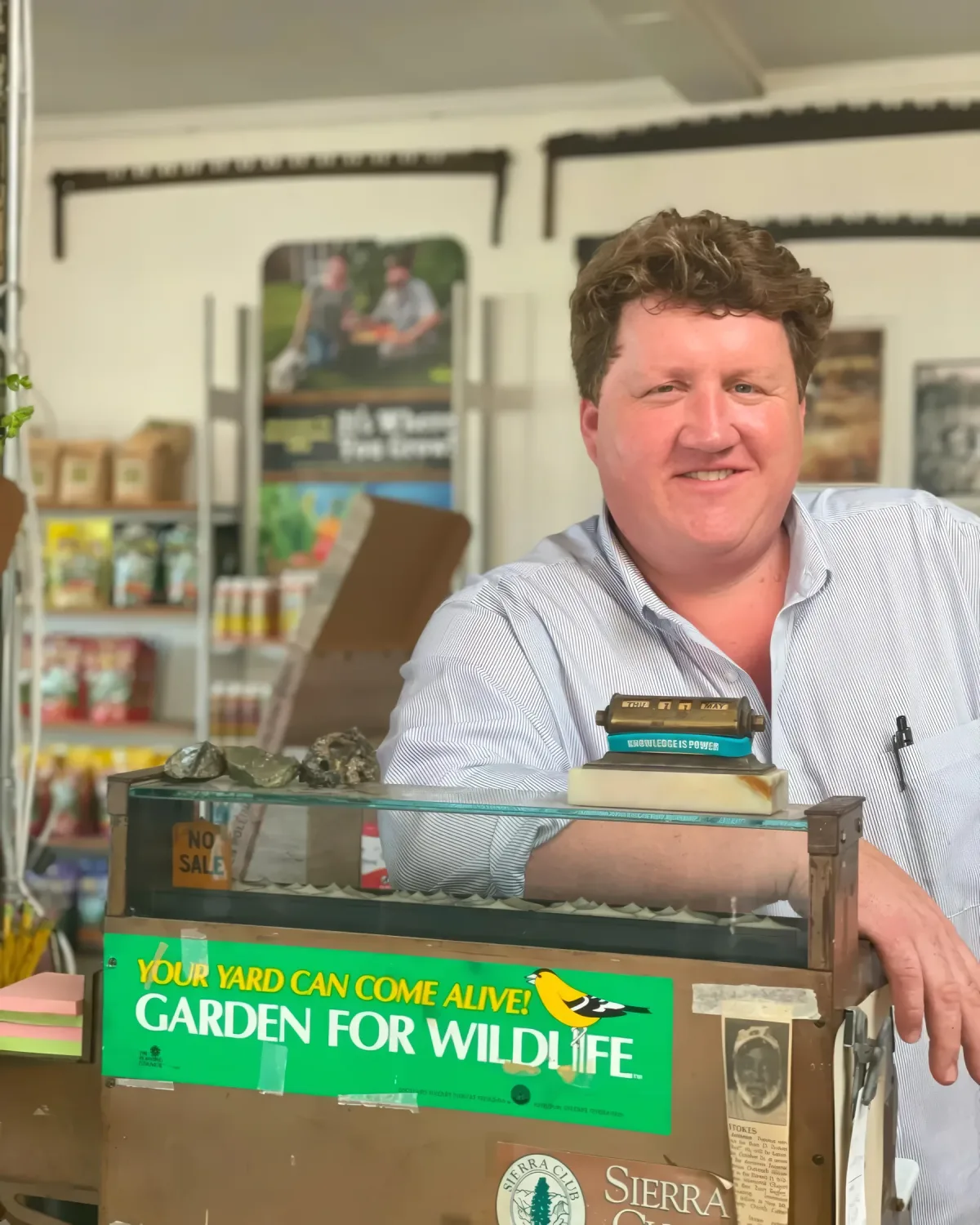
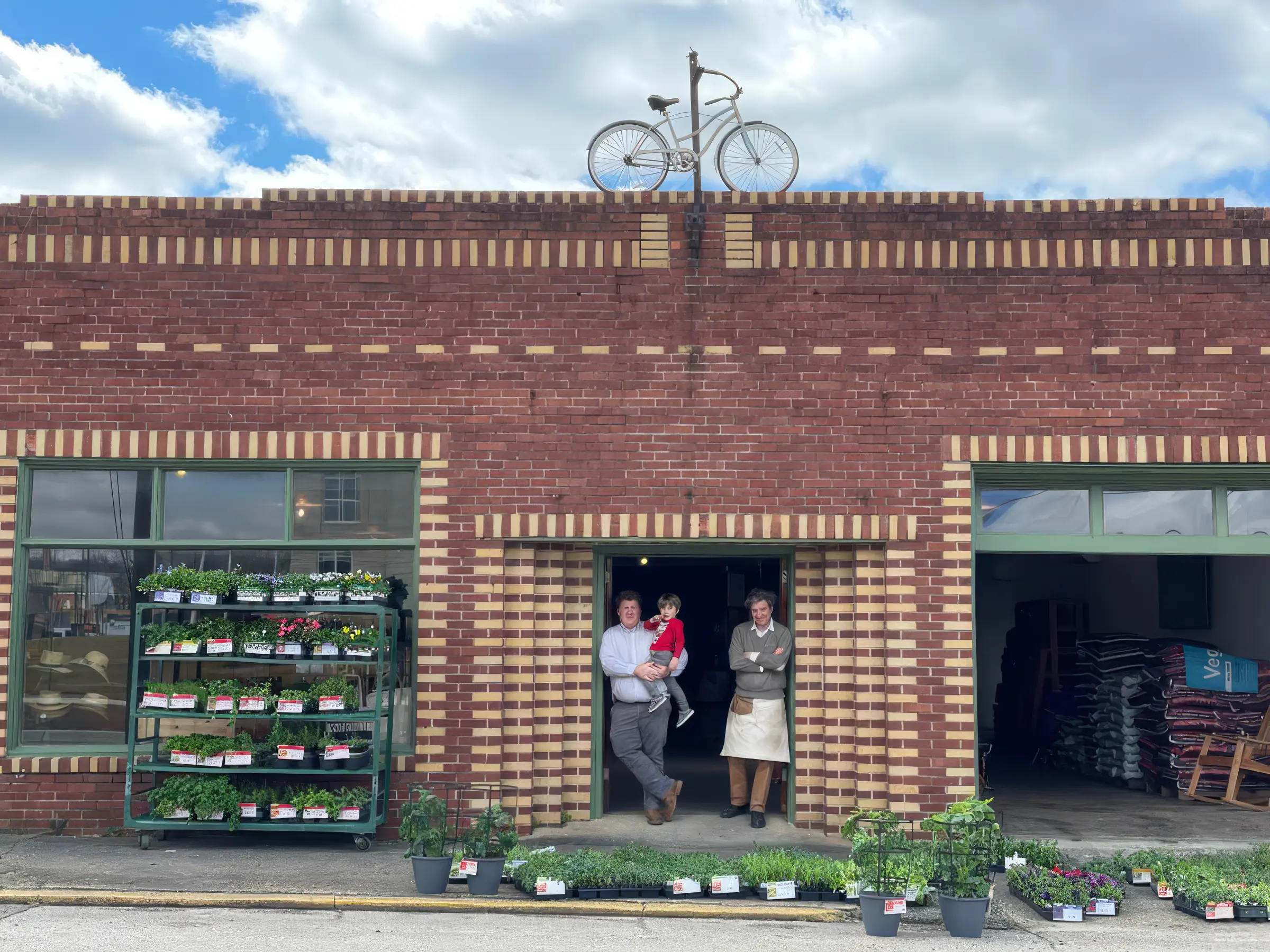
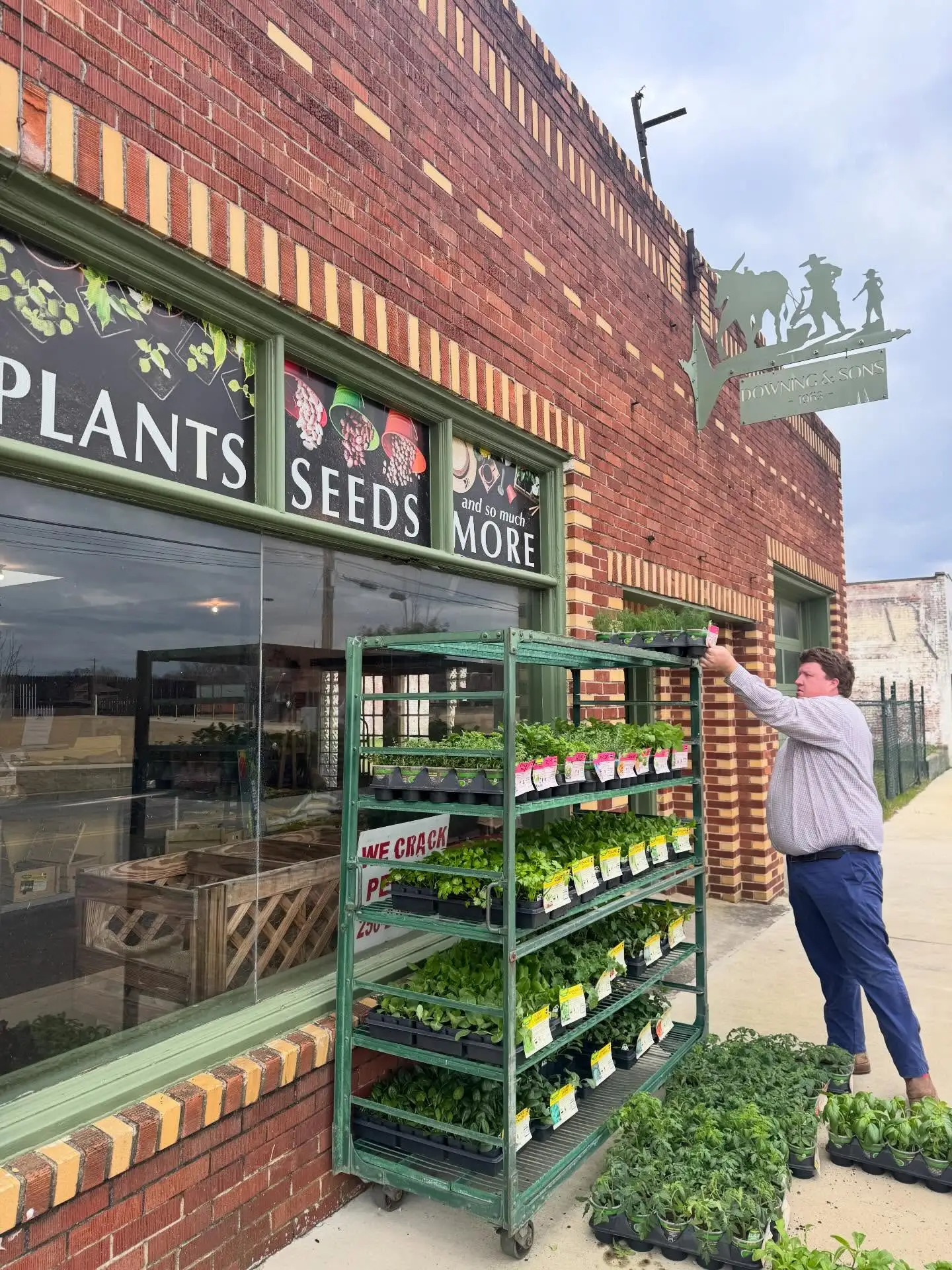
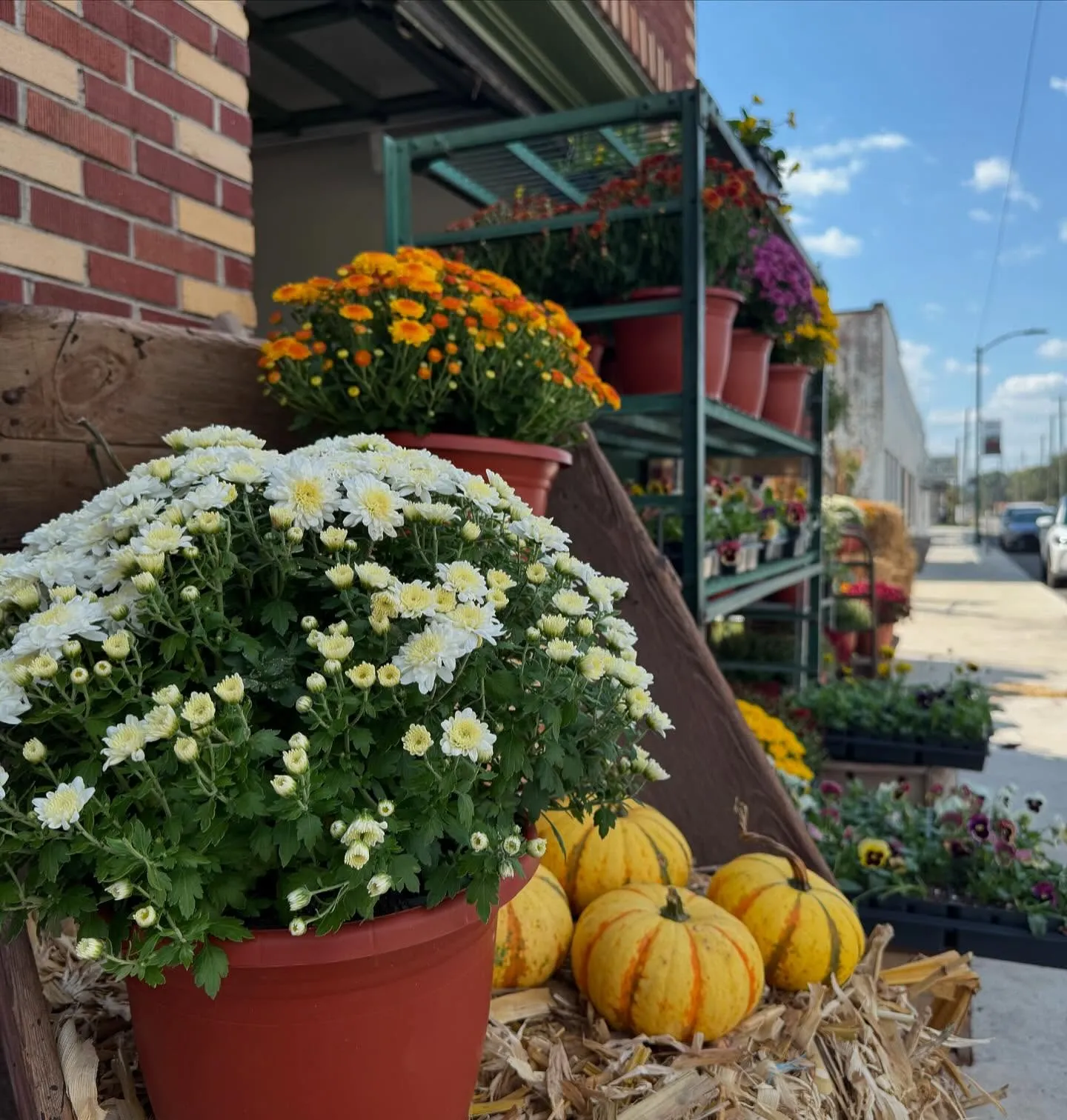
I was the brand new music director at the First Methodist church a few blocks north when I started roaming around the neighborhood. The brick front and the plants outside the windows on Gurnee drew me in.
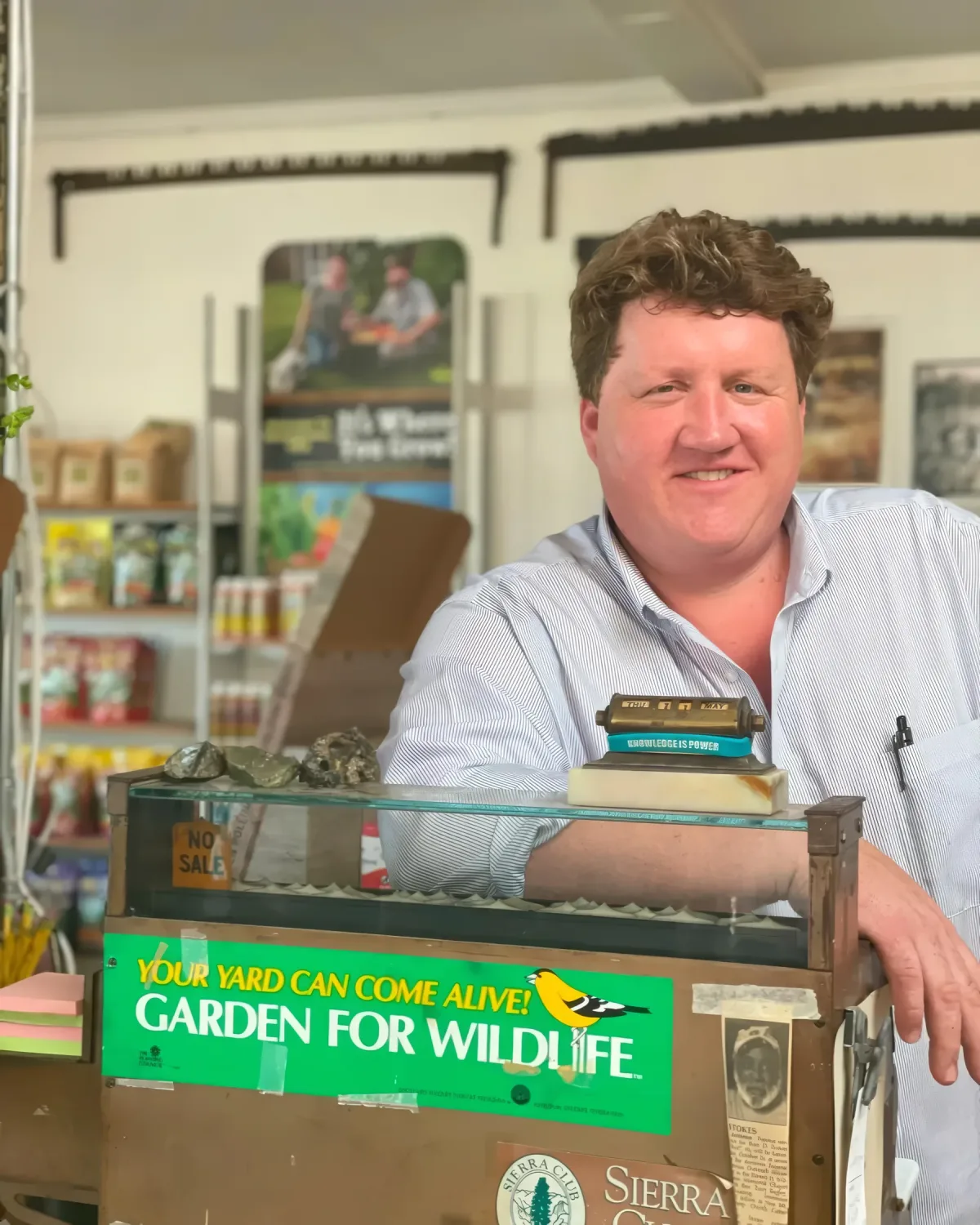
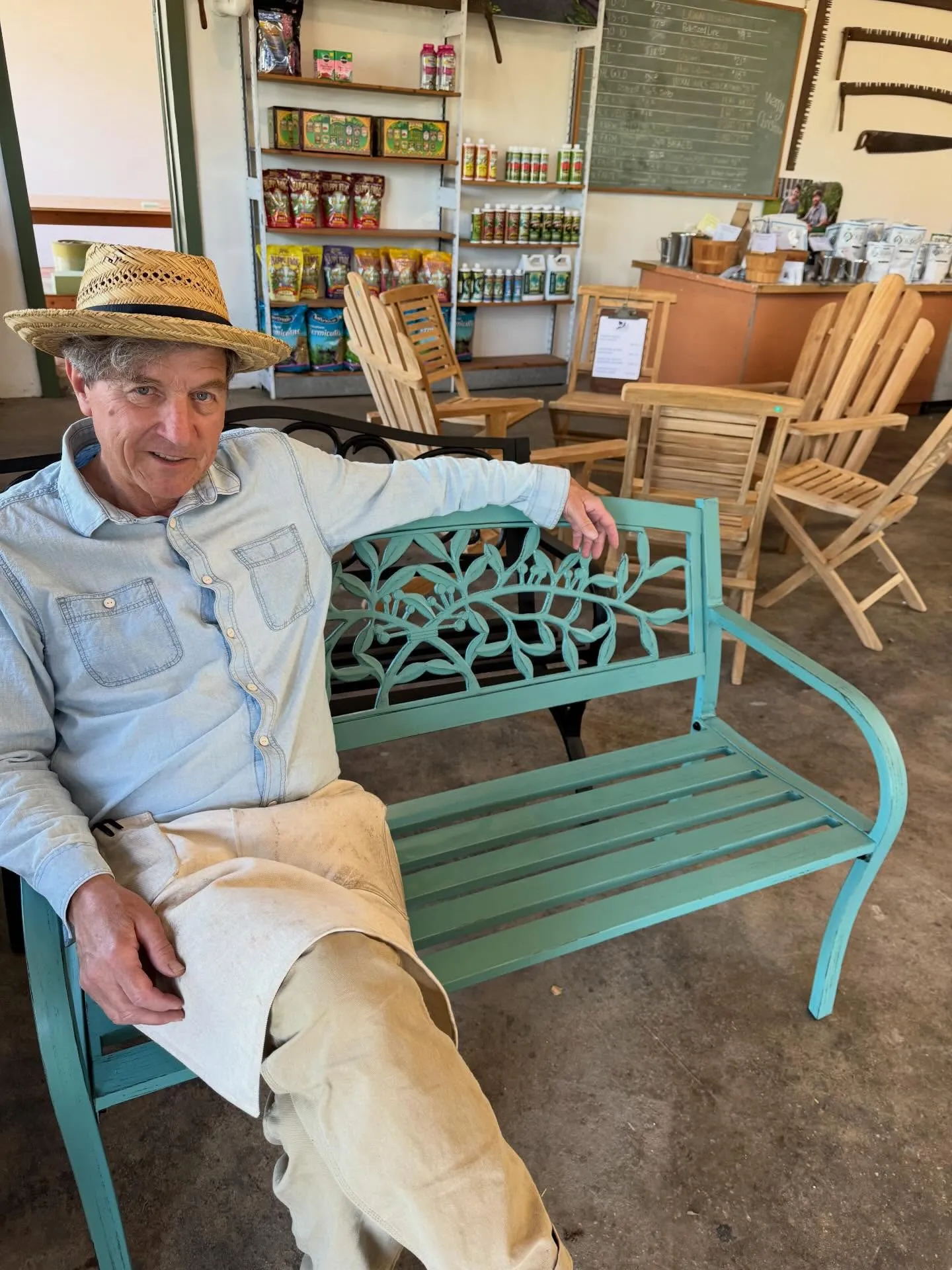
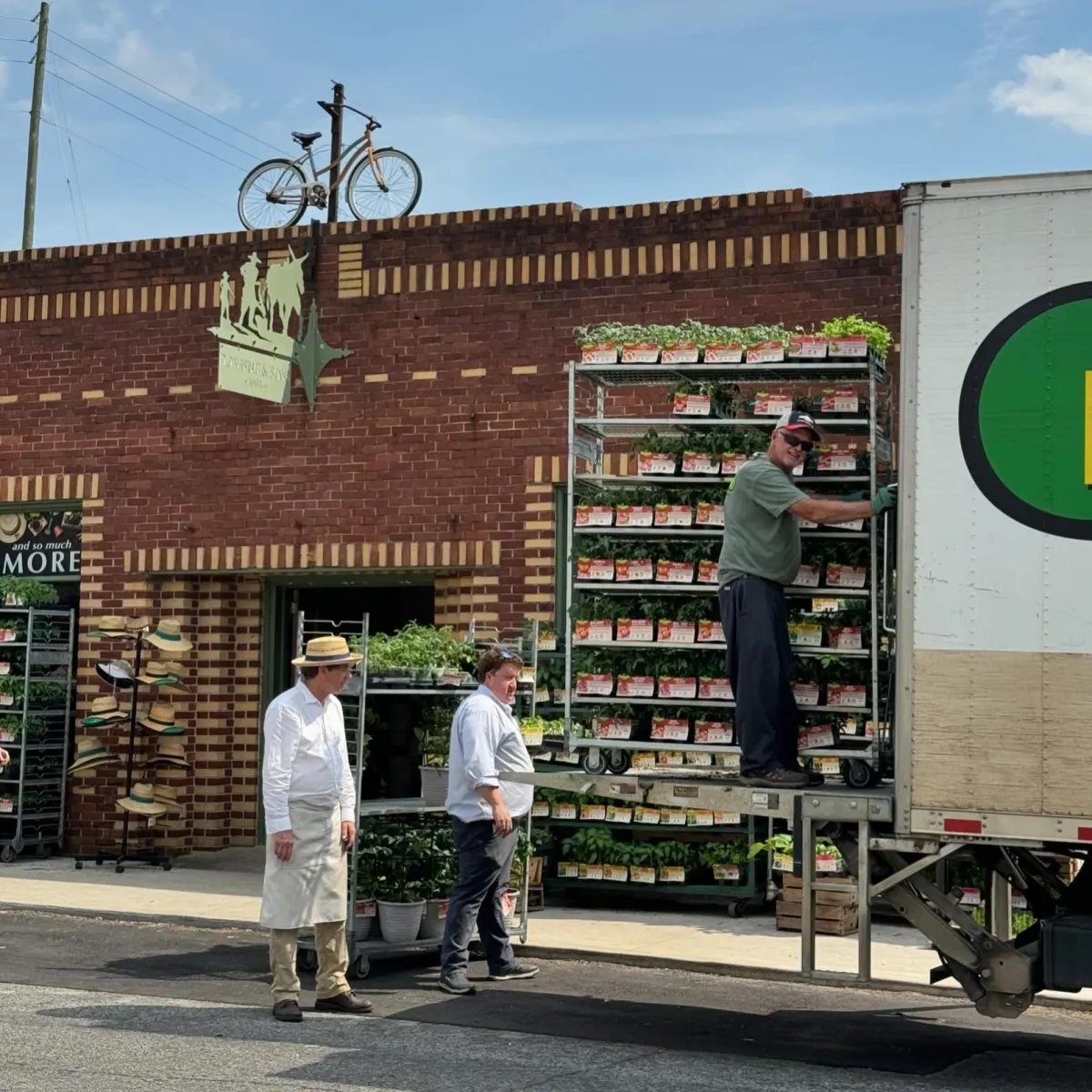
Early afternoon. Big open windows. Baskets of seed, garden tools. R.D. was in a straw hat and apron. He asked if he could help me. Looking for a stirrup hoe — we'd just bought the farm out in North Anniston, behind the Walmart. "I know that place," he said. "That was Johnny Bullock's place. He sold it?" "Did you get the big greenhouse with it?" We did. He smiled. He introduced me to Lewis right there.
The $600 Store
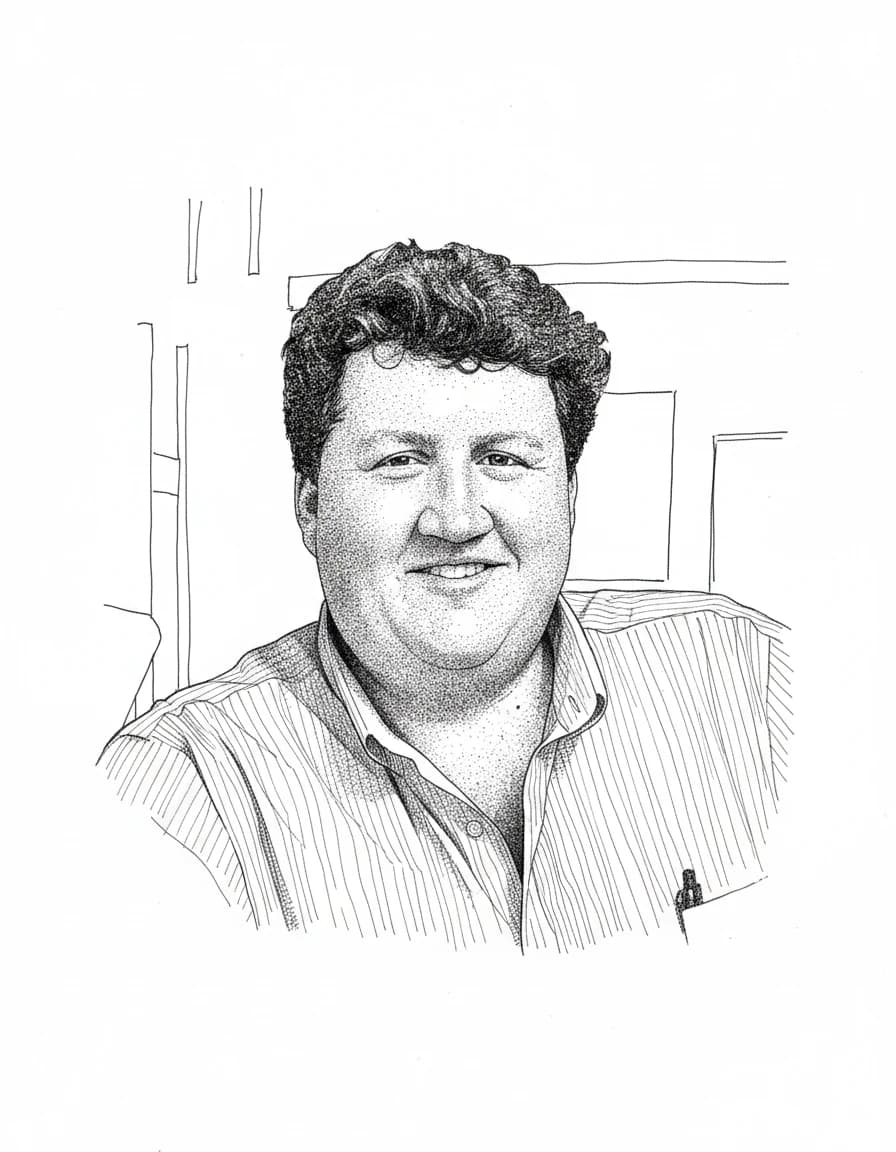
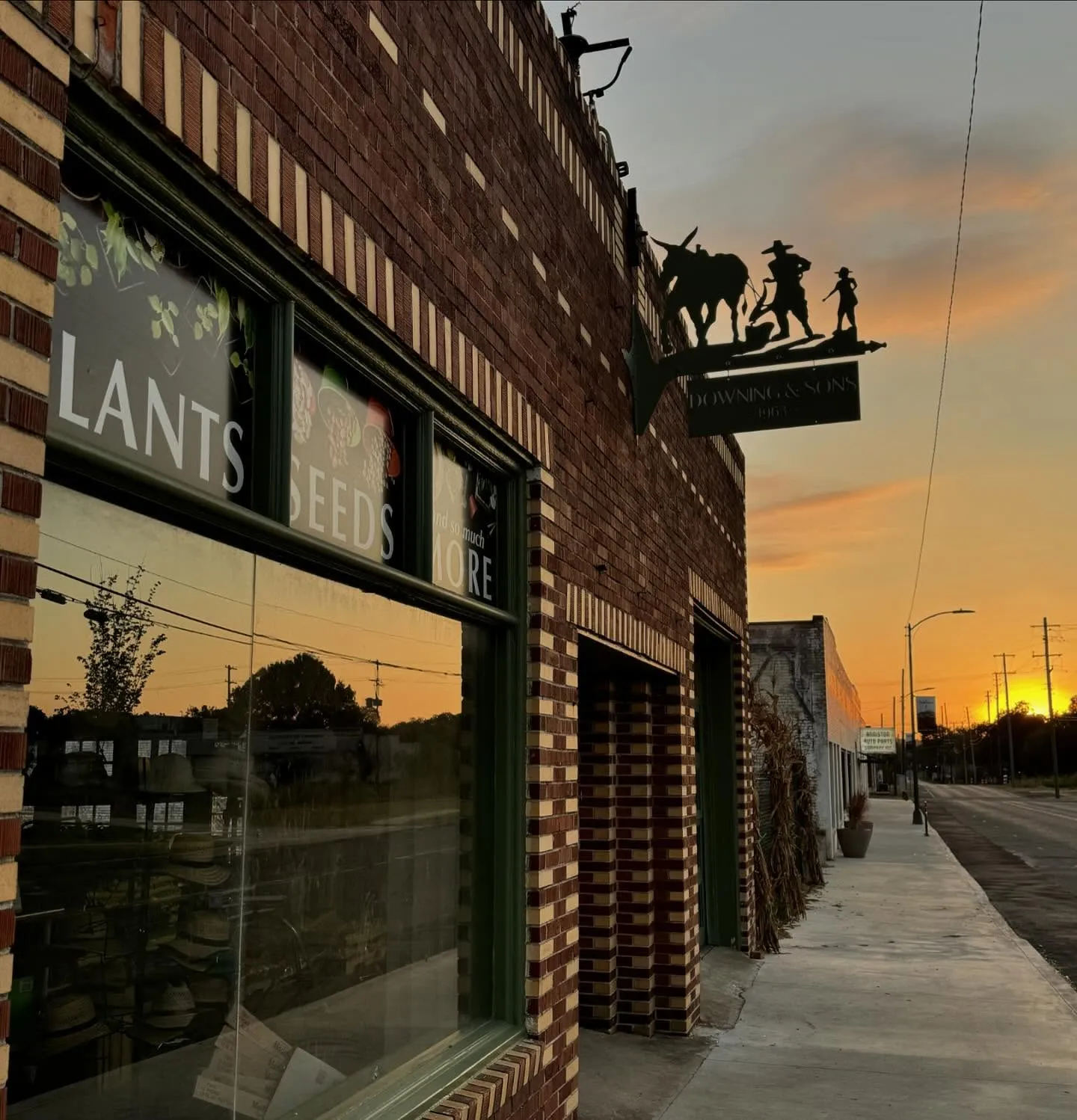
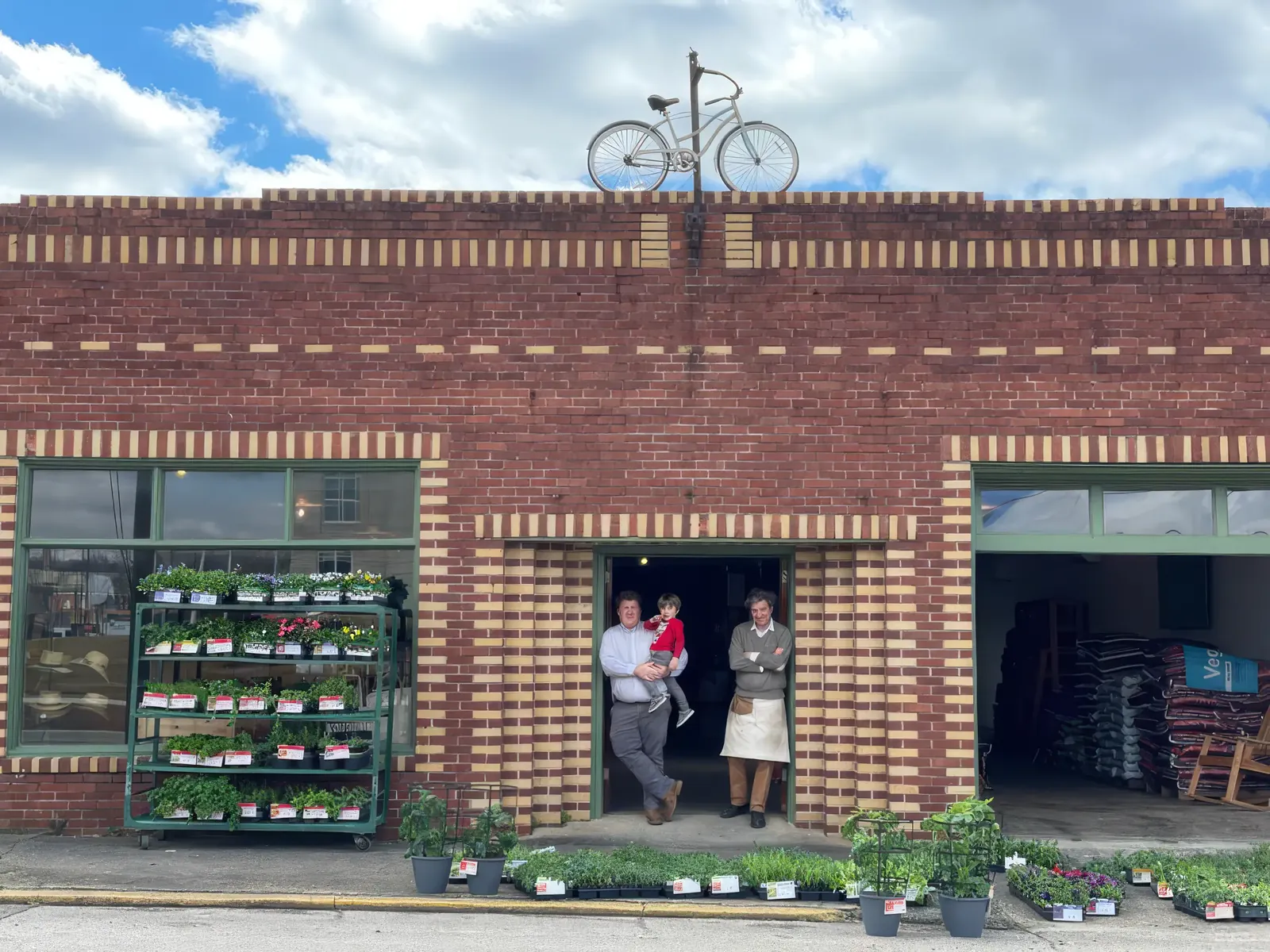
The building at 1030 Gurnee Avenue has been in the family since 1963. Lewis's grandfather walked across the street to buy a gallon of paint. The owner of the Mary Carter Paint Supply store offered to sell the whole thing for $600.
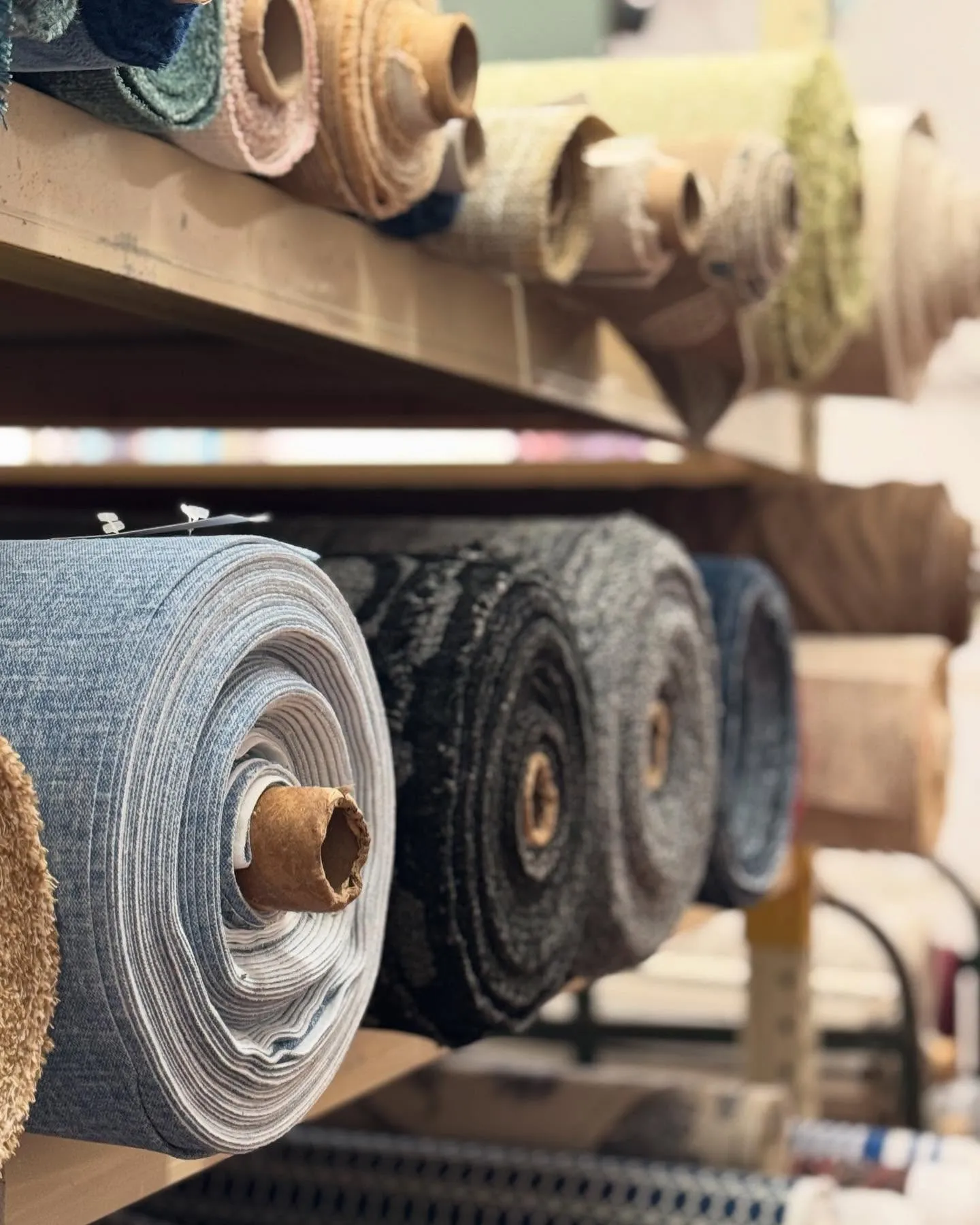
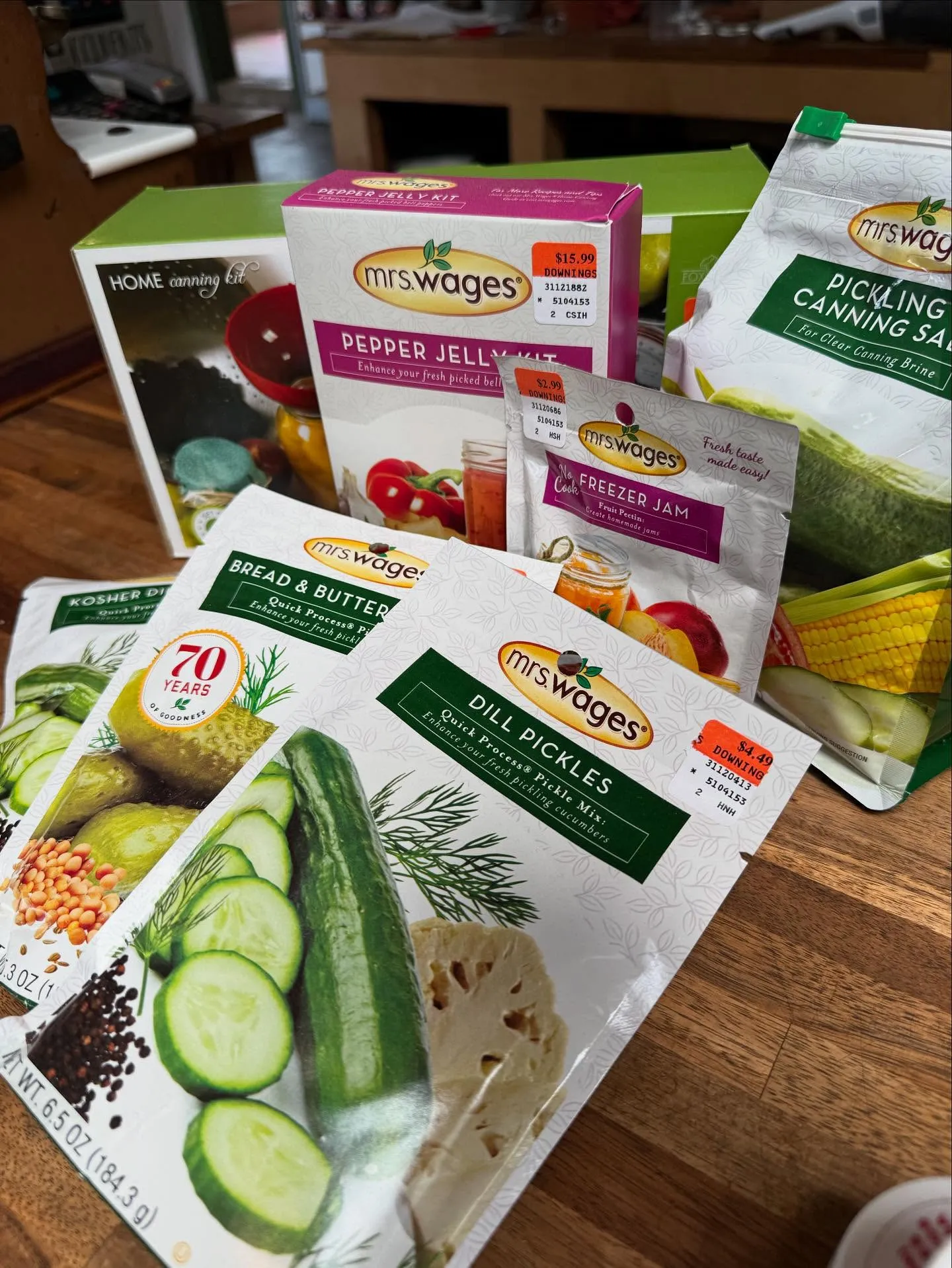
A gallon of paint that became a family business. The Mary Carter chain went bankrupt in the late sixties, and the Downings had to figure out what they were selling. They stayed with hardware and garden. Then Lewis's grandmother added sewing notions and fabrics. It made no sense on paper. Seed packets and upholstery fabric in the same building. It also made them impossible to replace.
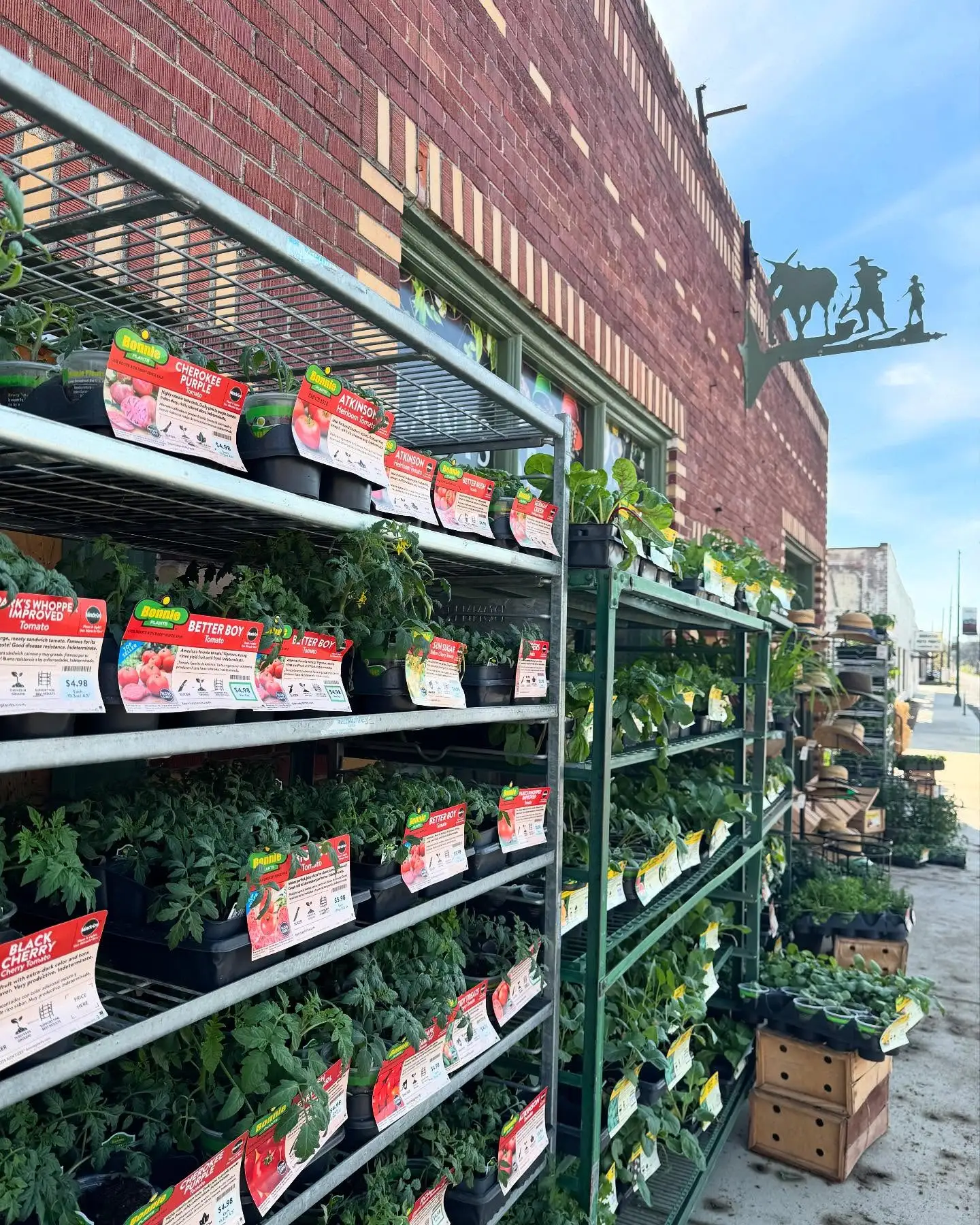
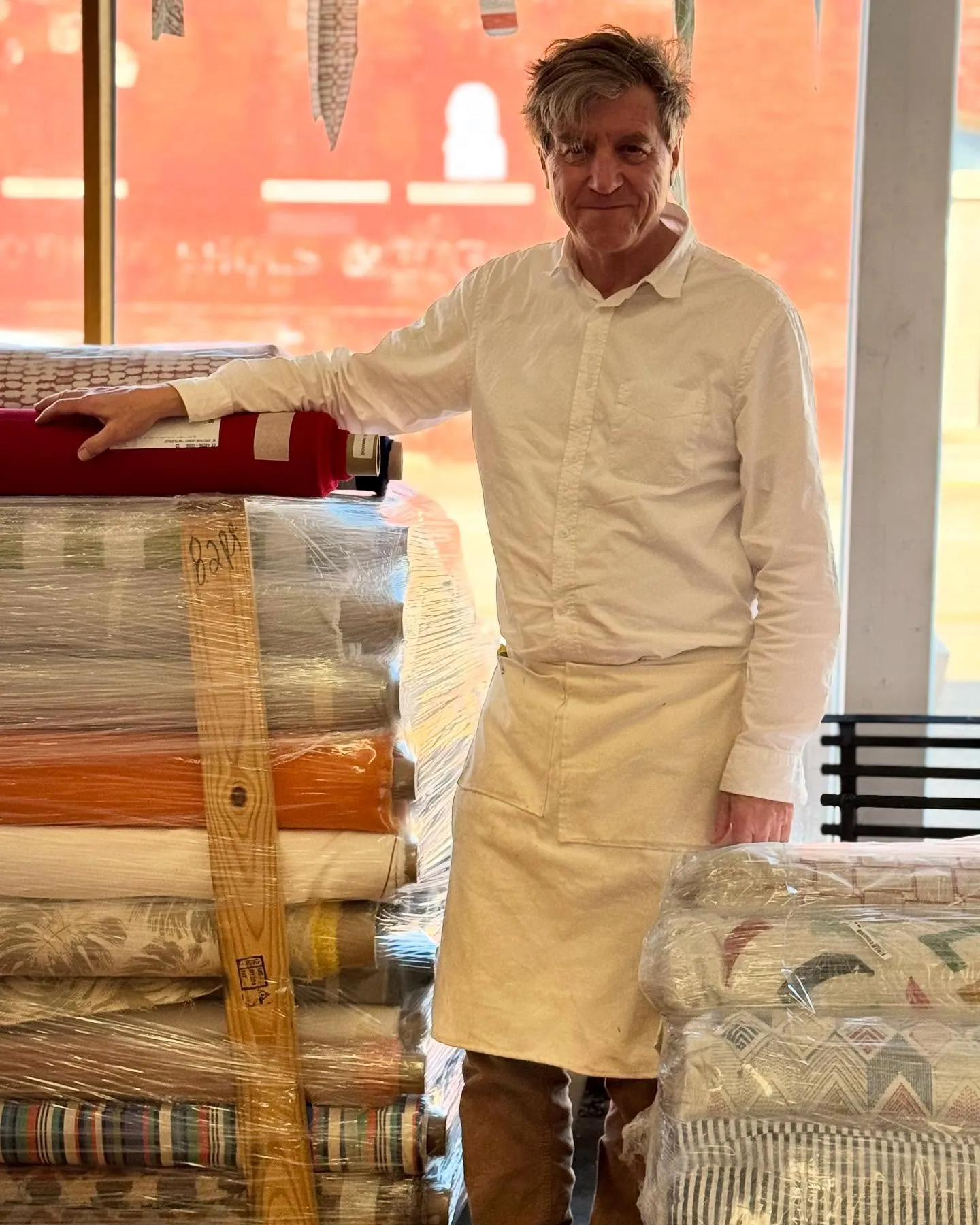
When Lewis took full ownership in 2017, the store had been on Gurnee for fifty-four years. He doubled its growth in the years that followed. The inventory runs to European upholstery fabrics and leather hides alongside organic fertilizers and bulk seed. He cuts polyurethane foam forms for the regional upholstery trade. He sets plants out at a quarter of eight every morning.
He started at the University of Alabama. Then Jacksonville State. The store pulled him back both times. He grew up in it. The smell of fertilizer. Heavy upholstery fabric. The ink from the Anniston Star's print shop next door, where his mother worked.
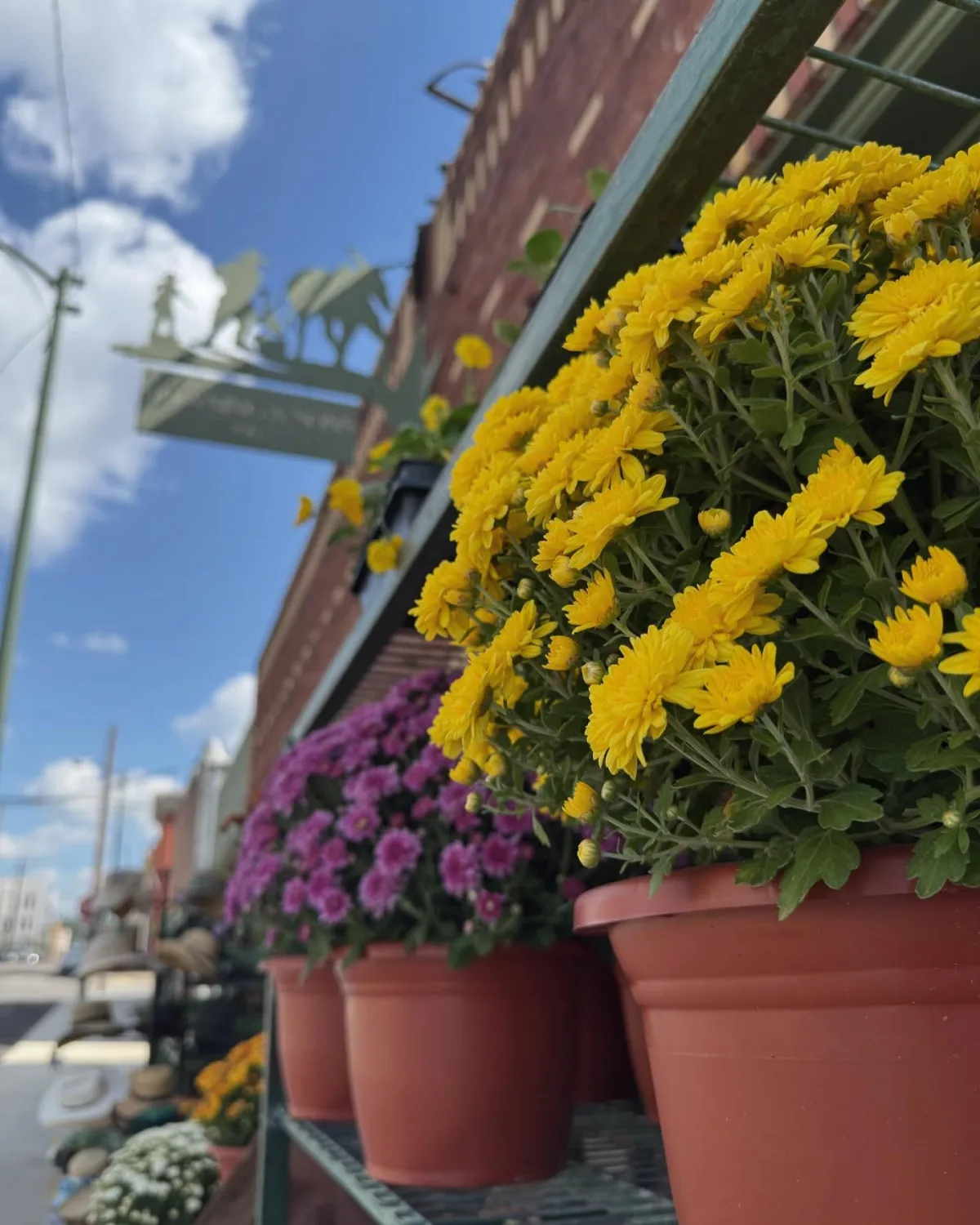
Downing and Sons on Gurnee Avenue.
The Alley
The store is on 1030 Gurnee Avenue. Next door, across an alley, is 1031.
On May 14, 1961, a Greyhound bus carrying Freedom Riders pulled into Anniston. A mob was waiting. That building is now the Freedom Riders National Monument.
I walked past that alley every week for years. It was just part of downtown.
Lewis has run his family's business in that shadow his whole adult life. The "Model City" is what Anniston called itself once.
The "Model City" is what Anniston called itself once.
R.D.
His father Robert still walks into Downing and Sons most days it's open.
He served sixteen years as a Calhoun County Commissioner, from 1994 to 2010. His colleagues called him the "resident tree hugger." He pushed energy-efficiency programs for county buildings, saved Calhoun County roughly $50,000 a year in operating costs.
He would come to the farmers market when we were selling flowers. The market was a few blocks from the store, around 2022 at the Coldwater Mountain Brewing parking lot.
I bought some pruning shears on a later visit. Lewis said he used to work for a landscaping company in high school. "Those were my favorite shears," he said. He went to Sacred Heart Catholic School. I was a member there in high school.
The second year we were vendors at the farmers market, it was out behind R.D.'s in his alleyway. They would both come and buy flowers. Lewis would walk up and say, "You got my eggs?" They always stopped to chat with Heather, me, and the kids.
I'd come in asking about Purple Hull pea seeds. They would put them in a brown envelope.
The Bible
I saw Lewis at the Sinclair Social at St. Michael's last May — we were there with the kids, selling bouquets from the Bloom Bar. New campaign hat, beer in one hand and crawfish in the other. "I love the swag," I told him.
In December 2024, the Anniston City Council appointed Lewis unanimously to fill the Ward 1 vacancy left by Jay Jenkins. He was sworn in with his hand on his great-grandmother's Bible. The Bible dates to the early 1920s. His father had used it when he was sworn in to the Calhoun County Commission.
R.D. was in the room. Lewis's first official act was to move to adjourn the meeting.
He ran for a full term in August 2025 and won in a landslide. He is now Vice Mayor, serving alongside Mayor Ciara Smith-Roston, the city's first Black female mayor and its youngest ever. He has said he ran because of a milestone birthday, because he wanted to be an asset and not a liability.
Heather manages events at the Longleaf Center at the Anniston Museum. A couple of weeks ago Lewis came through to organize a town hall meeting. He asked about the farm. He hadn't known we'd sold it. "I'm sorry," he said. "I didn't know."
She told me about it while we were on our evening walk on Little John Road. Looking at the cows, talking to them like we usually do. Watching the sun go down.



Responses