
 Bridal ShowThe Aisle Bridal Show · Sunday, Feb 21 · Silver Run Chapel, Munford · theaislebridalshows.comRegister free →
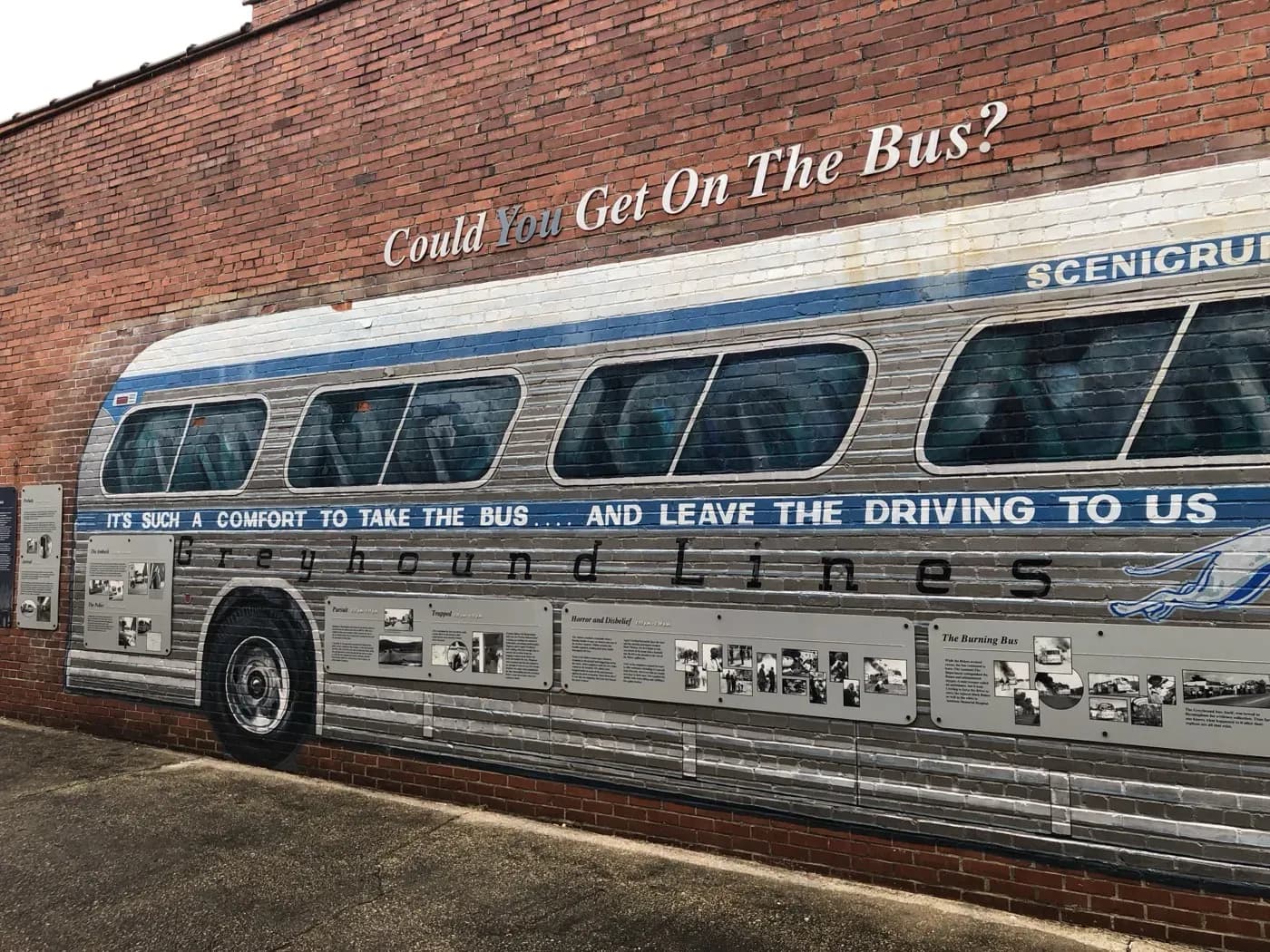
There's a stretch of Gurnee Avenue in Anniston that I've walked by hundreds of times. The old Greyhound bus depot sits there, quiet, unremarkable if you don't know what happened inside. Most days it looks like any other piece of downtown that time half-forgot. But on Mother's Day in 1961, this building and a stretch of highway six miles outside of town became the site of one of the most brutal attacks of the Civil Rights Movement.
This isn't comfortable history. It's not supposed to be.
May 14, 1961
The Freedom Riders were an interracial group of volunteers organized by the Congress of Racial Equality. Their plan was simple and deliberately provocative: ride interstate buses through the Deep South, sit where they wanted regardless of race, and force the federal government to enforce its own Supreme Court rulings banning segregation on interstate travel. The ride began in Washington, D.C. on May 4, headed for New Orleans.
By the time the Greyhound bus reached Anniston on Mother's Day, a mob of about fifty men, led by Ku Klux Klan leader William Chappell, was waiting at the station. They'd been tipped off. The local police, who'd been warned hours earlier, were nowhere to be found.
The mob smashed windows, slashed tires, and beat the sides of the bus with pipes and chains. When police finally arrived, they didn't arrest anyone. Instead, they gave the appearance of escorting the damaged bus out of town, then abandoned it at the city limits.
The local police, who'd been warned hours earlier, were nowhere to be found.
The Burning
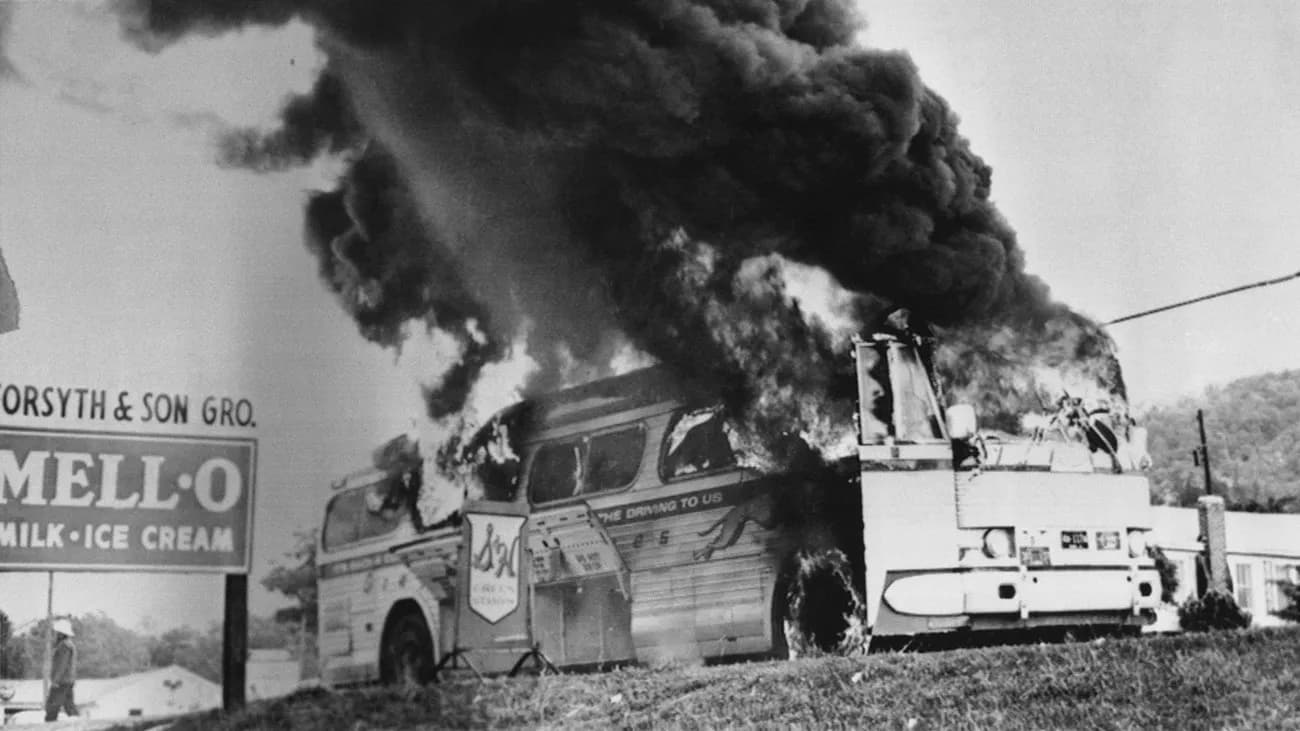
Six miles outside Anniston on Old Birmingham Highway, the slashed tires gave out. Another armed mob surrounded the bus. Someone threw a firebomb through a broken window. Others tried to barricade the door, trapping the passengers inside. The bus erupted in flames and smoke.
The riders escaped through windows and the main door only to be beaten by the mob waiting outside. A twelve-year-old girl named Janie Miller brought water to the choking, injured passengers, filling and refilling a five-gallon bucket while Klansmen taunted her. Her family was later threatened and forced to leave Anniston for that act of basic human decency.
Thirteen passengers were taken to Anniston's hospital, where staff treated them for smoke inhalation and then ordered them to leave as a mob gathered outside. It was Reverend Fred Shuttlesworth who sent a caravan from Birmingham to rescue the riders and bring them to safety.
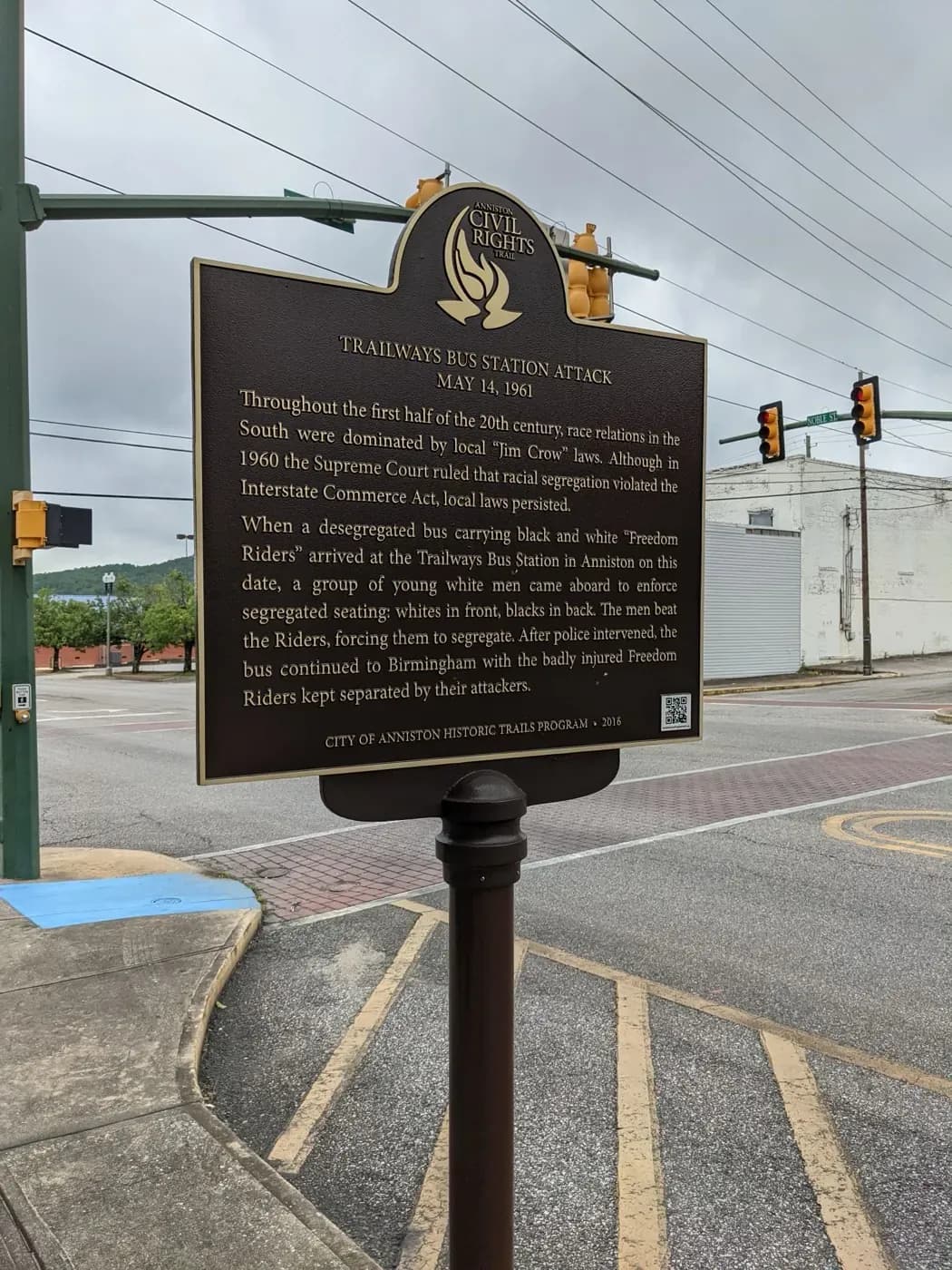
A second bus, a Trailways, fared no better. KKK members had boarded in Atlanta and beaten the riders during the trip. At the Anniston Trailways station, more men boarded and forced segregated seating. Freedom Rider Walter Bergman was beaten so severely he suffered a stroke and was paralyzed for the rest of his life.
What It Changed
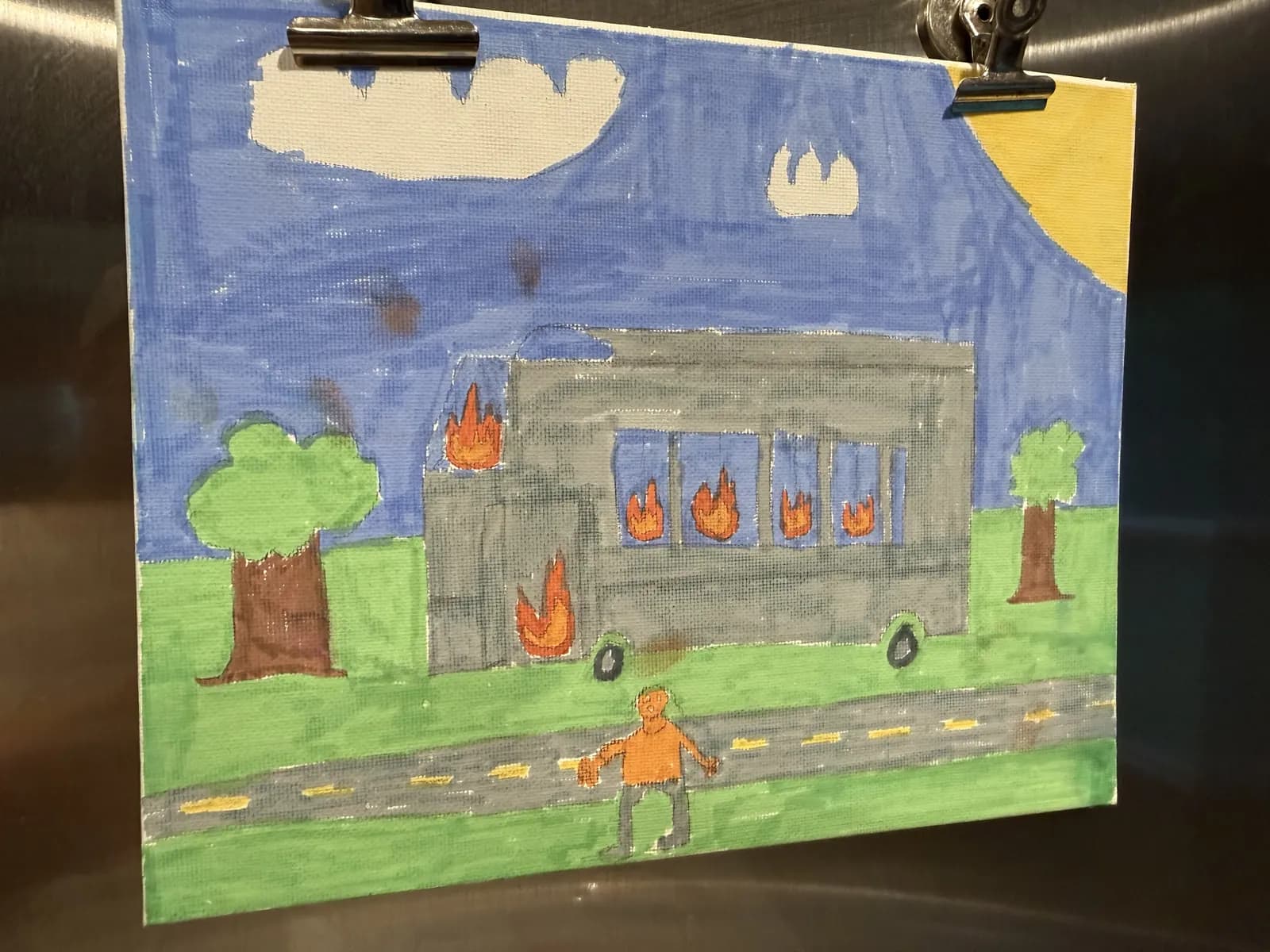
The attacks in Anniston were carried out with the knowledge and coordination of law enforcement. The FBI had advance intelligence and did nothing. The Birmingham police had agreed to give the mob fifteen minutes before intervening. This wasn't a failure of the system. The system was working exactly as it was designed to, and the Freedom Riders knew it.
That was the point. The riders understood that the violence they endured would be photographed, broadcast, and published. The photograph of a burning Greyhound bus on a rural Alabama highway ran in newspapers across the country and abroad. It embarrassed the United States during the Cold War and forced the Kennedy administration to act.
This wasn't a failure of the system. The system was working exactly as it was designed to.
The attacks didn't stop the Freedom Rides. They multiplied them. Hundreds of volunteers spent the summer of 1961 riding buses through the South, facing arrest and violence, until the Interstate Commerce Commission issued regulations banning segregation in interstate travel facilities. What happened in Anniston was meant to be a deterrent. It became a catalyst.
The Monument
In January 2017, President Obama designated the Freedom Riders National Monument, preserving two sites: the former Greyhound bus depot at 1031 Gurnee Avenue in downtown Anniston, and the bus burning site on Highway 202. The National Park Service manages both locations.
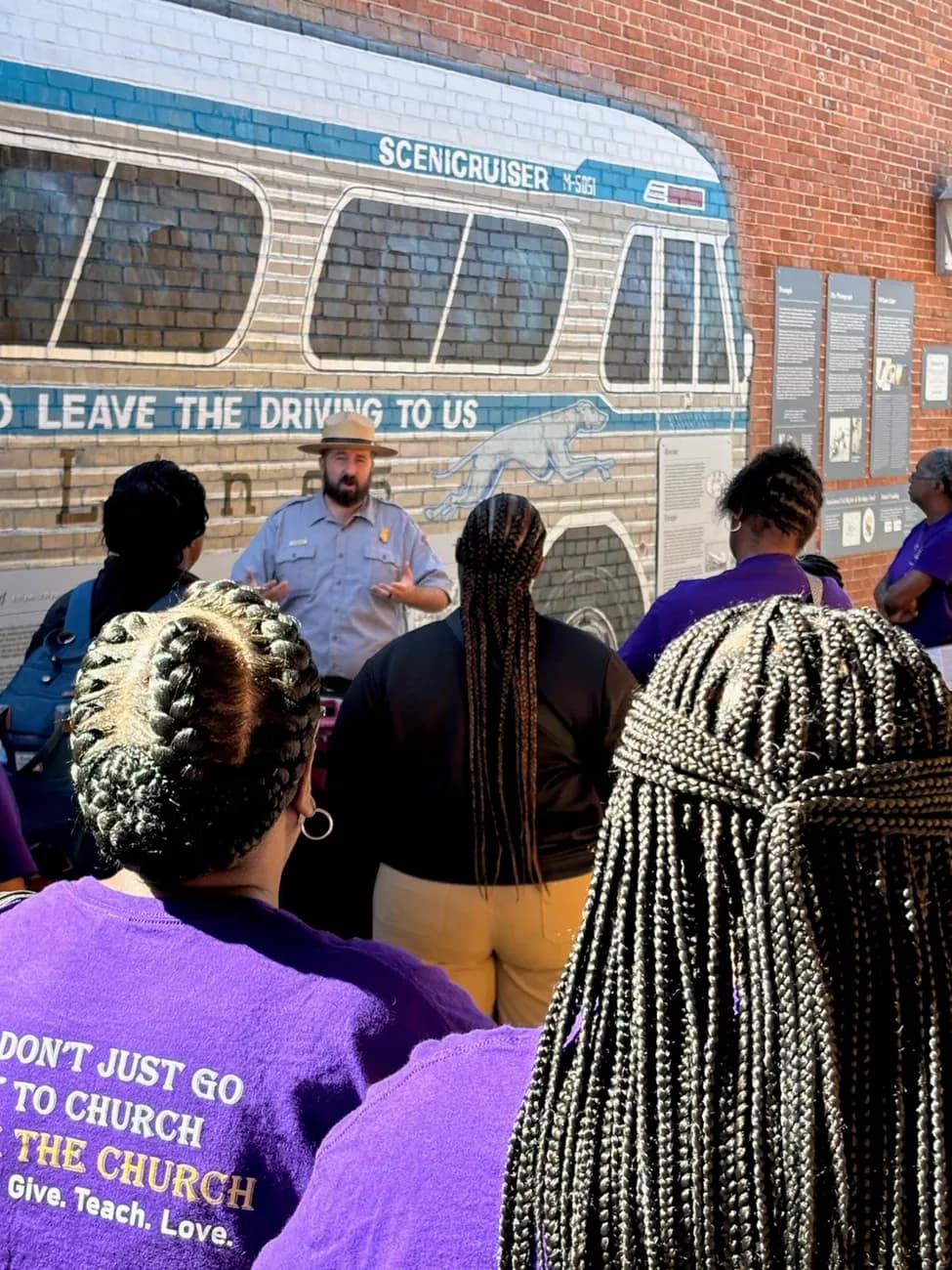
The monument is part of Anniston's nine-stop Civil Rights Trail. The Greyhound Bus Station downtown is undergoing visitor experience improvements, and in 2024 the National Park Service opened a public comment period on a master plan for the bus burning site itself, a 20-year development plan aimed at creating a second primary visitor venue at the location six miles west of town where the bus actually burned.
I walked past the Gurnee alley mural every week for four years. Some days I stopped and looked at it. Sobering is the right word. Other days it was just part of the landscape, another piece of downtown I moved past without really seeing.
The Civil Rights Trail map is what made the full geography click. RMC is on that trail. The county courthouse too, two blocks from the church where I worked, where a friend of mine came in every day. I'd walked past the marker there more times than I could count. Two of my kids were born at RMC. Same building that treated the Freedom Riders and then ordered them out.
Next door at 1030, Downing and Sons has been in the same family since 1963. Lewis Downing runs it now and serves as Ward 1 councilman and Vice Mayor. His family has operated that building through every era of what Gurnee Avenue has been.
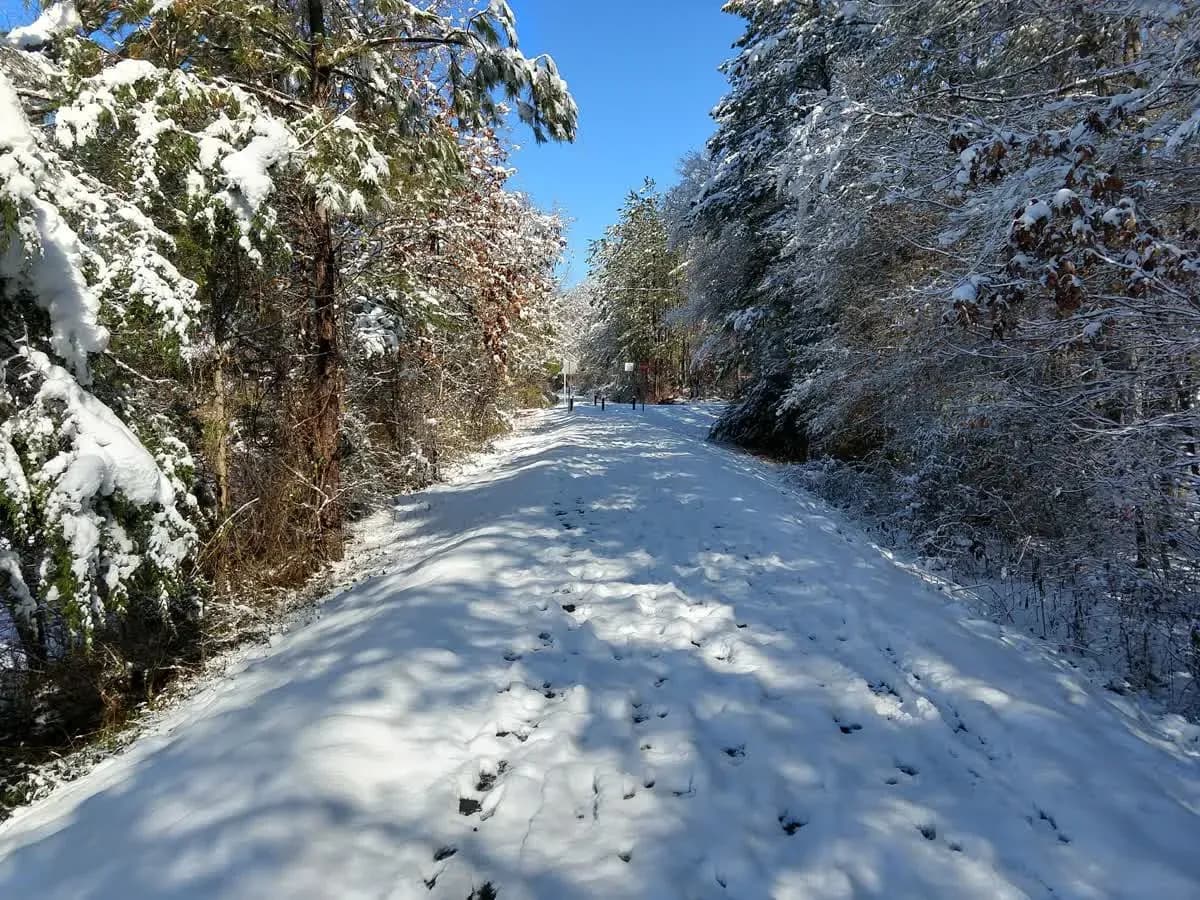
Cy Howe runs Full Bellie Deli at 1009 Gurnee, one address from the old depot. He'll tell you people stop to read the interpretive panels on ordinary weekdays, on their lunch break. Moore's Printing and CAST are on the same block. The Sinclair Social is just around the corner. The Chief Ladiga Trail runs a few blocks east. Life goes on all around this history. I think that's right. It's what saves us from ignorance.
Three blocks from the church, a mural marks what used to be Anniston's Black commercial district. That's its own story, and one worth a separate visit.
The Man in the Photo
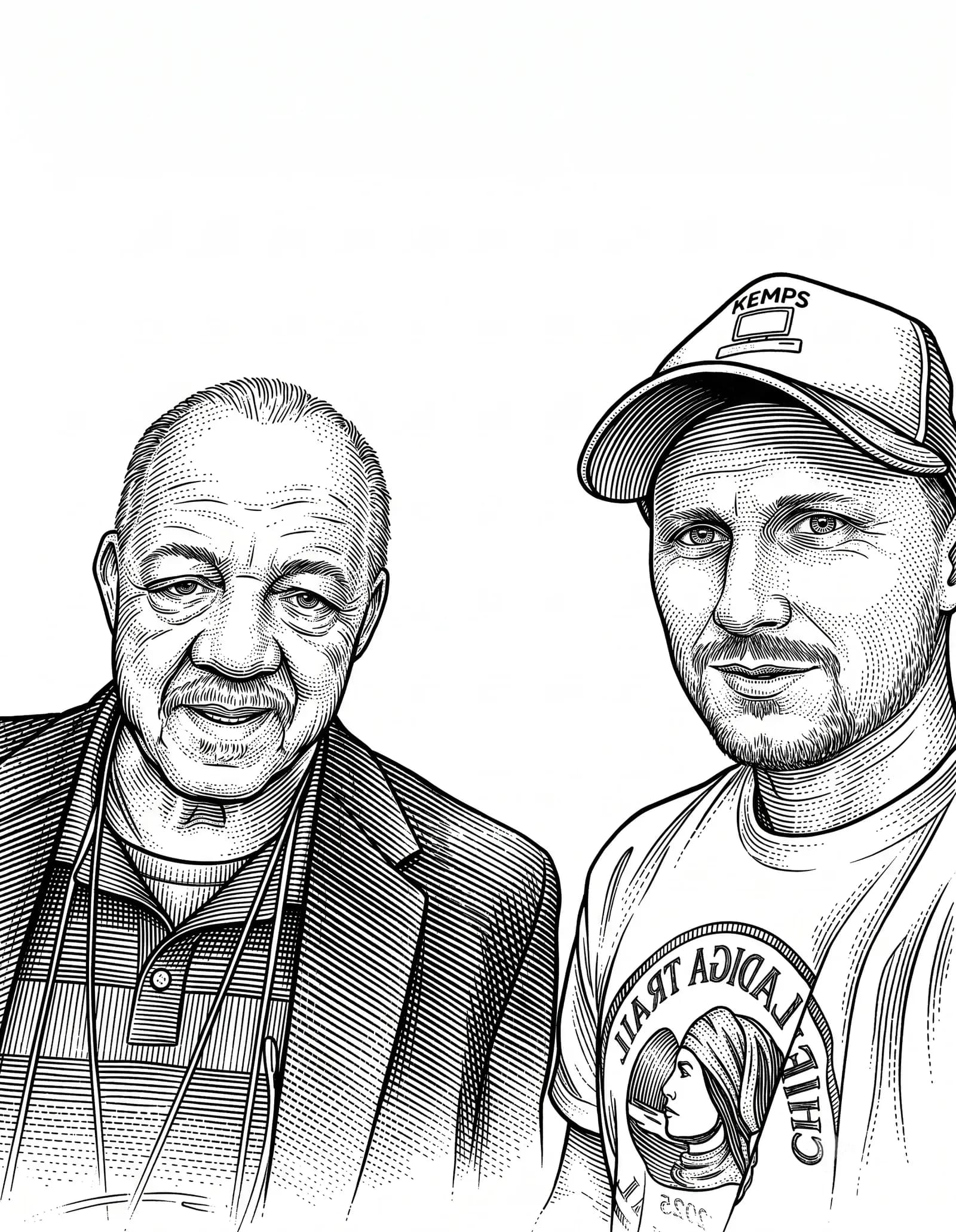
In May 2026, David Dennis came back to Anniston.
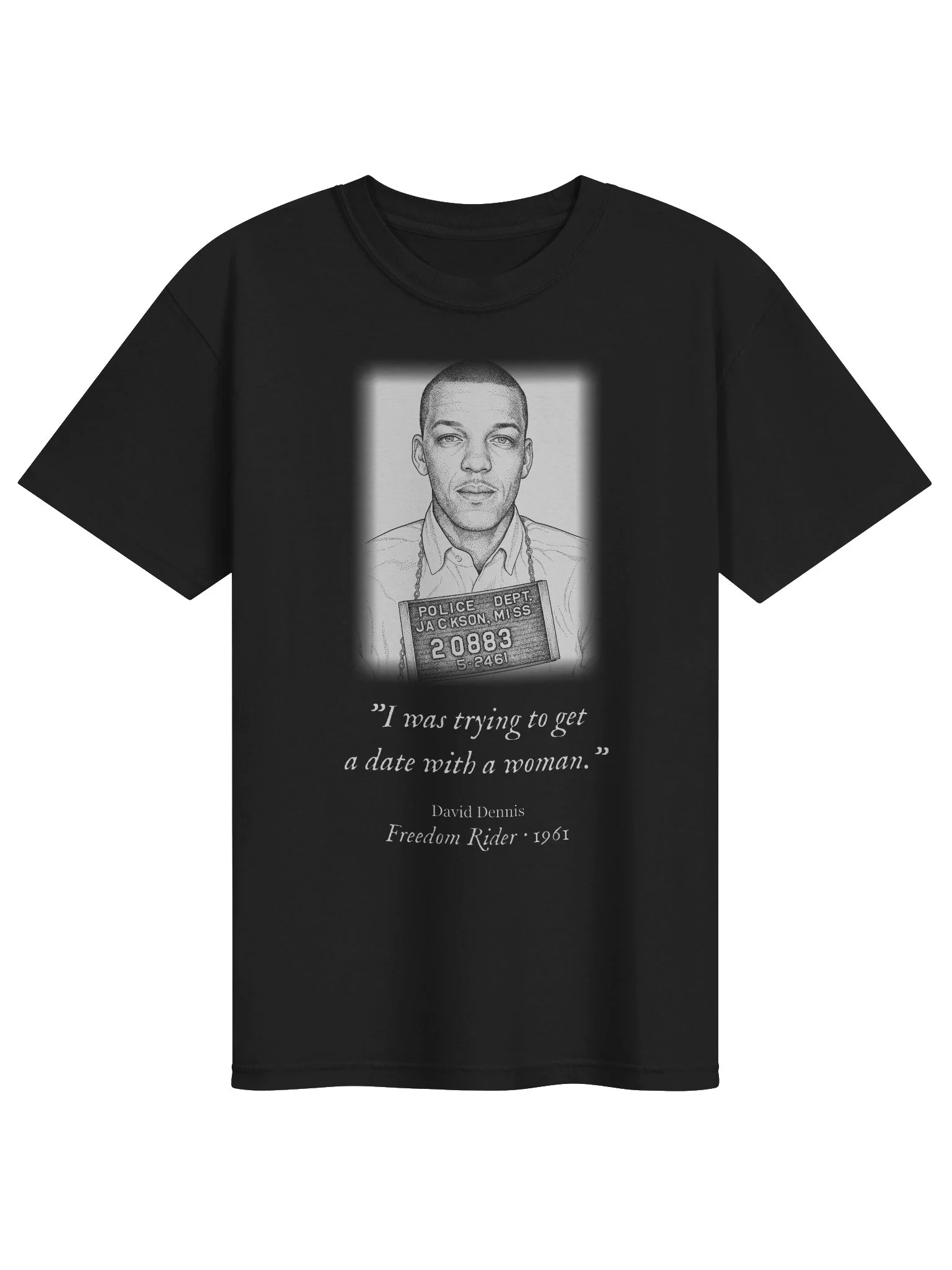
He was one of the original Freedom Riders. CORE organizer, then Freedom Summer, then the eulogy at James Chaney's funeral in 1964 — the one where he told the crowd he wasn't going to ask them to be patient. That speech. That David Dennis.
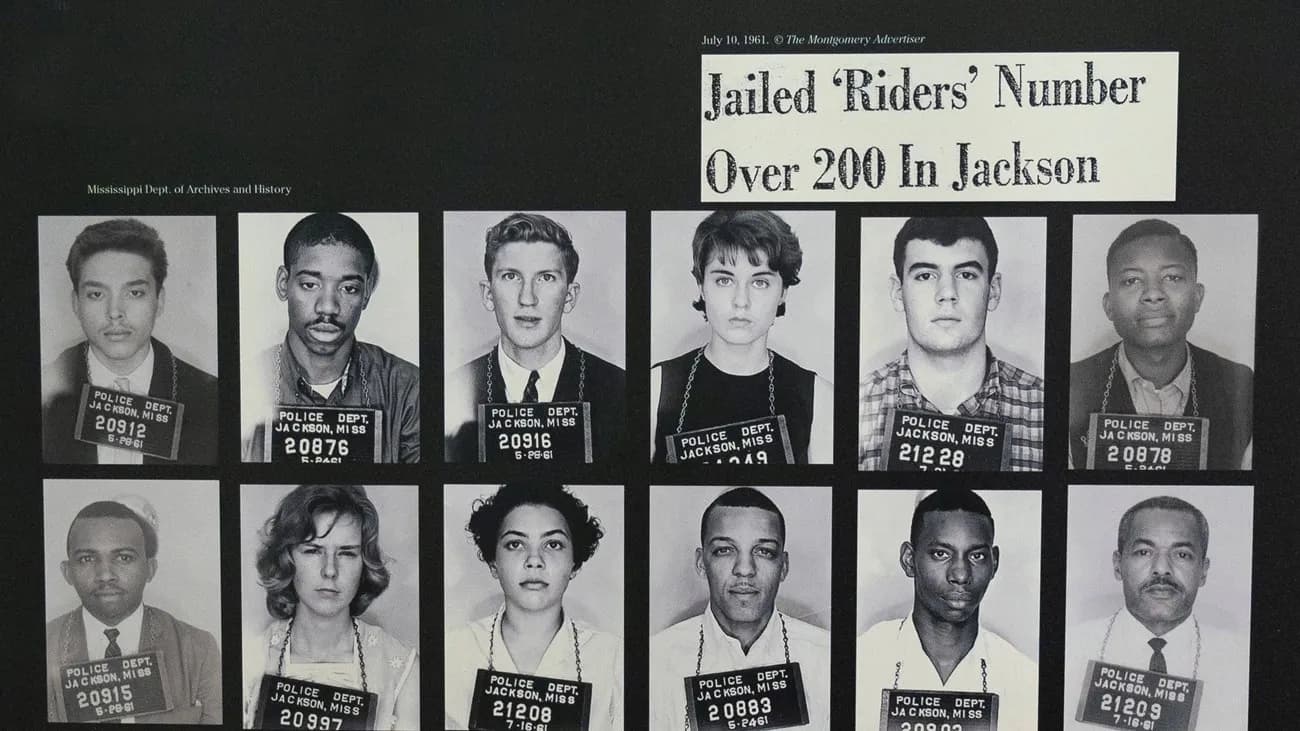
I was standing in a room with him, and I had a photo from the NPS website on my phone. One of the original riders, young, looking at the camera.
I showed it to him. You don't know any of these people, do you?
"Oh yeah," he said. "I know all of them."
He pointed at himself in the photo. He was twenty years old.
I asked him how he got involved in the Freedom Riders.
"I was trying to get a date with a woman."
He said it straight. The kind of line that sounds like a joke and isn't one. Or it is, and that's fine too. The most consequential things in a life don't always start with a moment of high moral clarity. Sometimes you're twenty, you're trying to impress somebody, and you end up on a Greyhound bus to Anniston.
I told him I'd lived there my whole life.
"Thanks for having me," he said.
Why It Matters Now
There's a version of local storytelling that only celebrates the charming parts: the old saloons, the botanical gardens, the friendly small-town character. And those things are real and worth writing about. But any honest account of this place has to include what happened on May 14, 1961. Not as a footnote, not as something that happened a long time ago, but as a defining event that shaped what Anniston is and how it sees itself.
The Freedom Riders National Monument exists so that nobody forgets. Not the courage of the riders, not the violence of the mob, not the complicity of the authorities, and not the quiet bravery of a twelve-year-old girl with a bucket of water.
Any honest account of this place has to include what happened on May 14, 1961.
If you're visiting Anniston, go see it. Stand in front of the depot. Drive out to the burning site. Sit with the discomfort.
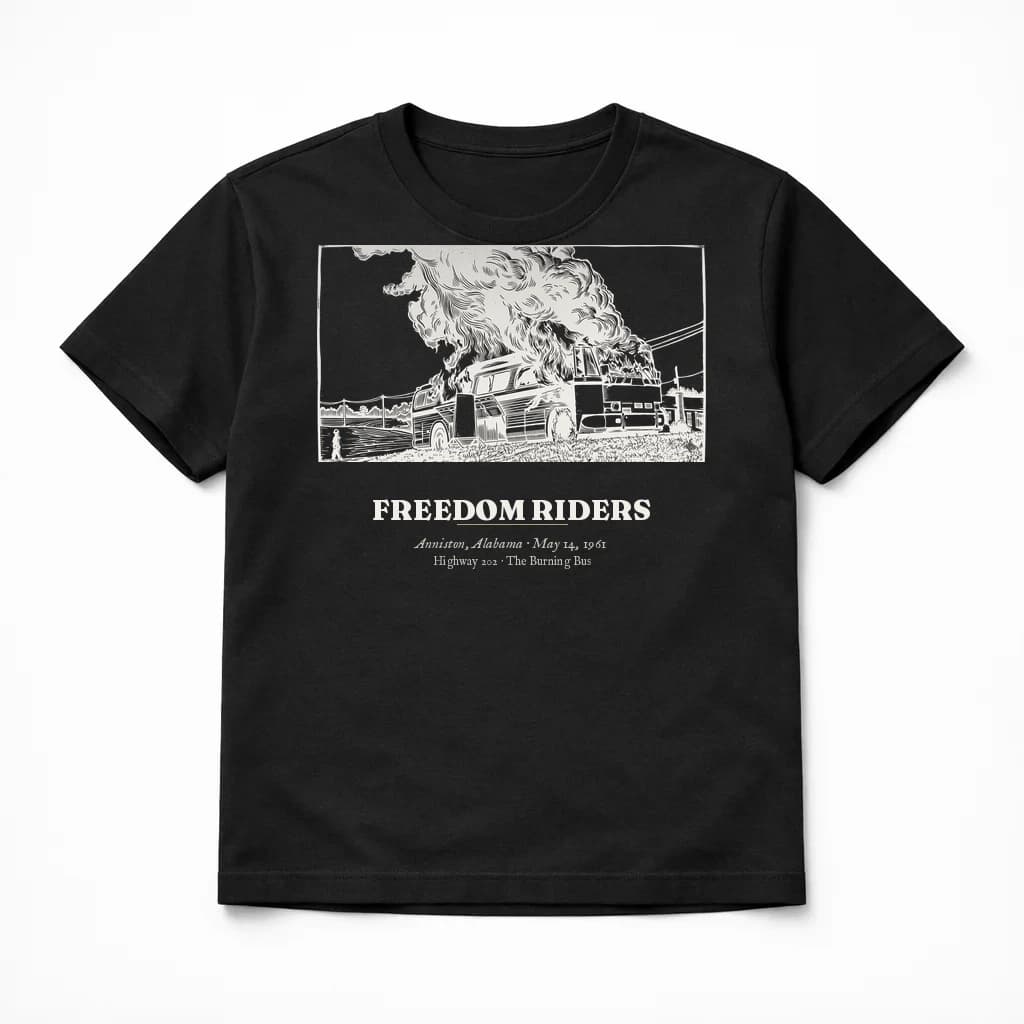
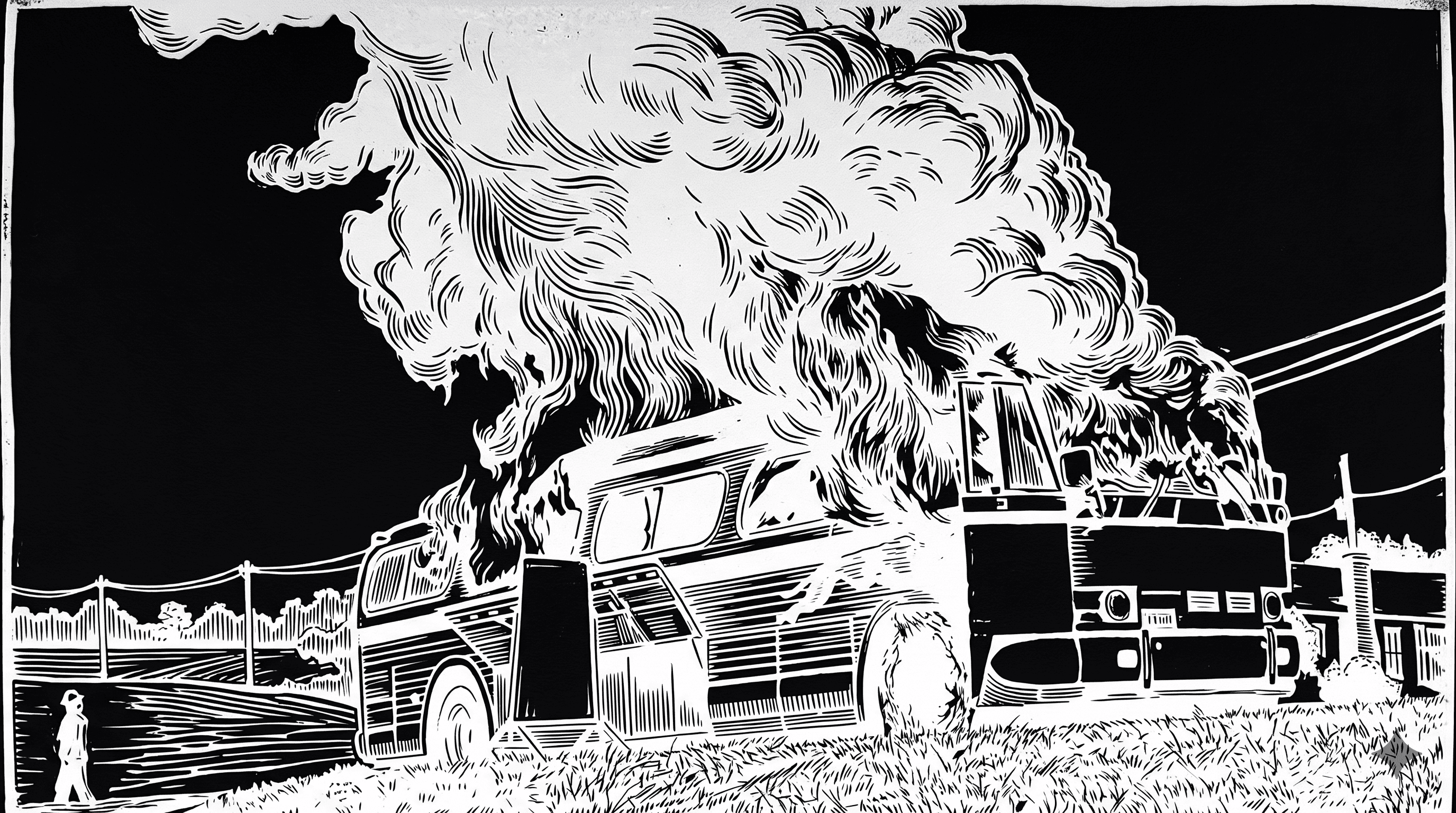
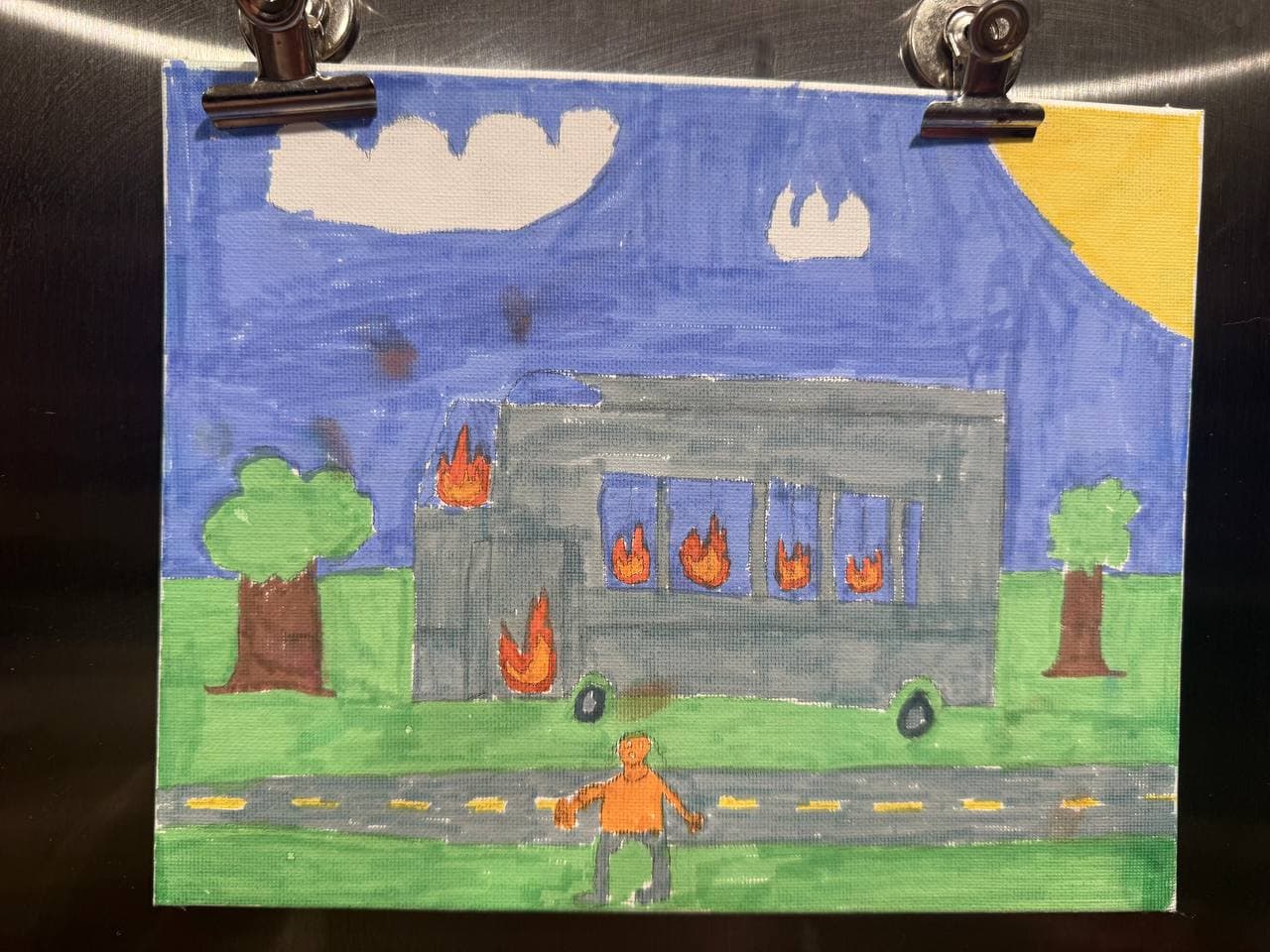
Freedom Riders — Anniston, 1961
Woodcut bus print. 25% of every sale → West Anniston Foundation. $40.
Color may vary slightly due to print vendor.
View details →
The Freedom Riders National Monument includes two sites: the former Greyhound bus depot at 1031 Gurnee Ave. and the bus burning site on Highway 202, both in Anniston, AL. The NPS visitor contact office is at 1302 Noble St., Suite 3G, Anniston, AL 36201, (205) 568-3963. Full visiting information at the National Park Service page. The Anniston Civil Rights Trail map is available at annistonal.gov/civil-rights-trail.




Responses