
 Bridal ShowThe Aisle Bridal Show · Sunday, Feb 21 · Silver Run Chapel, Munford · theaislebridalshows.comRegister free →
From 2021 to 2025, I served as Associate Pastor and Music Director at Anniston First United Methodist Church. My office was on the same campus where Interfaith Ministries operates, and I watched the work up close for four years. Shared volunteers, shared resources, shared parking lot.
In 1975, representatives from Protestant churches, Catholic parishes, and Temple Beth El, Anniston's Jewish congregation, sat down and had a conversation that should've happened sooner. The question was simple: why are we all trying to do the same thing separately?
Every church had a benevolence fund. Every fund was small. And people in crisis were bouncing from congregation to congregation, hoping someone had money left in the budget that month. The fix was obvious: pool the resources, centralize the process, and let one organization do what dozens of churches couldn't manage alone.
By 1978, they'd incorporated as a 501(c)(3). Nearly fifty years later, the model still works. The congregations keep giving, the staff keeps showing up, and the mission hasn't drifted.
Why are we all trying to do the same thing separately?
Interfaith Ministries sits on the campus of First United Methodist Church. First UMC sold The Bridge to United Way last year, and it's now Martha's Hope, a homeless shelter and transitional housing center.
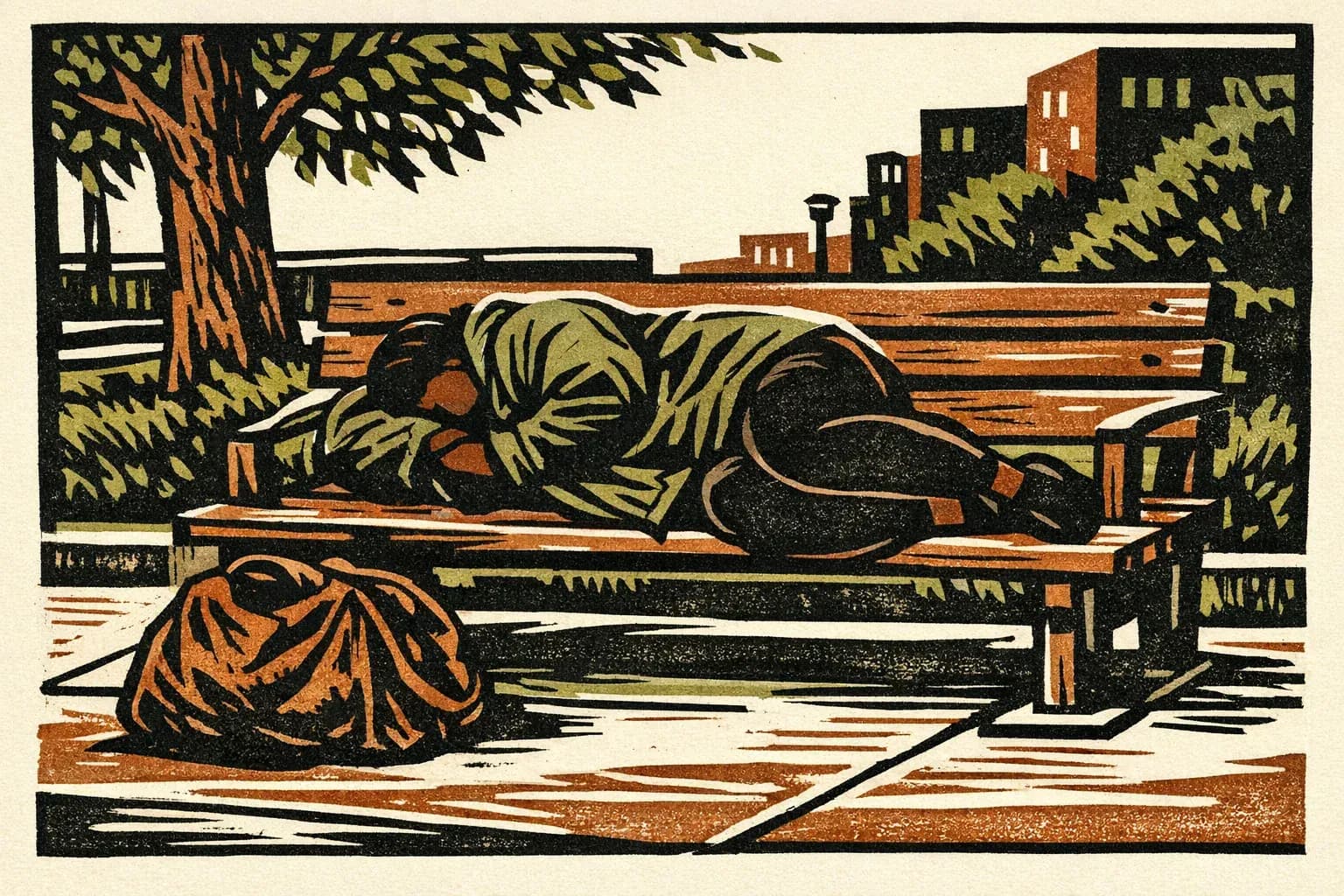
People used to sleep in the alleyway and under the bridge between the basketball gym and the office building. I'd often have to step over a person asleep on the concrete with their things in bags, just to get in the door.
We'd also often hear people shouting in fights, police coming up, or people with mental health problems shouting aloud in the parking lot. Sometimes people asked church members for money.
Some mornings I'd come in and there'd be folks in the parking lot with coffee, just waiting for Interfaith's doors to open. Through the blinds in my office window, I'd usually hear them before I'd see them: walking, talking, fighting, sleeping, smoking, and just hanging out and laughing with friends.
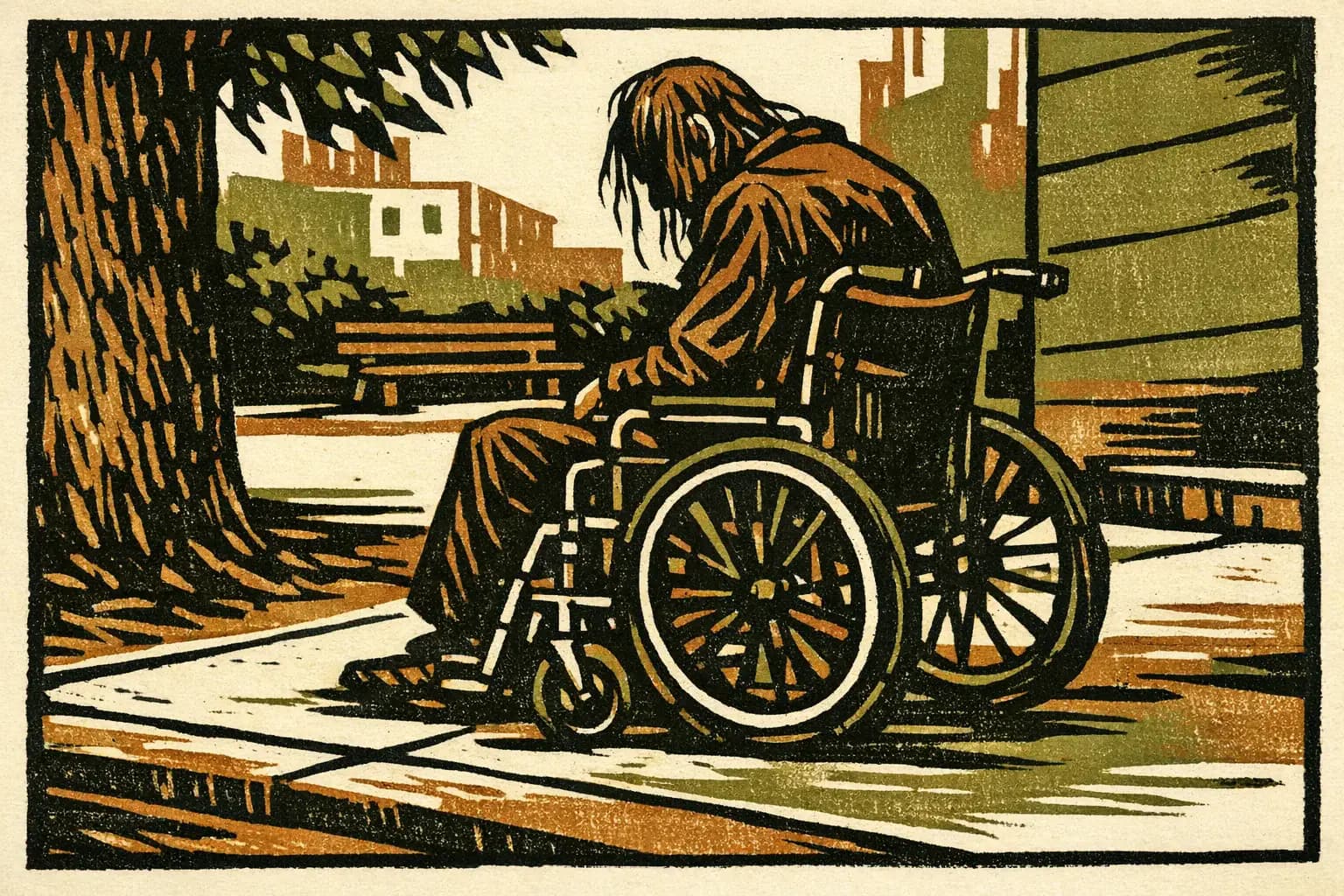
One man was old with long hair. His name was Randy. Gentle, soft-spoken. He had been a hair stylist, in a wheelchair, usually parked outside the gym. I would stop and talk to him, and occasionally bump into him in quiet spots on the sidewalk around downtown on 14th Street or directly on Noble Street. We had several conversations, and then I stopped seeing him. A few months later I learned he had died. My friend Kyle, who was over the warming station, texted me a screenshot of the police report, saying "I thought you would want to know, because I knew you developed a relationship with him."
I thought you would want to know, because I knew you developed a relationship with him.
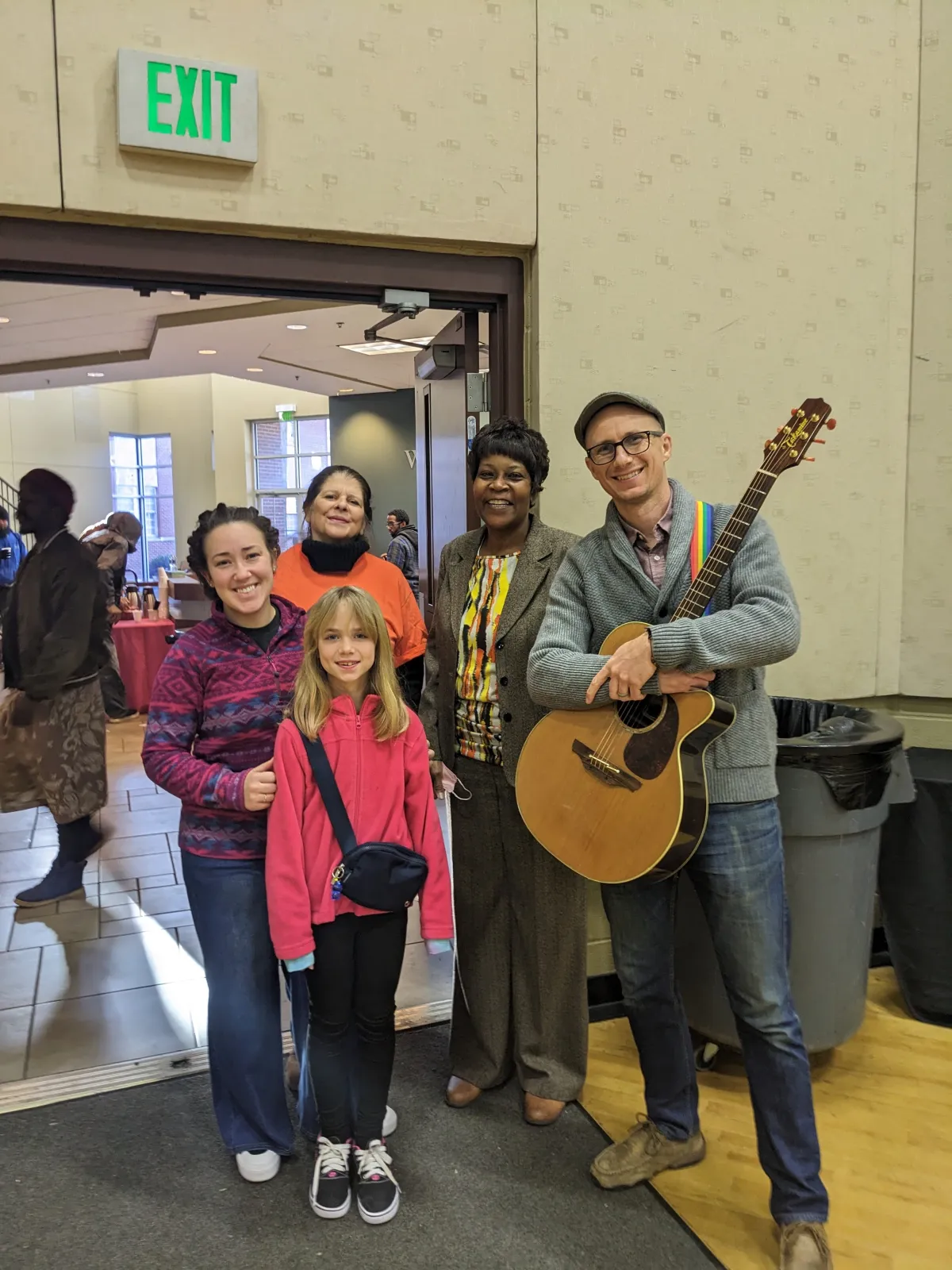
On Sunday mornings before the main service, I helped lead Shepherd's Table, a weekly breakfast started by former pastor Dale Clem to serve mostly homeless neighbors and occasionally low-income families with children. I did it for all four years I was there, in the gym. I'd often bring my own children for the breakfast. We'd sit and eat around round tables. Sausage, pancakes, muffins, cereal, eggs. Sometimes we'd sit in silence. Sometimes we'd strike up conversation. "Would you please pass the salt?" Volunteer groups from the congregation and from organizations like the Arc of Calhoun and Cleburne Counties served the meal alongside us. One man wrote poetry in pencil on notebook paper and would give me copies of it. Others would write down prayers and give them to me. One woman who lived in the tiny houses, Kaffie, would always say something to greet me each morning, and talked to our children. "Blessed rising." She'd clap along as I played my guitar and sang.
Most people in Anniston know Interfaith Ministries as the place you call when you're about to get evicted. That's not wrong, but it's incomplete. The organization runs eight distinct programs, and each one fills a different gap.
Emergency Assistance is the core. Rent payments, utility bills, prescriptions, transportation costs. The kind of urgent needs where the difference between help arriving Tuesday or Friday is the difference between keeping your apartment and losing it. I've seen families come through that door needing $800 by the end of the week. That's not a situation where spiritual counsel helps. It's a situation where money helps.
That's not a situation where spiritual counsel helps. It's a situation where money helps.
The organization also runs an Adult Dental Program (triage at the agency on Wednesday mornings, appointments to local dental providers as needed — call the office for current clinic location), Meals on Wheels across Anniston, Oxford, and Weaver, The Open Door for homeless individuals needing showers and supplies, SenioRx for prescription assistance, the Christmas Clearing House for children in low-income families, a Durable Medical Equipment and Recycling program, and Integrative Health Coaching.
The equipment program started because RMC discharge planners and St. Michael's kept sending people to Interfaith to buy medical equipment. Wheelchairs, hospital beds, power chairs. After one year, April LaFollette, Executive Director of Interfaith Ministries of Calhoun County, looked at what she'd spent. She and Nanette talked. "We just need to start accepting donations," Nanette said. So they put the word out.
Now people donate equipment they no longer need. Interfaith gives them a tax write-off and puts it back into the community. Beds, lifts, wheelchairs, power scooters, knee scooters, bandages, diabetic supplies. No paperwork to receive it. Any county. When equipment comes in needing repair, Grizzards Living Aid on Noble Street fixes it. Last week, Interfaith delivered three wheelchairs to RMC for uninsured patients being discharged. One was a new bilateral amputee. They also built a ramp at his house. It cost them nothing.
The Integrative Health Coaching program is harder to explain but maybe the most quietly remarkable thing they do. Linda White is a retired nurse practitioner, certified through Duke, who coaches uninsured patients for up to eighteen months. She connects them to a dietician, a Y membership, and a counselor named Mary O'Dell. One man came to St. Michael's with uncontrolled diabetes. Somewhere in the visit he heard he was only supposed to eat carbohydrates. That's not what the doctor said, but that's what he heard, and he went home and ate accordingly. Once Linda connected him to a dietician, he understood how his diabetes actually worked. He's off all his medication. Another client has lost a hundred pounds at the Y. When Linda sits down with someone who has five health problems, she doesn't start with the blood pressure or the diabetes. She asks what they want to work on first. One woman said: I can't sleep. So they worked on sleep. Once she started sleeping, her blood pressure came down. Her sugar came down. Then they could get to the rest.
"Just because there's someone that takes the time to listen to them," April said.
Another man who went by the name Taz. I remember meeting him on Quintard Avenue outside of Matas Pizza while I was still a pastor at Weaver. He was drunk every time I saw him. I had several conversations with him while working at the church. He'd often be sitting on the park bench in the courtyard garden area right outside our office entry. Taz disappeared one day and I've not seen him in years. I wrote this piece assuming he'd died. Then I sat across from April at a coffee shop and she told me he's living with a family member now. No longer homeless. No longer coming through their doors. That's the kind of news you don't expect.
A woman slept on that same bench for years. I talked with her more than once — she wanted a job, she wanted an apartment. She kept showing up anyway, sleeping overnight in the courtyard. I assume she's still there.
The coalition holds. Baptist and Catholic, Black and white, downtown and rural, Christian and Jewish. Plenty of things still divide Baptist from Catholic in Calhoun County. This isn't one of them.
Government programs have eligibility requirements and processing times. Nonprofits have funding cycles. Churches have limited budgets.
This is the work that doesn't make the news. There's no ribbon-cutting when a family avoids eviction. No press release when someone's power stays on. No headline when a homebound widow gets a hot meal instead of eating crackers alone.
These people were often treated as throwaway people. These were the same people Interfaith served, but Interfaith couldn't meet all their needs. Now there's Martha's Hope.
Interfaith Ministries carries a four-star rating on Charity Navigator (95%), which puts it in rare company for an organization of its size. The money goes where it's supposed to go. The programs do what they say they do. And every Monday through Thursday, the doors open at 8 a.m. on Gurnee Avenue because the need doesn't take a day off.
During my first bipolar depression I was afraid I'd become one of these people with mental health disorders.
Interfaith Ministries of Calhoun County is located at 1431 Gurnee Avenue, Suite A, Anniston, AL 36201. Office hours are Monday through Thursday, 8:00 a.m. to 4:00 p.m. For more information or to volunteer, call (256) 237-1472, visit interfaithcalhoun.org, or follow them on Facebook.

Responses