
There is an old assumption about who counts as a Southern legend. Country singers. Faith healers. The man who could tell a story on a porch until the light went out of the sky. Folks who were born here, stayed here, and carried something old forward.
Aseel Mohammad Mustafa is none of that, and that is exactly the point.
She came from Jordan. She graduated from Anniston High School. She earned a bachelor's degree in computer science at Jacksonville State University, and along the way she stood up at a research symposium and gave a talk about teaching a machine to recognize what a person is feeling. Now she teaches too, in the same city schools that once taught her, while she keeps studying. She is young, and she is already a piece of what Northeast Alabama is becoming.
The legend used to be the man on the porch. Now it is also the woman in Ayers Hall, teaching a computer to read a face.
Anniston First

Before the degree and the research, there was Anniston High School, class of 2019.
The record is the kind you notice. She finished near the top of the Calhoun County Scholars' Bowl. National Honor Society. The Bear Book Club. Individual awards in Pre-AP History and Psychology, which is worth pausing on, because a girl who wins prizes in both history and psychology and then goes into computer science is telling you something about how she thinks. She wanted to understand systems and she wanted to understand people, and she apparently never accepted that those were two different projects.
She left Anniston High with the JSU Gamecock Prestige and Gamecock Excellence scholarships in hand. She had decided where she was going before she got there.
Ayers Hall
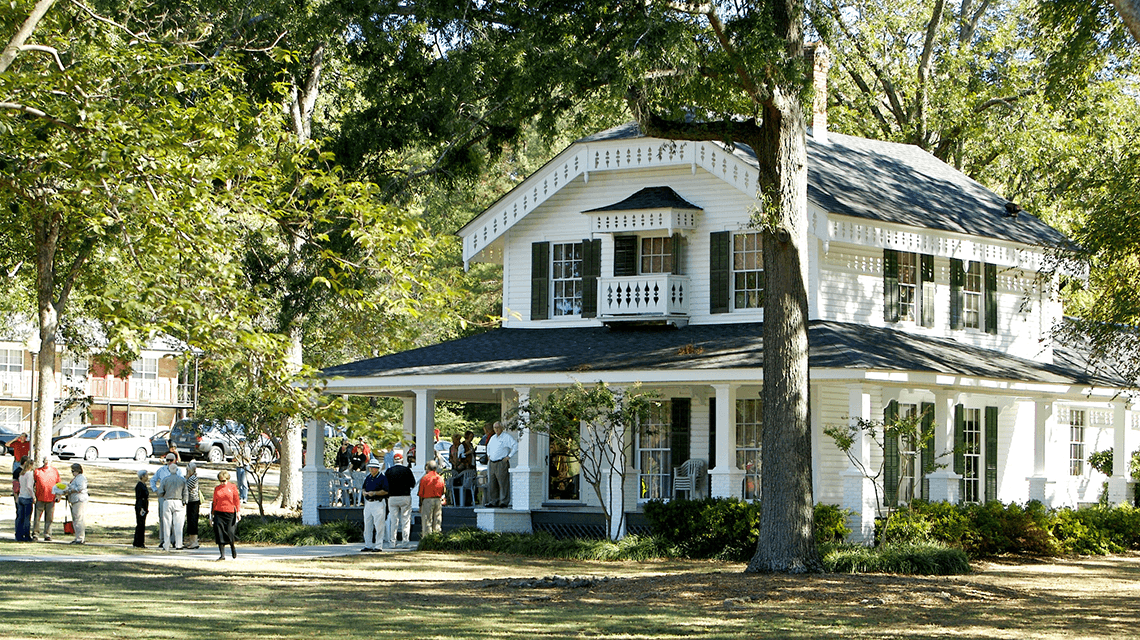
At Jacksonville State she enrolled in the Department of Mathematical, Computing, and Information Sciences, in Ayers Hall, working toward a Bachelor of Science in computer science.
The transcript is not a mystery. Dean's List in the spring of 2023. President's List in the spring of 2024. She finished her degree with the Fall 2024 graduating class. Those are the plain facts of a student who did the work, semester after semester, in a language, code, that is not the first language she grew up speaking.
That last part is easy to skip past. It should not be. There is a particular kind of discipline in earning honors in a technical field in your second language, in a country you moved to, in a town that is not always sure what to do with newcomers. Nobody hands that out. You build it.
Emotion in the Machine
On February 15, 2024, at the JSU Student Symposium, Mustafa gave an oral presentation titled "Emotion in Human-Computer Interaction." Her research mentor was Dr. Monica Trifas, a computer science professor at JSU whose own work runs through image processing, artificial intelligence, and the security of medical images and patient records.
Here is the plain version of what that research is about.
Computers are very good at doing what you tell them and very bad at noticing how you feel while you tell them. Affective computing, the field Mustafa was working in, tries to close that gap. It asks whether a machine can pick up on a human being's emotional state, from a face or a voice or the way a hand moves, and respond to it. It is the difference between a screen that shows you a form and a screen that notices you are confused by the form.
That is not a toy problem. Think about where it matters most: a nurse at a workstation in a busy hospital, trying to read a chart and a patient at the same time. A system that can lower the noise, flag what matters, and keep private records private is not a luxury in a mid-sized regional health network. It is the difference between a tired clinician who catches the thing and a tired clinician who misses it.
Mustafa's undergraduate research does not by itself remake a hospital. It is honest to say that. But it points directly at the seam where computer science meets human care. And that seam is exactly where a place like Calhoun County, with an aging population and a regional medical center doing more with less, is going to need people who understand both sides of it.
Computers are very good at doing what you tell them and very bad at noticing how you feel while you tell them. She spent her degree working on the second half.
Full Circle
The corridor she chose to stay in.



The thing that makes her story land is where she went after the degree.
She did not leave. She stayed in Calhoun County, took what she had learned, and turned around to teach it. She is an educator in the same city schools she came up through, and she is still a student herself, still tied to JSU, still learning. The girl who won the awards is now the woman handing them out.
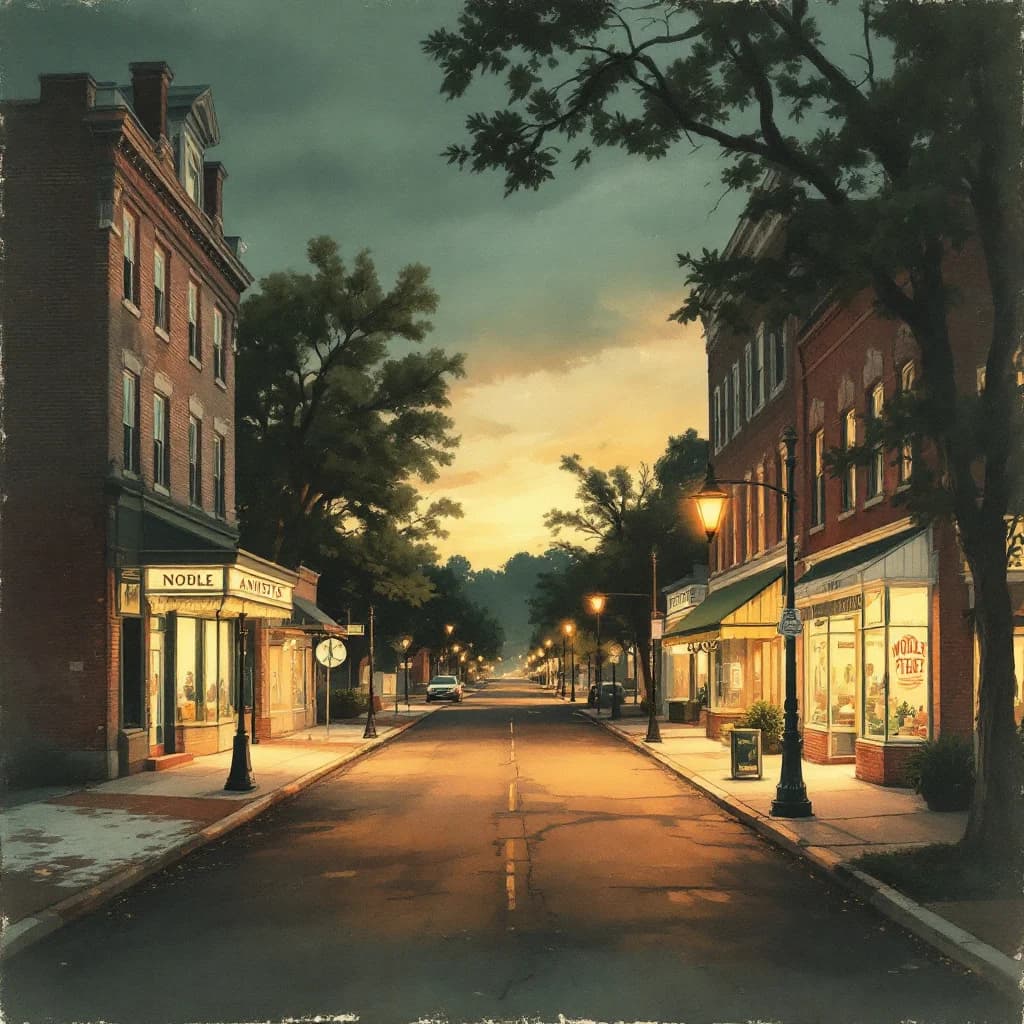
That is a pattern worth naming. Mustafa has always been a joiner, the kind of person who does not sit in the back of the room. Honor society, book club, Scholars' Bowl, the research symposium. Every stage of her life she has planted herself inside an organization and made herself useful to it. Teaching is just the next room she has walked to the front of.
For a region that spends a lot of energy worrying about the young people who leave, there is something quietly important about a young person who came from the other side of the world, could have gone anywhere, and chose to stand in an Anniston classroom instead.
What a Southern Legend Is Now
There is a story Northeast Alabama likes to tell about itself, and a truer one underneath it.
The story on top is that the talent leaves, that the bright ones grow up here and go to Atlanta or Birmingham or Nashville and do not come back. The truer story is that talent also arrives, from Jordan and the Philippines and Zimbabwe, and it arrives at places like JSU, and it puts down roots along the corridor between Jacksonville and Anniston, in classrooms and coffee shops and research labs.
Mustafa is part of that truer story. She is not a legend because she is exotic. She is a legend because she did an ordinary, difficult thing. She grew up in two places at once, she got the degree, she pushed the local edge of a hard field forward. And the region is better for her having done it here instead of somewhere else.
The porch and the storyteller are still real. So is the woman in Ayers Hall, teaching a machine to read a face. Both of them are the South. It is past time the record said so.
Aseel Mustafa is part of the story Southern Legends keeps telling: the people who arrive, and the people who come back, and what they build once they're here. Her city is Anniston; her campus is Jacksonville; one of her corridor's gathering places is Called Coffee.
This profile is a working draft. Facts drawn from public records will be confirmed with Ms. Mustafa, and her own words added, before publication.




Responses