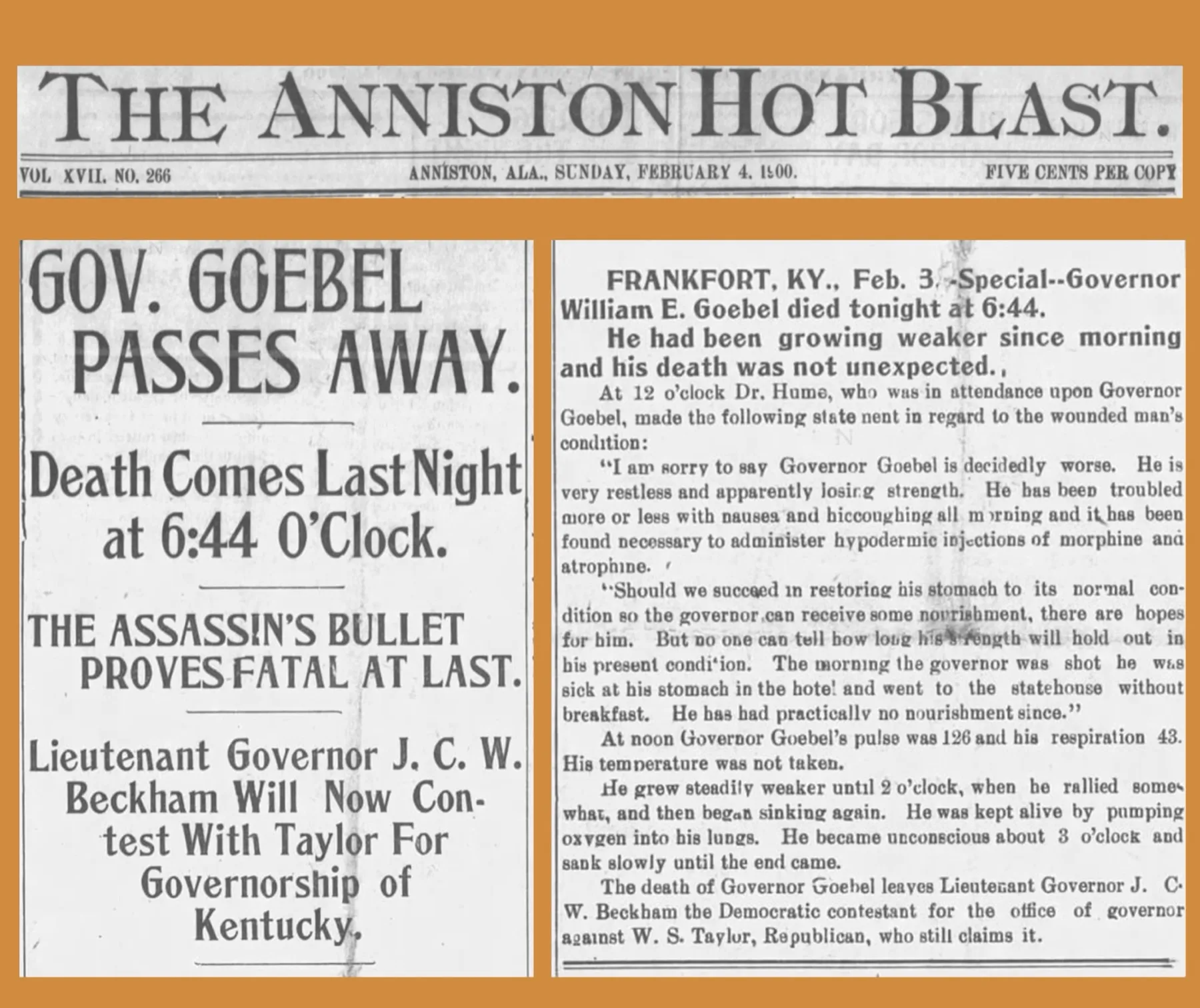
The front page from 1900 shows a city that had been incorporated for only two decades. The nameplate read The Anniston Hot Blast. The headlines were set in type someone assembled letter by letter. The paper made it to people's doors the same day the news happened.
That's not remarkable now. It was then.

A Small City and Its Big Paper
The Anniston Star was founded in 1883 as the Anniston Evening Star. The city was young. The iron industry was young. The whole enterprise of Anniston was still being invented.
What followed was a century of ownership that stayed in one family. The Ayers family, through their Consolidated Publishing Company, held onto the Star across wars and economic crashes and the civil-rights decades. That continuity is rarer than it sounds. Most papers of the Star's size eventually sold to a chain. The Anniston Star did not.
Harry M. Ayers built the paper's identity in the early twentieth century. He was a New Deal Democrat with connections that outran the reach of a small Alabama city. His son, H. Brandt Ayers, known as Brandy, took over management in 1968 and brought the paper back to its progressive roots. Brandy Ayers co-founded the L.Q.C. Lamar Society, co-edited You Can't Eat Magnolias, and became one of the more widely read editors in the South. His paper covered the region without flinching from what the region was doing wrong.
The Anniston Star was spoken of the way you'd speak of a paper ten times its size.
A small Alabama paper where the editor was read nationally. The market didn't explain it. The conviction did.
The Thing They Gave Away
In December 2002, Brandy Ayers did something that doesn't happen often in the newspaper business, or in any business. He created a nonprofit, the Ayers Family Institute for Community Journalism, and placed the family's ownership stake in Consolidated Publishing into that trust.
He gave the paper away.
The plan was straightforward in concept and difficult in practice. The institute would hold the stock. The company's earnings would fund the journalism. The paper would be legally insulated from sale to a chain. What the family had built over a century would belong to the community it had served, rather than to whatever media conglomerate made the highest offer.
The family gave the paper away to keep it honest.
That decision is worth sitting with. The economics of local journalism in 2002 were already pressuring family-owned papers toward exit. The simple move, the obvious move, was to sell. Instead, the Ayers family structured things so that no future Ayers could sell. They built a cage around the thing they loved and locked themselves out of the door.
In 2006, in partnership with the University of Alabama and funded by the Knight Foundation, the institute launched a master's program in community journalism. The classroom was the Star's newsroom. Graduate students came to Anniston to learn the work by doing it. A paper in a small Alabama city became a place people traveled to train.
That combination, a family that arranged the terms of their own dispossession and a paper that invited outsiders in to learn, says something about what journalism is supposed to be. Not a property. Not a product. Something closer to a public trust. The Star was practicing that definition before it was fashionable to say it.
What Fragility Looks Like
The paper is smaller now. That is true of every local daily in America.
Print has thinned. The advertising model that funded generations of ambitious reporting has collapsed, not just in Alabama, not just at the Star. The economics are genuinely hard. The Star is not immune to what has happened to local news everywhere. Saying that is not defeatism. It is honesty about a real situation.
What the 2002 trust means in that context is also real. The paper cannot be acquired by a chain. It cannot be stripped for parts and shuttered. Whatever future it has, it will have as itself. That is not nothing. In a landscape where hundreds of local papers have been purchased and hollowed out, the Star's continued existence as an independent institution is a fact worth stating plainly.
The paper cannot be sold. Whatever future it has, it will have as itself.
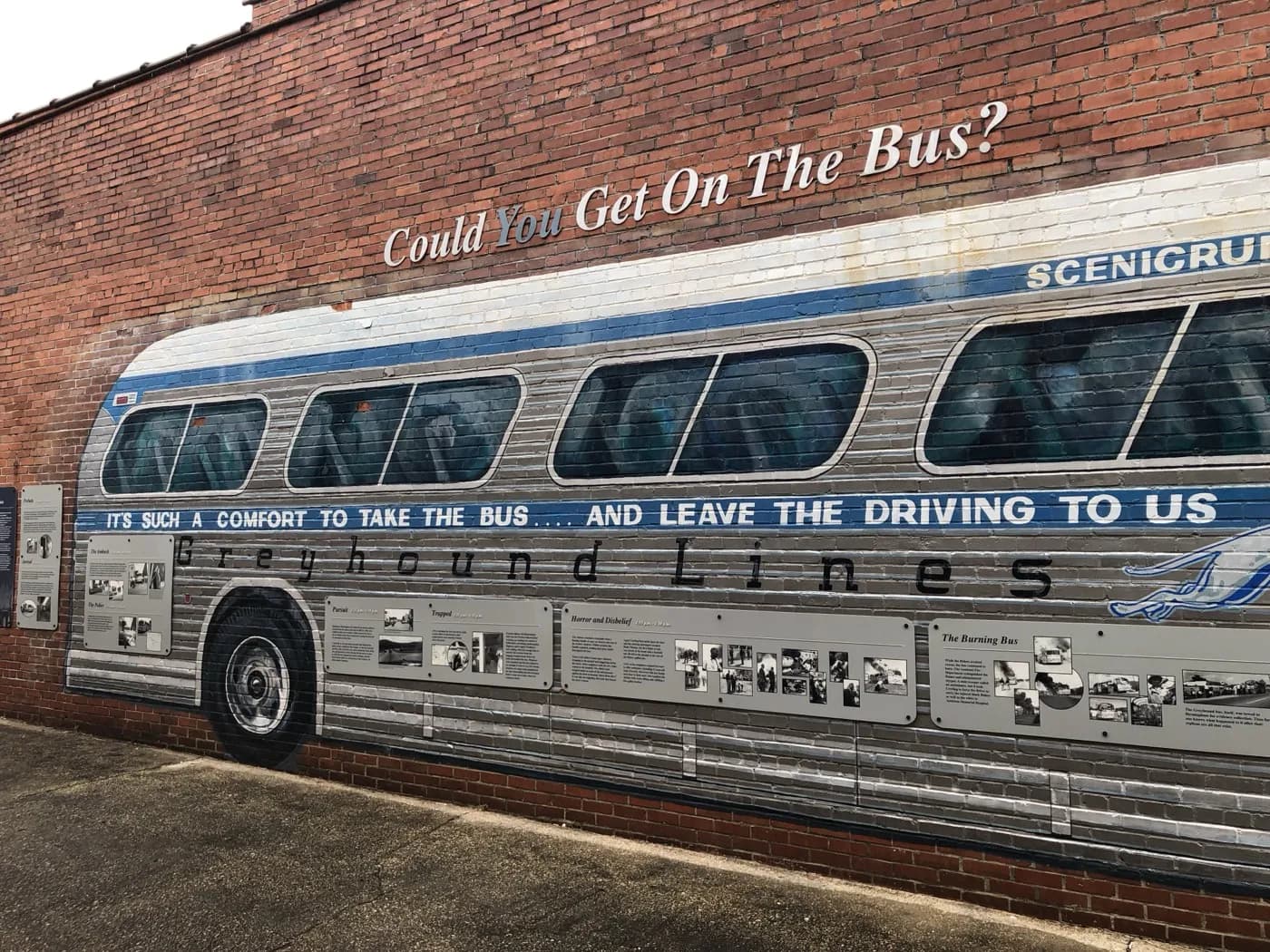
Related: Freedom Riders National Monument, another institution in this county that chose to hold its memory against the pressure to forget.
The Paper on the Table
Growing up in Oxford and Jacksonville, I didn't think much about the Star. It was just the paper. It arrived. Someone read it. Life moved on.
It took leaving to understand what I'd been around.
I was a Marine Corps kid who moved. Then seminary in Illinois. Then years away from Alabama, working out what home meant when you'd grown out of the place that made you. When I came back, I came back looking. Southern Legends is that looking, put into sentences. The people who left and what they carried. The places that formed us before we knew we were being formed.
In 2024, the Anniston Star published an essay I wrote about my first mental health leave. It ran under my name in the paper I grew up with. I named the diagnosis. I named the medication. The hardest part of that piece was not writing it. It was understanding that writing it in the Star was different from writing it anywhere else. That paper has been on tables in Calhoun County for over a hundred years. The people who read it are not strangers. They are the people I grew up around, the people whose kids go to school with my kids, the people in the pews at Ecclesia on Sunday nights.
Putting something that hard into that paper was an act of trust in the community the paper represents.
My wife Heather is a florist. The Ayers family has been a floral patron over the years. The connection between our family and that paper is not transactional. It is the kind of thing that accumulates in a small city over time, without anyone planning it.
I write a faith column for the Star now. It started in July 2026. I am still figuring out what that means. What I know is that the paper is still here, still independent, still the place where this county's life gets written down.
A town needs somewhere to put its truth. The Star has been that place for over a hundred years.
The Ayers family spent a century building it. Then they arranged for it to outlast them. Both things are the same impulse. You build something true and you try to make sure it stays true after you're gone. Read more in the essays from Northeast Alabama.
That is a kind of faith.
The Anniston Star is the daily newspaper of Anniston, Alabama, owned through the Ayers Family Institute for Community Journalism. Matt Headley writes a faith column for the Star.





Responses