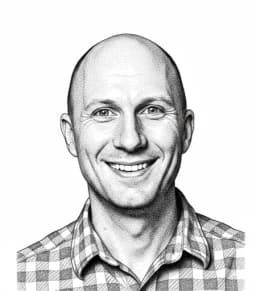
Jerod Snider from Weaver does not like telling the story.
"I really don't like talking about how we got into coffee," he told the Calhoun County Rotary Club in June 2025, then told the whole story anyway. It's a good story. That's why he keeps telling it.
It starts in 2011 with a mission trip to Peru. He and his wife Hannah were not planning to move there. Then she told him she was pregnant with their first daughter, and they decided it was time to go do the thing they had been talking about.
Huancayo
In 2016, they moved to Huancayo in the Junín region of Peru with an eight-month-old baby. They worked with a local church — food and clothing distributions, a water filter program, school clothes for kids, early steps toward planting a congregation. The plan was to turn the church operations over to local leadership and come home.
A girl named Elisa gave him a small bag of coffee beans.
Her father was Gregorio Torre. Gregorio and his wife Isabel ran a coffee farm called La Vida Dor about twelve hours from Huancayo, up in the hills. Jerod ground the beans as best he could. It was the best coffee he had ever tasted.
Gregorio had heard you could make more money if your coffee got to America. He asked Jerod if he could help. Jerod said yes — not knowing anything about how.
The Road to the Farm
He traveled twelve hours into the jungle to visit La Vida Dor, hauling water filters donated by a North Carolina nonprofit called Wine to Water. He went door-to-door to exporters in the region, eventually finding one willing to move the beans. He paid $6,000 and trusted that the coffee would arrive.
It did.
He learned, slowly, the difference between commodity coffee and specialty-grade: how altitude and processing affect flavor, how the bigger the harvest the slower the beans develop, how the work of a farmer at five thousand feet shows up in a cup on Quintard Avenue in Anniston.
"High quality coffee starts with the farmers," he told the Star in 2026. "It's a combination of the work of every person involved."
At that time, Gregorio was earning five soles per kilo for his coffee — about 70 cents a pound. By the time Called Coffee had been open three years, that number was 28 soles per kilo, nearly $8 a pound.
Gregorio's son Eddie, who once wanted nothing to do with the coffee business, now runs a shop in Huancayo using his father's beans.
The Truck
Hannah got pregnant again in 2018. Serious complications on the return — the kind, Jerod said later, that might not have been survivable in Peru. They came home.
He had beans. He needed a way to sell them.
He built a pair of handmade carts and found an espresso machine on Facebook Marketplace. He started with bags of roasted beans, then drinks. The Noble Street Festival in Anniston was an early stop. He got a coffee truck. The 2019 Festival of Lights in Oxford was the truck's first night — 300 customers, no experience, and they ran out of everything.
"We had never done it before," he said. "We had no idea what we were doing, and we just started making drinks. And we survived that night."
We had never done it before. We just started making drinks. And we survived that night.
The pandemic hit in March 2020 and wiped out the event calendar. He had already signed a lease on a building. He shifted: parked the truck around town, posted locations on social media, waited.
Quintard
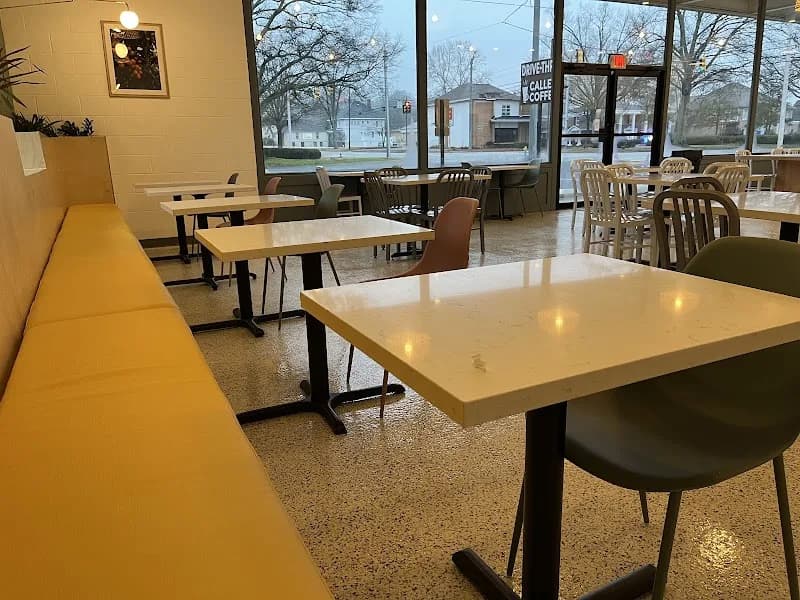
The building was the former Daylight Donuts on Quintard Avenue in Anniston.
Called Coffee opened January 31, 2023. The drive-thru now accounts for 70 percent of business. They sell out of food — breakfast empanadas, pastries from Artisanal Baked Goods — by ten or eleven in the morning. The seasonal menu runs on local honey from the Eastaboga Bee Company. Jerod's personal drink is the Cortato: four ounces, two of espresso, two of steamed milk.
The shop has become something he didn't fully anticipate: a community hub. Business meetings, Bible studies, friends who come three times a week because the room is that kind of room. When people experiencing homelessness needed somewhere to be, Called Coffee tried to hold both things — welcome everyone, keep a safe environment for regulars. Martha's Hope opening in Anniston changed that.
"We went from having daily problems to I think we've only had, honestly, one or two incidents since Martha's Hope," he said. "It's been a huge sigh of relief."
Called Coffee, the Podcast
There is also a podcast. It has nothing to do with coffee.
"The Called Coffee podcast has nothing to do with coffee," Jerod confirmed, then laughed.
It is conversations with people about what they are called to do. The name of the shop was always more than a shop name. Called Coffee — as in, what are you called to do? — extends to a Rotary talk, a podcast, a way of being at a counter when someone wants to tell you what is going on in their life.
"I've always been someone who people approach and tell me what is going on in their lives," he said. "I have realized that is part of my calling."
Called Coffee is at 1624 Quintard Avenue, Anniston. Explore Anniston.





Responses