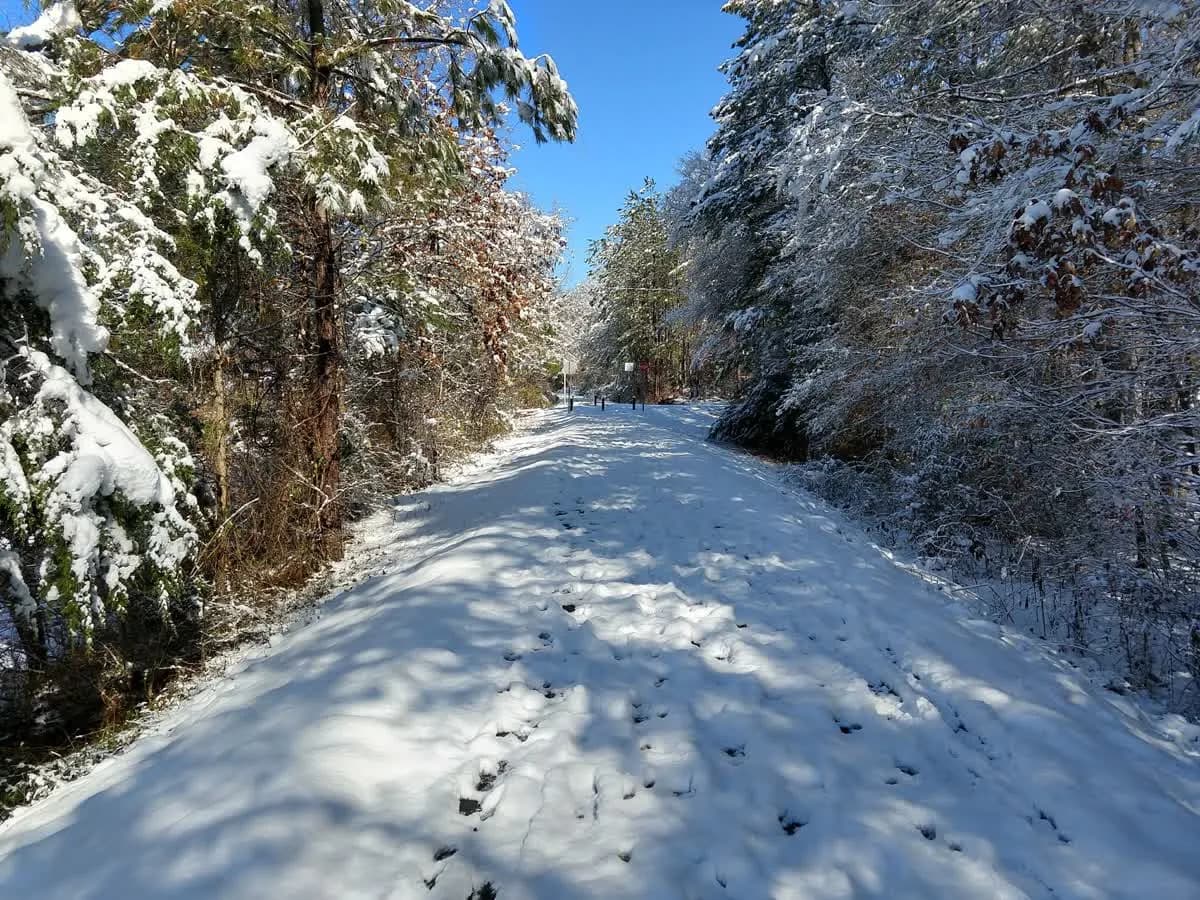
Most people who walk the Chief Ladiga Trail don't know who Ladiga was.
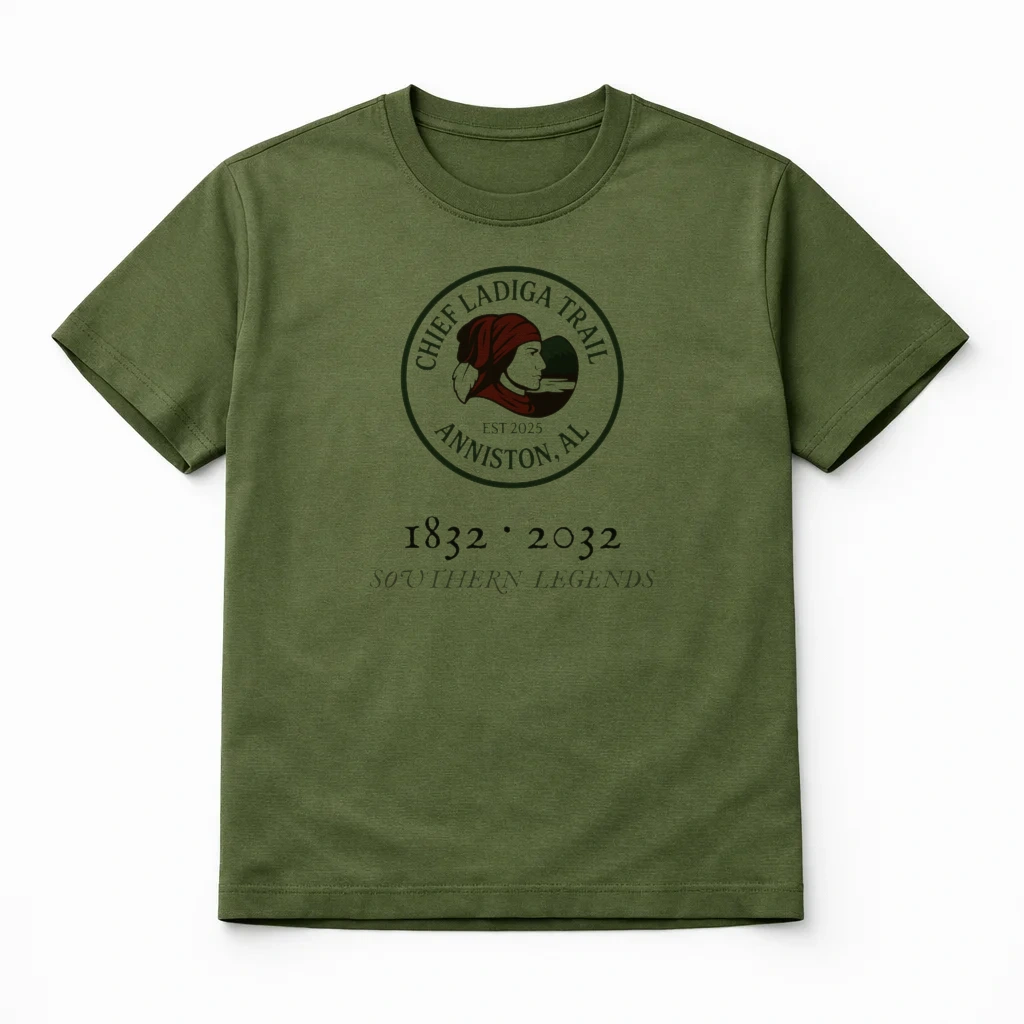
They know the name. They've seen the green-and-white signs at the trailheads. They may have a shirt from Walmart. What they don't know — what the signs don't say — is that the trail named after this man runs from the land he sold to the place where he died.
That geography is not a coincidence. It is the shape of what happened here.
The Man
Ladiga was a Muscogee chief — specifically, the principal chief of the Hitchiti, a Muscogee town on the Tallapoosa River in what is now northeast Alabama. He was one of the most prominent Creek leaders in Benton County (now Calhoun County) in the early nineteenth century.
By 1832, he was one of 90 Creek chiefs who signed the Treaty of Cusseta.
The treaty, signed March 24, 1832, ceded the last Creek homeland east of the Mississippi River to the United States — approximately 5.2 million acres, most of it in northeast Alabama. In exchange, each signing chief was to receive a square mile of land of his choosing, and each Creek family a half-square mile. These were individual allotments, not tribal land. The treaty was, in practice, the mechanism by which a communal people was converted into individual property holders in order to be stripped of their land more efficiently.
Ladiga signed. That choice — and historians have debated what it meant, under what conditions, with what understanding — is what made him notable in the American record. That is why his name is on the signs.
What He Received
Because he had signed the treaty, Ladiga was permitted to select land in Benton County for himself and his wife.
He did.
A year after the treaty — in 1833 — he sold part of those holdings for $2,000 to a group of land speculators headed by Charles White Peters.
That land became Jacksonville, Alabama.
Let that sit for a moment. The land Ladiga received in exchange for signing away his people's homeland became one of the county's principal towns. The price was $2,000. The buyers were speculators. The transaction was legal. It was also the kind of legal that history tends to revisit.
Where He Went
After the land sale, Ladiga and his wife left Benton County.
They moved to the Cherokee Nation — specifically, to the area near what is now Piedmont, Alabama. His cabin stood in that area until approximately 1900. He is buried in a grave near his home place, near Piedmont.
This is the detail that changes how you see the trail.
The Chief Ladiga Trail runs 33 miles from Anniston to Piedmont — through Calhoun County, through Jacksonville, through the railroad corridor built on land cleared of Creek people. It ends, more or less, near the area where Ladiga spent the last years of his life.
He sold the land at one end. He died near the other.
What the Signs Say
There is a historical marker at the Anniston trailhead.
It mentions Ladiga. It tells you the trail is named for him. It does not, to my knowledge, mention the Treaty of Cusseta. It does not mention the removal. It does not mention that he sold the land beneath your feet for $2,000 and died near where you're headed.
A name without the story of what the name cost is not a memory. It is a placeholder.
What Comes Next
The bicentennial of the Treaty of Cusseta is 2032 — six years away.
The Muscogee (Creek) Nation is seated in Okmulgee, Oklahoma. Their Historic and Cultural Preservation Department can be reached at (918) 732-7713. The Poarch Band of Creek Indians — descendants of Creeks who remained in Alabama after removal — are in Atmore, Escambia County, and hold the only officially recognized Creek lands remaining in the state.
Both nations have a relationship to this land. Neither has been formally consulted about what the bicentennial might mean here.
That conversation is the one this trail is still waiting to have.
Matt Headley is a writer and builder in Anniston, Alabama. He has walked the Chief Ladiga Trail for twenty years. This essay is part of The Trail and Its Reckoning, a book project about the trail, the 1832 treaty, and the 2032 bicentennial.





Responses