Wendell Berry has been writing from the same farm in Henry County, Kentucky for sixty years. Same farm. Same county. Same river. He has written poems about specific fence rows, essays about specific neighbors, novels about a fictional small town that is transparently Port Royal, Kentucky with the names changed. He is one of the most important writers in America and he has spent his career refusing to go anywhere important enough to prove it.
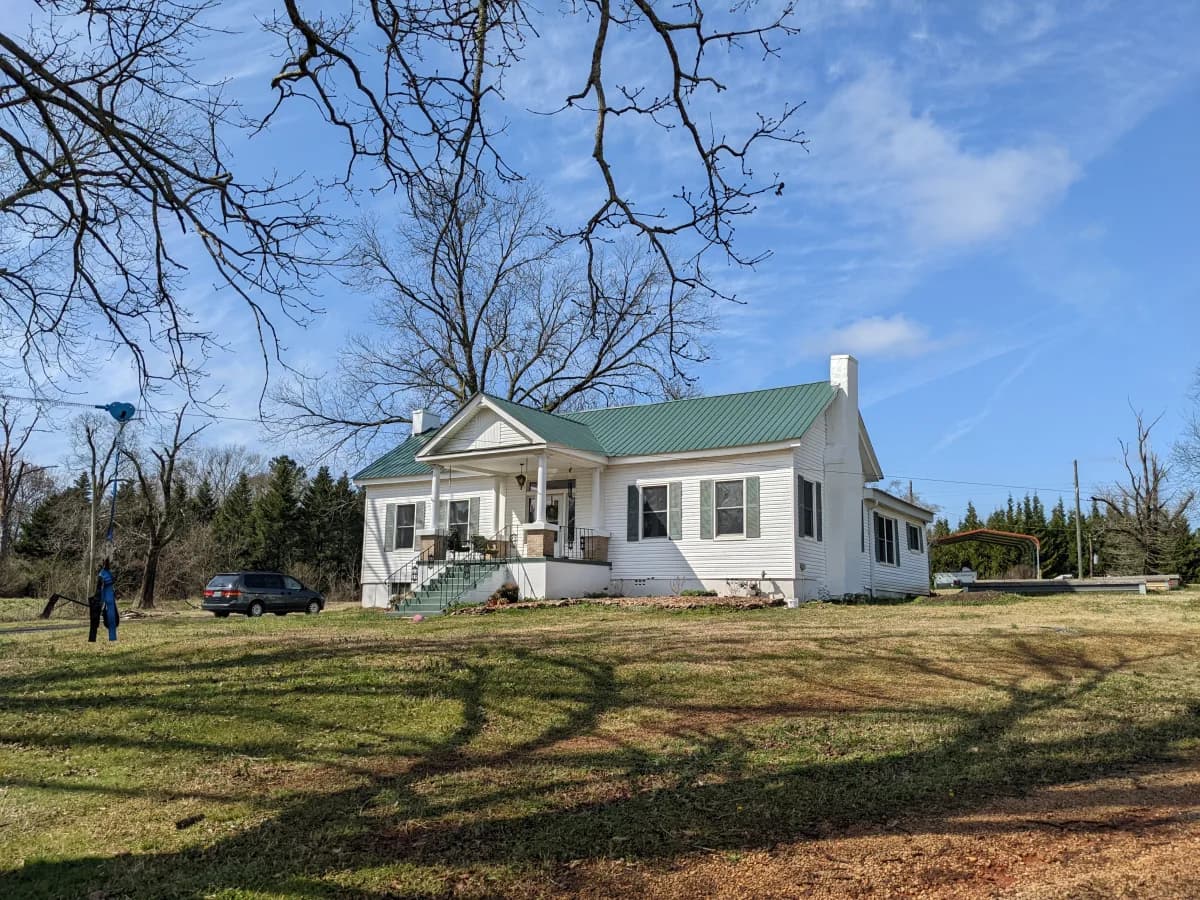
I farmed nine acres near the Chief Ladiga Trail for several years. Not sixty. Not a lifetime. But enough to understand what he is talking about when he says the land teaches you something no classroom will, which is that you are not in charge of anything, that the soil has its own schedule, that a frost in April does not care what you planted.
Berry's argument, and he has been making it since The Unsettling of America in 1977, is that the way a culture treats its land is the way it treats everything. The same logic that strips a hillside to mine what's underneath it strips a community to extract what's profitable and leaves the rest. The same impatience that won't let a field rest won't let a person rest either. He is not making a metaphor. He means it literally. The land and the people who work it are connected at a level that the modern economy finds inconvenient and so has spent a century trying to sever.
I grew up in Northeast Alabama. The ridge where I farmed had been farmed before, there was an 1832 farmhouse on the property. Someone made a life there before me and before the people who owned it before me. That continuity is not sentimental. It is the thing Berry keeps pointing at. The farm was not a blank canvas. It had a history I inherited whether I understood it or not.
He would say I did not stay long enough. He would probably be right.
The 2016 documentary Look & See follows Berry on his farm, interviews his neighbors, watches him walk his fields. It is a quiet film. Undefended. It does not try to make Berry into more than he is, a farmer who writes, or a writer who farms, and who has never been willing to say which one comes first. The film lets the land speak as much as the man, which is how Berry would want it.
What stays with me from that film is not the arguments, though the arguments are good. It is the image of a man in his eighties walking a fence line he has walked ten thousand times. Not inspecting it. Not improving it. Walking it because it is his and he knows it the way you know the hallways of your childhood house in the dark. That relationship with a specific piece of ground is what his whole body of work is trying to describe and preserve and mourn, because he has watched it disappear across his lifetime.
In Kentucky and in Alabama and across the rural South, the farms closed. The young people left. The small towns hollowed. The knowledge of how to keep a place, how to read the soil, how to tend the watershed, how to be a neighbor in the deep sense, that knowledge left with the people who carried it, and it did not come back.
Southern Gothic keeps photographing the ruins. Berry keeps asking what caused them.
His faith is the part that gets left out of most discussions of his work, probably because it makes people uncomfortable to say that a serious environmental thinker is also a serious Christian. But the two are not separable in his work. His sense of obligation to the land comes from his sense that the land is not his to destroy, that he is a steward of something given, that the word husbandry means what it means, care, not ownership. He writes about the Sabbath with the same attention he gives to soil amendment. Both are about rest. Both are about the limits that make a life livable.
I was a pastor for seven years. I preached about exactly this and did not always practice it. The farm was partly an attempt to practice it. Then the farm got hard and the ministry got hard and my body got hard and everything got too heavy at once, and I put most of it down.
Berry would say: that's the thing the culture does to you. It teaches you that rest is failure, that limits are weakness, that the only meaningful thing is what you produce. The land knows better. The body knows better. The problem is that by the time you understand what the land and the body are trying to tell you, you are usually already broken.
I understand it now. That is something, even if it is late.
Look & See is worth your time. So is Jayber Crow, which is his best novel, a small-town barber in Port William, Kentucky, watching the community he loves come apart across the twentieth century, staying anyway, loving it anyway, which is the only kind of love Berry trusts. So is This Day: Collected and New Sabbath Poems, which you can open to any page and find something that will stop you.
He is ninety-one years old. He is still on the farm.
The fence rows are still there.
Part of an ongoing series on Southern Gothic art, literature, and the writers who told the truth about this place before we were ready to hear it.



Responses