
 Bridal ShowThe Aisle Bridal Show · Sunday, Feb 21 · Silver Run Chapel, Munford · theaislebridalshows.comRegister free →
The vendors who matter show up at six-thirty.
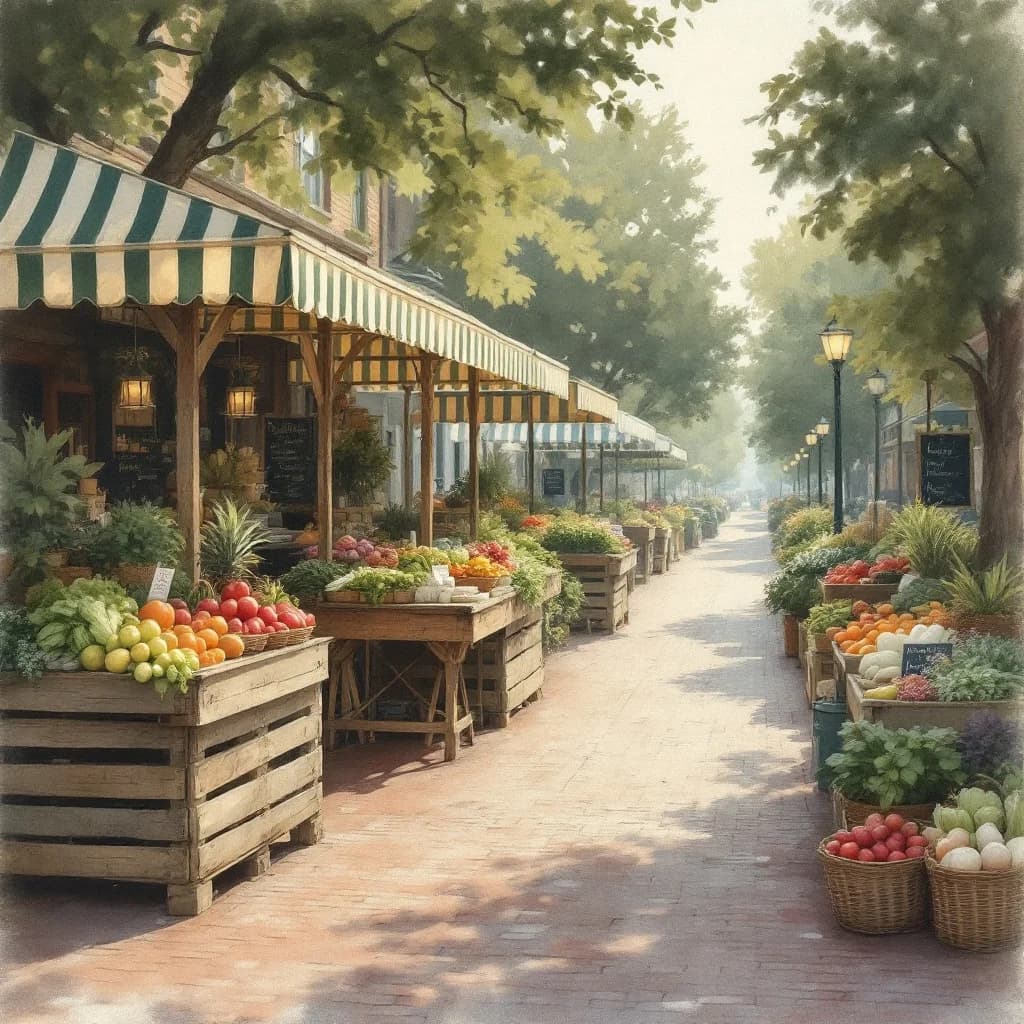
Not when the market opens at eight. Not when the customers start arriving. At six-thirty, when the light is still low and the air has that spring-morning smell and the canopy poles are going up in the parking lot and nobody has bought anything yet. They are there before the transaction. They are there because the place is theirs.
I ran the Anniston Downtown Farmers Market for a season. I know what it looks like from the inside.
There is a particular kind of vendor who sells at a farmers market that is not doing it to get rich. She already knows she will not get rich. She is there because she grew something, or made something, or put something together from her kitchen or her garage or the back corner of her land, and she wants to hand it directly to the person who will use it.
She wants to be there when they decide it's worth the price.
No algorithm. No review system. No middleman taking a cut to introduce them. Just a folding table and a handwritten sign and a conversation that wouldn't happen any other way.
I watched that transaction happen dozens of times in a season. A jar of local honey. A bunch of zinnias. A loaf of bread that somebody's grandmother's recipe rode inside of. The customer would stop. They would ask something — how is this made, where did you grow this, what do I do with it. And the vendor would tell them. And for thirty seconds they were two people in a conversation instead of a consumer and a provider.
That's what a market is actually for. That's what makes it worth the drive.
I left that market in July. The politics of it are not interesting enough to name here — every city-run market has them, and they mostly come down to the gap between what a market is supposed to do for a community and what a city can actually manage at a bureaucratic level.
What I took with me was the vendors.
I know a woman who drove forty miles each way to sell at a table on a Saturday morning. She made enough to cover gas on the slow weeks. On the good weeks she made enough to cover gas and groceries and feel something. I don't know what to call that feeling except the feeling of doing the thing yourself and having someone confirm it was worth doing.
I don't want her to lose that.
Gather Ground is what happens when you take the structure of a city market and remove the city politics.
Private, vetted, Noble Street area. Vendors keep more of what they make. No application fee. No bureaucratic approval process for the kind of jam you put in your jars. First run is this fall.
I have spent a year learning what the vendors need. They need a place. They need a consistent crowd. They need someone who treats them like the product, not the help.
I have been that person before. I am going to be that person again.
The market at six-thirty is a different thing than the market at ten.
At six-thirty it's just the people who showed up. The ones who loaded the truck in the dark. The ones who drove before the traffic. The ones who believe, without proof yet, that today is going to be worth it.
Those are the ones I'm building this for.
Gather Ground is coming to Noble Street this fall. Get on the vendor list.




Responses