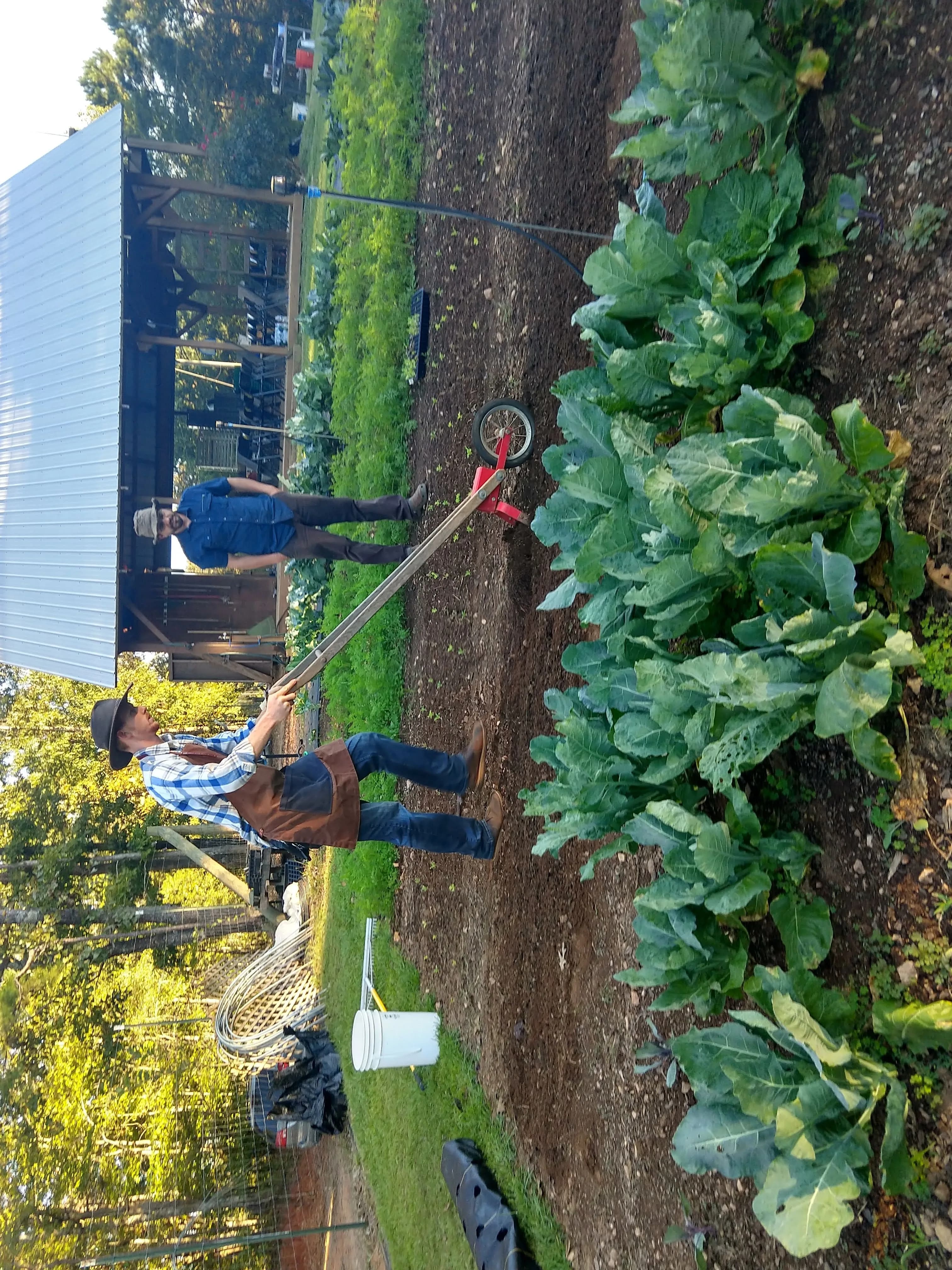
In 2018 I was still pastoring at Weaver, and I drove to a farming conference for a farm I did not yet own.
That is the honest shape of it. I was a pastor with a dream about land, sitting in a room full of people who already had their hands in it. The conference was called Redeeming the Dirt. The man who ran it was Noah Sanders.
I did not know him. I knew his book, Born-Again Dirt, the way you know a book that says the thing you have been circling for years but had not found the words for. Farming as vocation. The ground as something you are answerable for. Work as worship, not in a bumper-sticker way but in the old, load-bearing way where the two are not actually separable. I had read it as a pastor reads it, which is to say I read it looking for permission.
The room
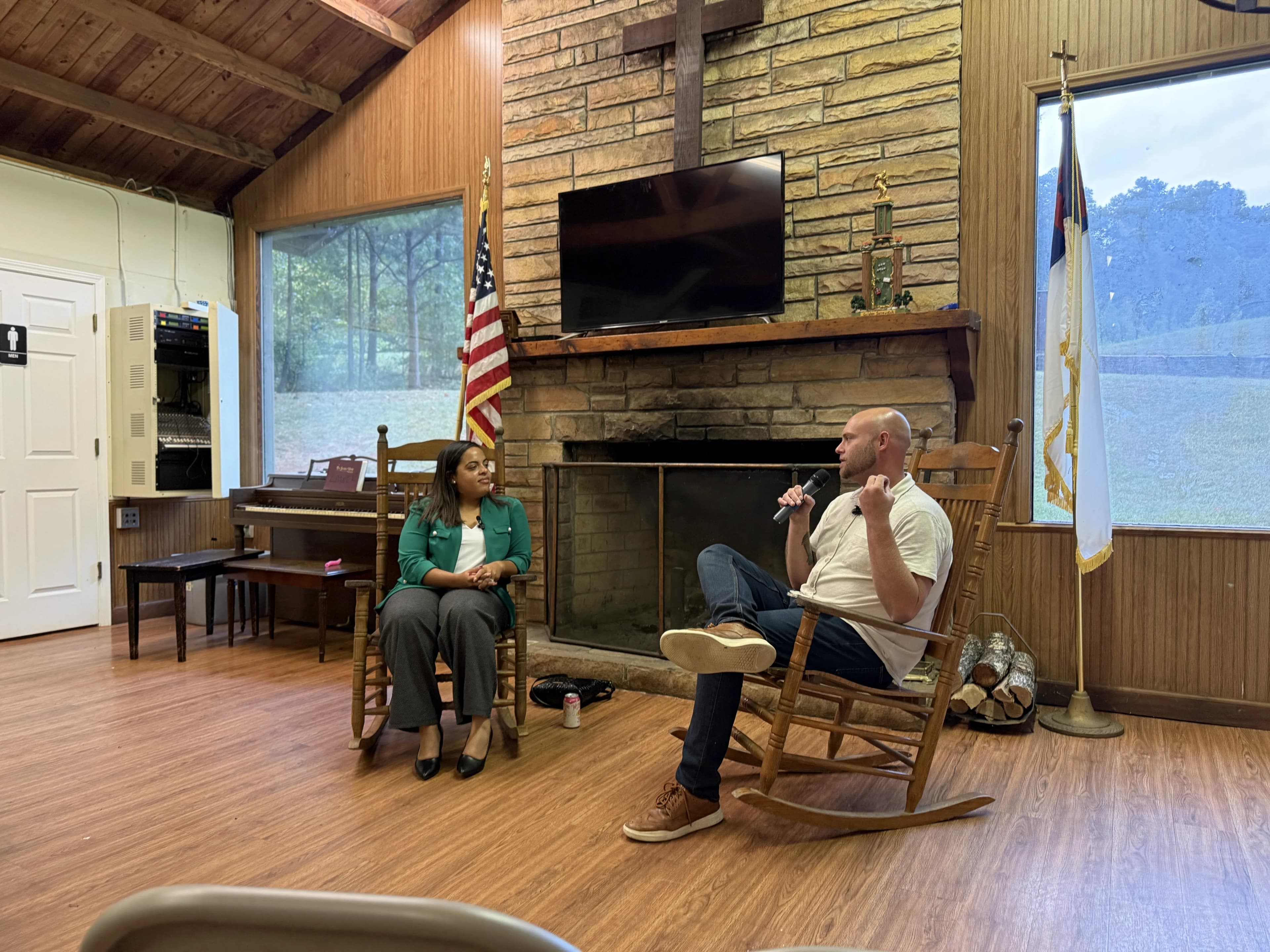
I remember the room more than any single line from the stage.
It was full of people who were not performing. Farmers do not perform well; the work does not leave enough left over for it. There were families. There were young men Noah had a particular way of talking to, about vision, about manhood, about building something that would outlast them. There was a plainness to all of it that I recognized from the best rooms in ministry, the ones where nobody is trying to sell you the next thing.
I left wanting the land. Not a metaphor for the land. The actual dirt.
That is the part I did not fully understand at the time. I thought I was there for information. I was there for a calling to get its hooks in.
Who he is
Noah Sanders farms in Goodwater, Alabama, Coosa County, central part of the state, a hillside operation that runs on the logic of a family economy rather than a market projection. Chickens, eggs, vegetables, honey, milk, fruit. He has been farming since he was sixteen. He plays the fiddle. He sketches. He does some blacksmithing. He is, in the specific and unfashionable sense, a whole man.
In 2012 he wrote Born-Again Dirt: Farming to the Glory of God, and Joel Salatin wrote the foreword, which is its own kind of endorsement, Salatin being the closest thing regenerative farming has to a prophet. The book made an argument that a lot of people had been feeling without saying: that a farm can be a place where faith and vocation and family are not three separate things you try to keep in balance, but one thing you are already doing when you do the work well.
He did not stop at the book. He became the U.S. representative for Foundations for Farming and started the first American training station on his own land in Goodwater, Rora Valley Farms, teaching the method to anyone who would come. Live for Jesus. Excel in agriculture. Make disciples. That is the whole thesis, in the order he means it.
What he names
I have read a lot of the regenerative farming voices since that conference, and I have come to think Noah does something none of the others quite do. He names the landlord.
There is a specific discomfort that runs through the whole movement when the subject of God comes up. It will talk all day about soil biology, carbon, mineral density, the moral failure of industrial agriculture. Then it gets quiet and secular right at the point where you would ask the actual question: whose creation is this, and who are you answerable to for how you treat it. Noah is not quiet there. That is the whole place he stands. He wrote a book of practical theology for farmers, honoring God's design in production, the idolatry of modern agriculture, marketing as ministry, making a living without making an idol of the making, and then he built his life on it out loud.
It costs him in both directions, which is how I know it is real. To the industrial food system, a farmer who treats soil as a trust he will answer for is sentimental and slow. To the secular regenerative crowd, a farmer who names Christ as the reason is an embarrassment they would rather not platform. Noah is untroubled by either. He thinks the health of the soil and the health of the soul are the same subject, and that the subject has an author.
That is the thing I could not get past. Wendell Berry gives you the century. Joel Salatin gives you the volume. Justin Rhodes gives you the homecoming. Noah Sanders gives you the reason. Strip the reason out and regenerative farming is just a better business model. Leave it in and it becomes what he insists it is, and what I wanted so badly to build my own version of: obedience. A covenant kept with a piece of ground, on behalf of the one who made it.
Why he belongs here
Southern Legends is the story of people who are rooted somewhere on purpose, and of what they carry.
Noah Sanders is rooted in a hillside in Coosa County by choice, in a country that spent a century teaching people to leave the land as fast as they could. He stayed. He dug in. He wrote it down. And then he taught it, which is the part most people skip, because staying is hard enough without also being generous about it.
I am writing this as someone whose own farm came after that conference and then was gone. The land is still there. What I built on it changed shape, a wedding expo, a marriage ministry, a studio, a different way of tending a community. But the title of Noah's conference never left me. Redeeming the dirt. Reclaiming land, faith, and vocation, and refusing to accept that they belong in separate rooms. My whole story is a version of that sentence, and I first heard it said out loud in a room in 2018, by a farmer from Goodwater who was not trying to impress anybody.
Some legends make noise. This one grows things and tells you how, in case you want to grow them too.
Noah Sanders farms in Goodwater, Alabama, and runs Redeeming the Dirt. His book, Born-Again Dirt, sits on the Southern Legends agrarian shelf alongside Wendell Berry, Joel Salatin, and Justin Rhodes. The conviction he named is being farmed an hour up the road by Cale and Kelly Crosby at Indigo Ridge Farms in White Plains. Read more about the farm we built and lost, or about the land itself.



Responses