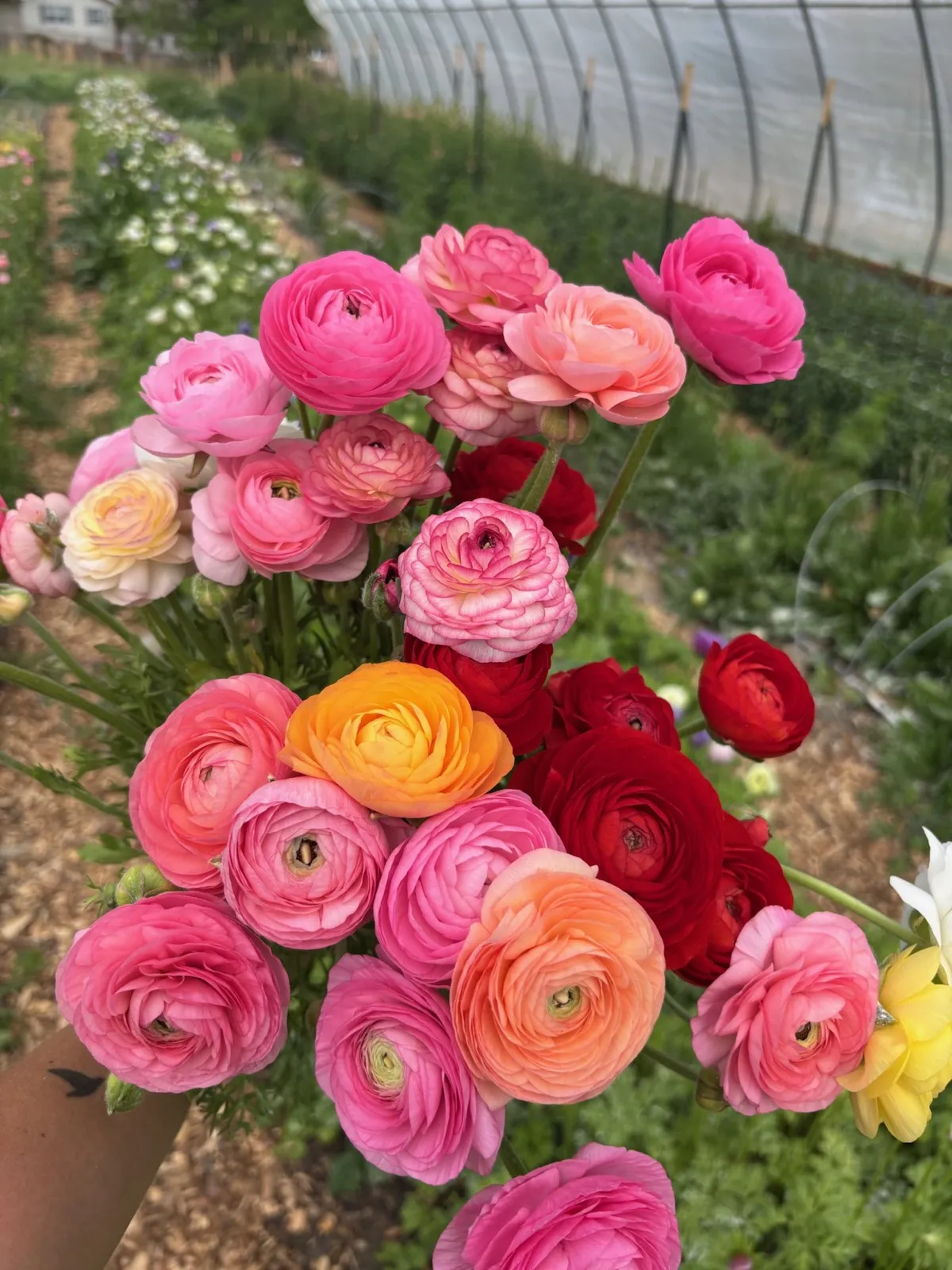
Justin Rhodes's grandfather bought the family land in 1932. The farm is in Fletcher, North Carolina, just south of Asheville, in the French Broad River drainage of the Blue Ridge.
Justin grew up on that land, left it, went to Honduras and Australia to study permaculture under serious practitioners, came back broke and sick with Lyme disease and without the farm working the way he needed it to, and then started filming himself farming the same land his grandfather had farmed.
He now has over a million subscribers on YouTube.
The story that his audience tells about him is a success story. The correct story is about going home.
What Makes It Different
There are a lot of homesteading YouTube channels. Many of them are good. Many of them feature people who bought land and are building something new on it from scratch, which is its own kind of story and not a bad one.
Rhodes's story is different. He did not buy the land. He inherited it, left it, and came back to it. The land predates him and will outlast him. His grandfather walked those same fields. There is a continuity to the operation that most homestead content does not have and most homestead content is not trying to have.
Wendell Berry's argument about place, that the knowledge accumulated in a specific piece of land over generations is irreplaceable, that the relationship between a family and its land is not something you can transfer or start from scratch, that argument is most legible in cases like Rhodes's. He returned to something, not arrived at something.
He studied permaculture seriously, not from YouTube videos but from Geoff Lawton's program at the Permaculture Research Institute of Australia, which is as rigorous as permaculture instruction gets. He came back to the family land with a skill set he had earned by leaving and then applied it to the ground his grandfather had worked.
The Failure Narrative
Rhodes was on food stamps before the homestead worked. He contracted Lyme disease during the period when he was trying to get the farm operational. There is a period in his documentary content where things are genuinely hard in the practical sense, not hard in the content-creator sense of "this was challenging and then we figured it out." Hard in the way that debt and illness and doubt about whether any of this is going to work is hard.
A homeless man allegedly prophesied his homesteading future to him during this period. Rhodes has told this story publicly. He is not embarrassed by it. The Appalachian evangelical tradition accommodates that kind of supernatural interruption in a way that the coastal creative class does not, and Rhodes is from the Appalachian evangelical tradition.
He got through the hard period. The farm works now. The YouTube channel works.
He documents his methodology at Abundant Permaculture (abundantpermaculture.com) and in book form in The Rooted Life (2022), which is his most sustained written account of what he has been building and why.
Where to Start
The YouTube channel (Abundant Permaculture) is the work. It is long-form, many videos run twenty to forty minutes, and it is honest about difficulty in a way that most farming content is not.
The Rooted Life (2022) is the book. It is accessible and practical and rooted in the specific geography of Western North Carolina.
Permaculture Chickens is his documentary series about chicken systems and is where he intersects most directly with Salatin's influence.
He is reachable through his website and is responsive to correspondence. He does not perform inaccessibility.
The Back Forty Note
I write a column called The Back Forty that is partly about people like Rhodes. About the gap between the internet version of agrarian life and the actual condition of farming in clay soil in the heat. About the difference between content and practice.
I do not write it to disparage what Rhodes does. I write it because I recognize the impulse and have felt it myself and think the impulse is correct and the internet version of it does something to the correct impulse that is worth examining.
His return to his grandfather's land is the most honest version of what the agrarian internet is trying to reach. That story does not need a camera to be true. It was true before the camera arrived.
See also: Joel Salatin Is What Happens When Wendell Berry Gets a Megaphone, on the practitioner version of the agrarian argument. And What Wendell Berry Knew, on what the philosophers of place are actually pointing at.
Responses