
 Bridal ShowThe Aisle Bridal Show · Sunday, Feb 21 · Silver Run Chapel, Munford · theaislebridalshows.comRegister free →
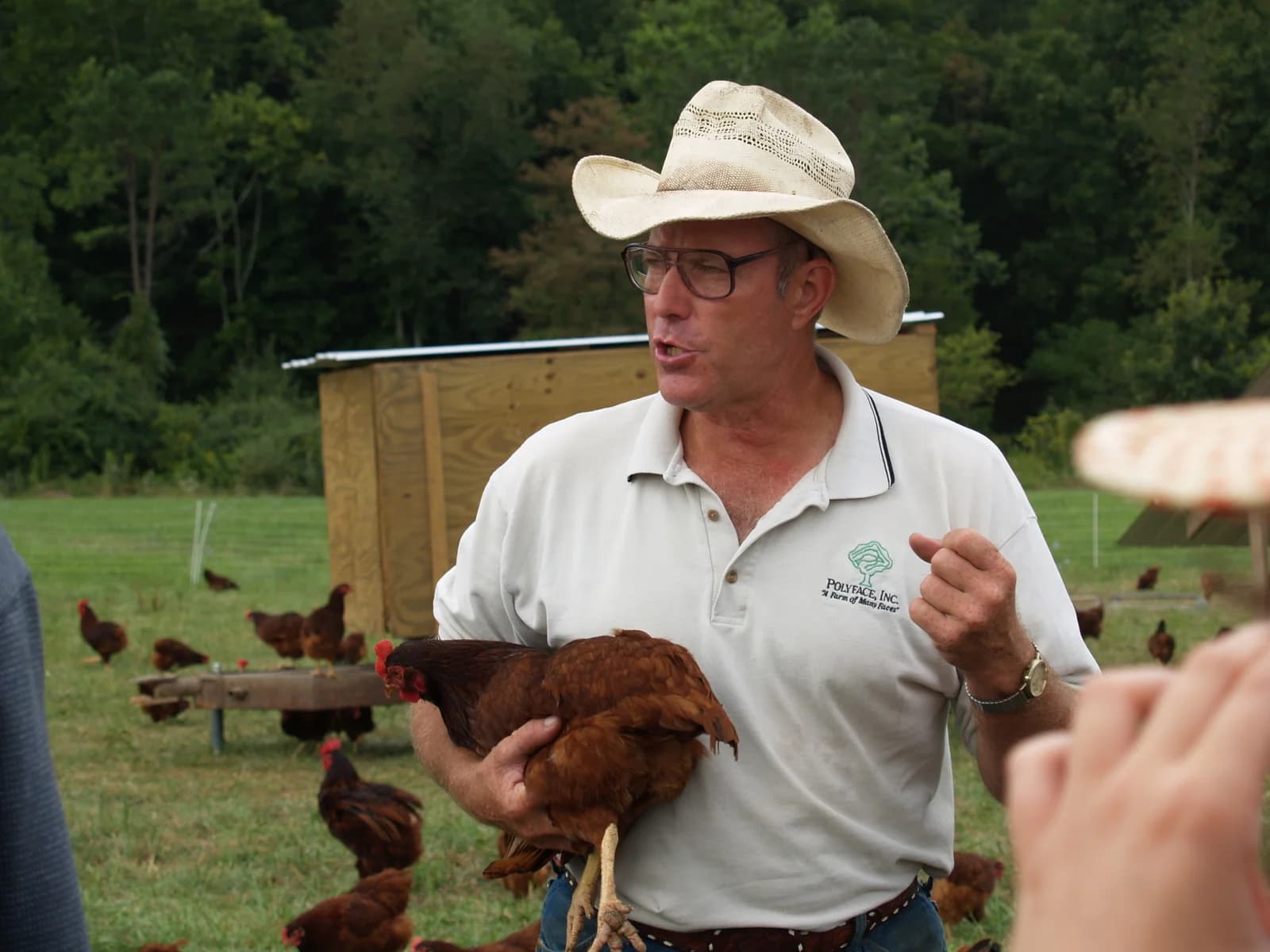
Joel Salatin farms Polyface Farm in Swoope, Virginia, in the Shenandoah Valley. His parents established the farm in 1961. He took it over from them. He has three generations of family on that land.
He calls himself a "Christian libertarian environmentalist capitalist lunatic farmer." He means all of those words.
He has written books with titles like You Can Farm and Folks, This Ain't Normal and The Sheer Ecstasy of Being a Lunatic Farmer. He was featured at length in Michael Pollan's The Omnivore's Dilemma (2006), which introduced him to the audience that was not already attending his farm tours. He gives hundreds of talks a year. He has said yes to essentially every interview request for the past twenty years.
He is the loudest person in the agrarian tradition. Wendell Berry is the quietest. These are two different responses to the same diagnosis, and both of them are worth understanding.
The Argument
Salatin's core argument is that the industrial food system is not feeding people well, is destroying the soil that future generations will need, and is doing both of these things because it is built on a set of philosophical assumptions about what land is for and what animals are for that are wrong at the root.
The land is not a machine. The farm is not a factory. A cow is not a unit of production.
This sounds simple. It is not simple to actually farm this way, and it is not simple to build an economic model around farming this way, and Salatin has spent his career demonstrating that both are possible.
Polyface Farm runs a complex system of interlocking enterprises: grass-fed beef, pastured poultry (the famous chicken "eggmobiles" that follow the cattle rotation), pork, rabbits, eggs, and turkeys, all managed in a pattern that uses each animal to prepare the ground for the next one. The chickens sanitize behind the cattle. The pigs turn the compost. Nothing is wasted because everything is in relationship.
He calls this "stacking enterprises." Salatin learned the ecological principle from observation of how natural systems work. Every element in a healthy ecosystem serves multiple functions. The industrial food model stripped all that complexity out in the name of efficiency and has been paying the environmental cost ever since.
The Theological Claim
Salatin's father was a missionary-agricultural entrepreneur in Venezuela before the family settled Polyface. The theological frame came from the family inheritance, not from a pivot to spirituality.
He is explicit about this: the farm is a stewardship exercise. The land is not his to do with as he pleases. He is a tenant, not an owner, in the deep sense. The specific obligations of regenerative agriculture, building soil organic matter, managing water retention, protecting the watershed, maintaining animal welfare, are not only economically advantageous in the long run. They are moral requirements.
Wendell Berry wrote a letter for the front of Salatin's book The Sheer Ecstasy of Being a Lunatic Farmer. That endorsement matters. Berry does not endorse often, and he does not endorse performers. He endorsed Salatin because Salatin is doing the thing, not describing the thing. The farm is the argument.
What Berry Is Quiet and Salatin Is Loud About
Berry writes with a scholar's restraint. He publishes essays in literary journals. He has declined most of what New York offered and has not complained about it.
Salatin runs farm tours, gives keynote speeches, sells beef boxes through the internet, operates an apprenticeship program, and has a website called thelunaticfarmer.com. He is building a scalable demonstration model of what he believes is possible and marketing it as loudly as he can.
The underlying conviction is the same. The delivery system is not.
Both of them are right in their register. The agrarian tradition needs its poets and it needs its practitioners. It needs Berry in Henry County, Kentucky, farming for sixty years and writing poems about fence rows. It also needs Salatin in Swoope, Virginia, building a system that other farmers can learn from and that journalists can visit and that books can be written about.
Where to Start
The Omnivore's Dilemma by Michael Pollan is the best introduction. The Polyface section is the heart of the book.
Then Folks, This Ain't Normal (2011), which is Salatin's most accessible argument. You Can Farm (1998) for the practical. The Sheer Ecstasy of Being a Lunatic Farmer (2010) if you want the full voice without any filtering.
The Polyface Farm website is thelunaticfarmer.com. Farm tours are available. He has a podcast. He is on social media. He is very easy to find.
The farm is in Augusta County, Virginia. It is a working farm. You can visit.
See also: Wendell Berry Has Been Saying This for Sixty Years, on the quieter version of the same argument. And What Wendell Berry Knew, on what nine acres in Alabama taught me about why both of them are right.


Responses