
 Bridal ShowThe Aisle Bridal Show · Sunday, Feb 21 · Silver Run Chapel, Munford · theaislebridalshows.comRegister free →
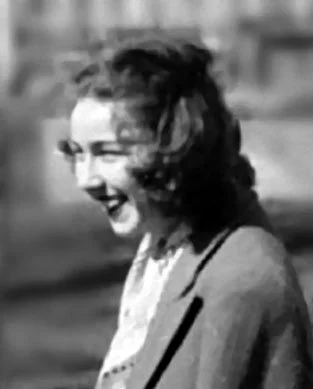
Flannery O'Connor raised over a hundred peafowl at Andalusia Farm in Milledgeville, Georgia. She raised them partly because they were beautiful. She raised them partly because she was on crutches from lupus and peafowl were one of the few animals she could observe without extensive physical effort. The birds came to her.
She wrote most of her best work in the same years she was learning how to walk with crutches. The grotesque arrived in her fiction the same decade her body started fighting her. These things are not coincidence.
She died at thirty-nine. She had published two novels and twenty-nine short stories. She had also written enough letters that the collected correspondence fills a 600-page volume and is one of the funniest books in American literature.
What She Was Doing
O'Connor was a Catholic writer working in the Protestant South, which put her in the position of being a foreign correspondent in her own home. She understood the Southern Gothic not as atmosphere but as theology. The strange, the grotesque, the sudden violence that ends her stories, these were not literary tricks. She believed grace arrives through disruption. She believed comfortable people do not change. She believed the moment you least want to be interrupted is usually the moment you most need to be.
"A Good Man Is Hard to Find" (1955) is the story everyone uses to explain her. A grandmother, a family road trip, a murderer called The Misfit. It ends badly. O'Connor wrote in her letters that the grandmother is the story's hero, that the final moment of grace she receives is real, and that readers who find the ending nihilistic are missing the point she was making as clearly as she knew how.
She was not subtle. She was precise.
The subtitle of her essay collection Mystery and Manners could be the subtitle of her entire project: "Occasional Prose." She gave talks at colleges and wrote the transcripts up into essays about what fiction is for, what the grotesque is for, why the South produces a particular kind of literature. Those essays are the clearest explanation of the Southern Gothic I have found.
Her key line: "The novelist with Christian concerns will find in modern life distortions which are repugnant to him, and his problem will be to make these appear as distortions to an audience which is used to seeing them as natural; and he may well be forced to take ever more violent means to get his vision across to this hostile audience. When you can assume that your audience holds the same beliefs you do, you can relax a little and use more normal ways of talking to it; when you have to assume that it does not, you have to make your vision apparent by shock, to the hard of hearing you shout, and for the almost-blind you draw large and startling figures."
She was shouting. She was drawing large figures. The peafowl strutting around Andalusia are those figures. Strange, beautiful, impossible to ignore, slightly ridiculous. You stop what you are doing when a peacock spreads its tail. That is the point.
The Farm
Andalusia was her mother Regina's family property. O'Connor did not choose it. When she was diagnosed with lupus in 1951, the same disease that had killed her father, she came home from the writer's colony in Connecticut to Milledgeville because that was where she could be cared for. The farm was medically imposed.
She spent the next thirteen years at Andalusia farming on crutches, writing in the mornings, corresponding in the afternoons, receiving visitors, raising peacocks, and producing the work that would define the Southern Gothic tradition.
The enforced attention of illness is what you hear in her prose. She could not run anywhere. She had to look at what was in front of her. Andalusia in the 1950s was a working farm with dairy cattle and a tenant farming operation, and O'Connor watched all of it from close range and wrote it down with the eye of someone who knows she has limited time to get it right.
Visitors came to Andalusia to meet her. She was famously, sharply, specifically funny in person. She did not perform the grotesque. She just looked directly at what she saw.
Where to Start
A Good Man Is Hard to Find (the story collection) is where to begin. "The Life You Save May Be Your Own," "Good Country People," "The Artificial Nigger", each one is a different angle on the same argument about grace and violence and what we do when we are forced to see ourselves clearly.
Mystery and Manners is the companion text. O'Connor explaining what she was doing and why. It is indispensable.
The Habit of Being, the collected letters, is where she becomes a person rather than an icon. She is dry, precise, patient with her correspondents, savage about bad writing, generous about good writing, and funny in a way that feels modern and not of its decade.
The Andalusia farm is now a museum in Milledgeville, Georgia. The main house, the barn, the peafowl pens, preserved. You can walk where she walked.
She is the patron saint of this column.
See also: What Sinners and Jason Isbell Know About Alabama That Alabama Won't Admit, on the Southern Gothic tradition in contemporary art. And Wendell Berry Has Been Saying This for Sixty Years, on the agrarian side of the same argument.


Responses