
 Bridal ShowThe Aisle Bridal Show · Sunday, Feb 21 · Silver Run Chapel, Munford · theaislebridalshows.comRegister free →
In 1996, Baylor University named Barbara Brown Taylor one of the twelve most effective preachers in the English-speaking world. She was the rector of Grace-Calvary Episcopal Church in Clarkesville, Georgia. She had a full congregation, a functioning ministry, a reputation that put her in demand across the country.
She left the parish in 1997.
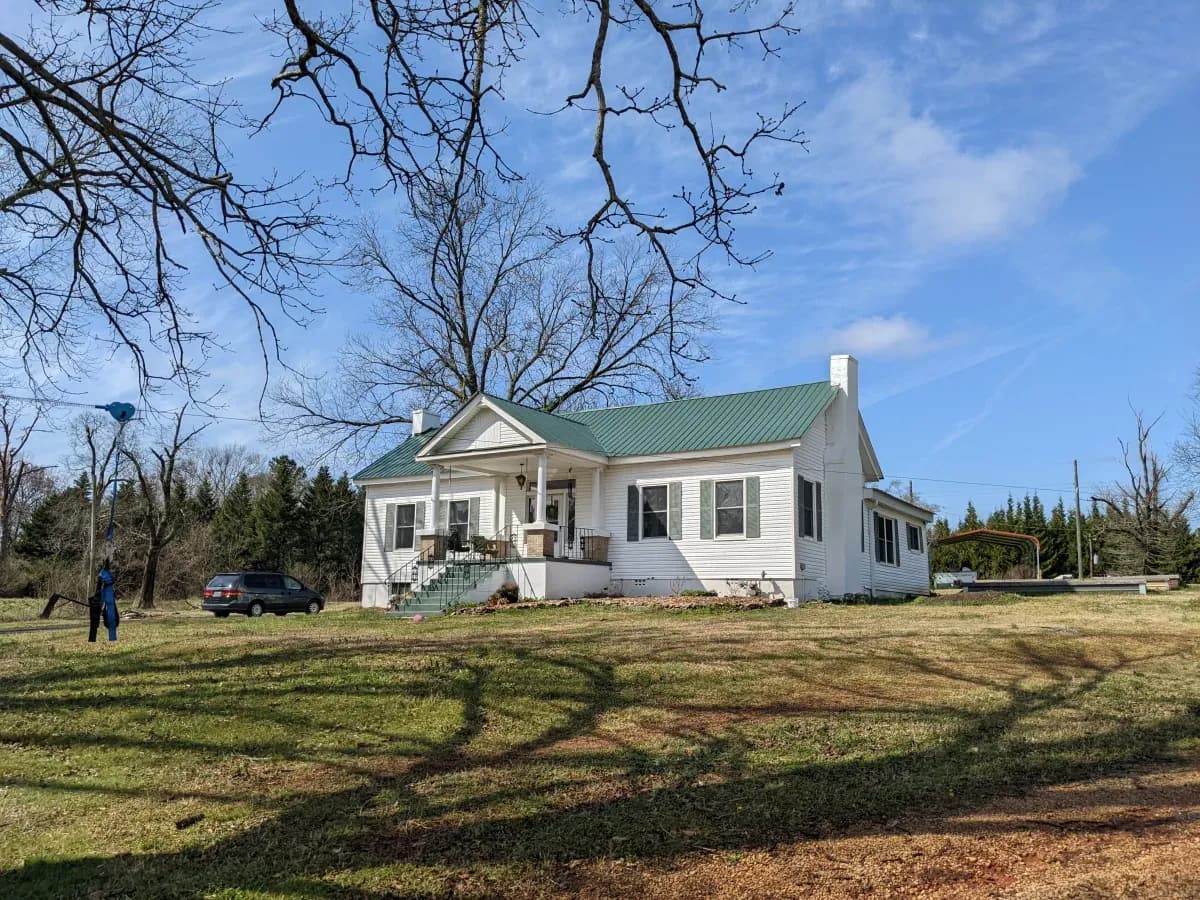
She moved with her husband Ed to a farm in the Blue Ridge foothills of North Georgia. She raised chickens. She walked at night without a flashlight. She taught at Piedmont College and at Columbia Theological Seminary. She wrote books about what she found in the fields that she had not found in the pulpit.
I am a former pastor who farms in Northeast Alabama. I am paying close attention.
What She Left and Why
Taylor has written about the leaving honestly. The parish work was good work. She believed in it. And it was also unsustainable, the constant production of sermons, programs, pastoral care, presence, at a pace that left no room for the contemplation the sermons were supposed to be about. She was writing about encountering God and not encountering God because she had no time for encounter.
She named this in Leaving Church (2006), which is her account of the transition. It is not a complaint. It is a clear-eyed accounting of what parish ministry can do to the person doing it, and what she discovered when she stopped.
What she found was that holiness was not located primarily in church buildings and Sunday services. It was located in the physical world, in the dirt, in the darkness, in the weight of animals, in the ordinary surfaces of things. An Altar in the World (2009) is the book where she works this out. Its subtitle is "A Geography of Faith," and that is exactly what it is: a mapping of where God shows up when you are paying attention outside the building.
The Chickens
She writes about her chickens in An Altar in the World as a spiritual practice. Not metaphorically. She tends to them and watches them and lets them teach her things about bodies and dependency and the specific grace of small obligations.
I know this sounds a certain way if you have not farmed. It sounds like spiritualizing something practical, like putting a halo on what is really just a chore.
It does not sound that way after you have done it.
There is a kind of attention that sustained physical work in a specific place teaches and that no other form of attention quite replicates. You are accountable to something that does not care about your schedule. You have to show up. You have to be present to what is actually there, not to what you planned or hoped or intended. That accountability to the actual, to the chicken, the drip line, the soil temperature in April, is the kind of attention that prayer is trying to produce.
Taylor figured this out by leaving the parish and going to the farm. I had to leave the parish and go to the farm to understand what she was talking about. Some things do not transfer by reading alone.
Learning to Walk in the Dark
Learning to Walk in the Dark (2014) is her most interesting book and possibly her best. It came from night walks on the farm, literal darkness, no flashlight, learning to move through the fields without the reassurance of being able to see clearly.
The book is a theological argument that the tradition has too thoroughly associated darkness with danger and absence, and that the mystics who found God in darkness were onto something the contemporary church has largely lost. Not darkness as metaphor for suffering. Darkness as its own form of clarity, the kind of seeing that is only available when you can no longer see clearly.
She learned this by walking at night on a farm in North Georgia. That is an important detail.
Where to Start
An Altar in the World first. It is the most direct statement of what she is doing. Then Learning to Walk in the Dark. Then Leaving Church, which gives the personal biography that makes the other two make sense.
Her On Being interview with Krista Tippett is worth the hour. She is as precise in conversation as she is in print.
She teaches and speaks regularly. Her website is barbarabrowntaylor.com. She is reachable and has done extensive interviews.
She is still on the farm in North Georgia.
See also: What Wendell Berry Knew, on another writer who had to work the land to understand what the land was saying. And Fred Craddock Drove to the Small Churches for Free, on the other great Georgia preacher who found the real work after the official work ended.


Responses